
Total eclipse and full moon mark the beginning of the March astronomical calendar with a spectacle in the sky

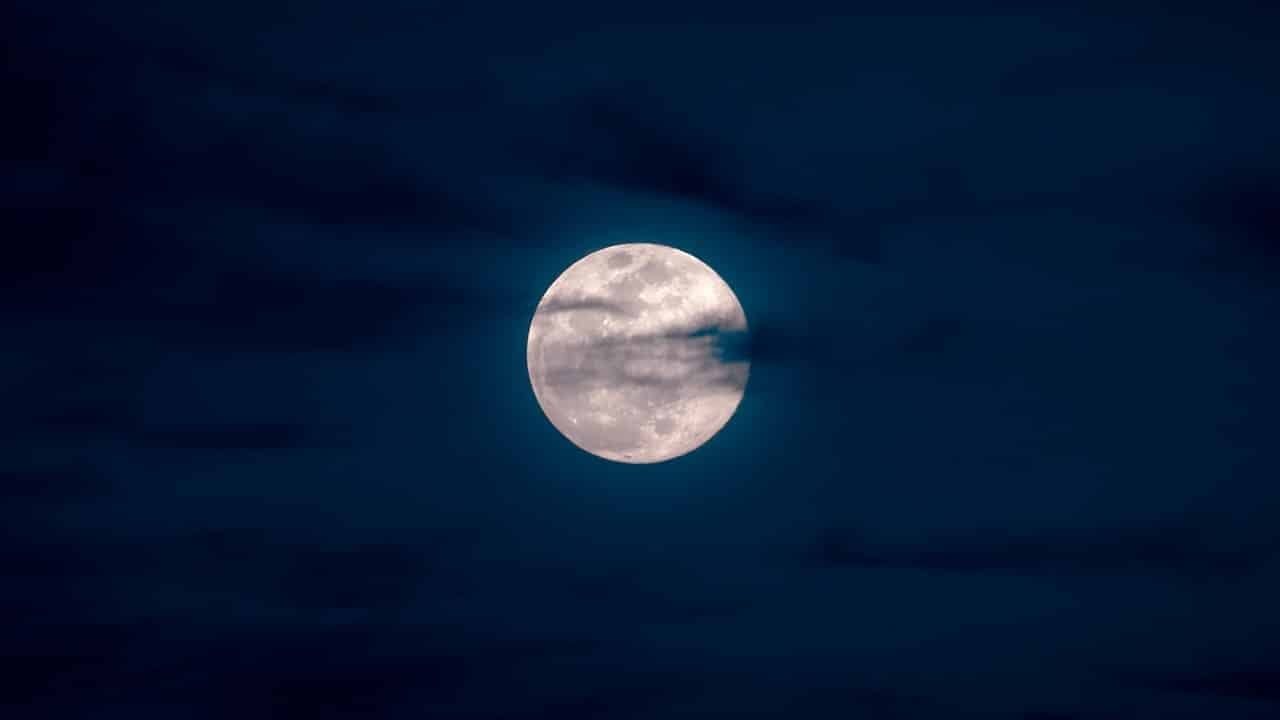
The night sky presents a special configuration at the beginning of this month, attracting the attention of observers and researchers. March 3rd records the simultaneous occurrence of the Lua Cheia phase and a total lunar eclipse, a phenomenon that alters the visual perception of the natural satellite. The astronomical event is scheduled for 8:39 am, following the official time of Brasília, and marks the starting point for the period’s cycle of lunar changes.
The transition of lunar phases follows a regular pattern known as a synodic month, which has an average duration of 29.5 days. Durante this interval, the relative position between Terra, Sol and Lua changes, generating the different appearances of the lunar disk visible from the Earth’s surface. In March 2026, this cycle completes all its main stages until the 25th.

Experts indicate that viewing the eclipse and the characteristics of the lunar surface directly depends on local meteorological conditions. The reddish hue, common in total eclipses due to the filtering of sunlight by the atmosphere of Terra, can be observed in regions where the satellite is above the horizon at the time of alignment.
Official timeline of lunar phases
The distribution of the four main phases occurs at approximately seven-day intervals, allowing planning for those who want to follow changes in the sky. The times listed below refer to the Brasília time zone and serve as a reference for adjustments in other locations.
- Lua Cheia:March 3rd, at 8:39 am (with total lunar eclipse);
- Room Minguante:March 11th, at 6:41 am;
- Lua Nova:March 18th, at 10:26 pm;
- Room Crescente:March 25th, at 4:19 pm.
The March equinox also occurs during this period, close to the Lua Nova phase, marking the transition of seasons and the balance in the duration between day and night.
Eclipse dynamics and visibility
Lua Cheia on the 3rd stands out for the occurrence of a total eclipse, the result of the precise alignment where Terra is positioned between Sol and the satellite. Durante this phenomenon, the planet’s shadow covers the lunar disk, creating a visual spectacle distinct from the usual intense white lighting of this phase. Observing this event does not require complex equipment, although the use of binoculars can reveal details of the lunar topography.
After the initial event, the cycle advances to the Quarto Minguante on day 11. In the Nesta stage, the satellite’s luminosity progressively decreases, halving. Visibility in this phase is favored during the second half of the night and early morning, when the illuminated portion faces east.
The sequence culminates at Lua Nova on the 18th, when the satellite is positioned between Terra and Sol, becoming practically invisible in the night sky due to solar glare and the unilluminated side facing the planet. The main cycle ends with Quarto Crescente on the 25th, offering good observation conditions during the afternoon and early evening.
Influence on tides and oceans
The phases of the moon exert a direct influence on the dynamics of the oceans through gravitational force. Nos periods of Lua Cheia and Lua Nova, the stars align, generating the so-called spring tides. Esse phenomenon is characterized by greater amplitude in water movement, resulting in more intense high tides and more receding low tides.
On the other hand, during the phases of Quarto Crescente and Minguante, the gravitational forces of Sol and Lua act at right angles to Terra. Isso causes neap tides, where the variation between high and low water levels is significantly smaller. Navegadores and coastal communities use these astronomical predictions to safely plan marine and fishing activities.
Tips for astronomical observation
To make the most of viewing the March phenomena, it is recommended to look for locations away from large urban centers, where light pollution is lower. The darkness of the environment makes it possible to identify the outline of craters and lunar seas more clearly, especially during Lua Cheia and the waxing and waning quarters.
Checking the weather forecast in advance is essential to ensure the success of the observation. Céus clear and cloudless are ideal for following the eclipse and occasional conjunctions with other celestial bodies that may occur throughout the month.




