
Trump promises unprecedented force against Tehran after offensive on strategic Israeli and US targets

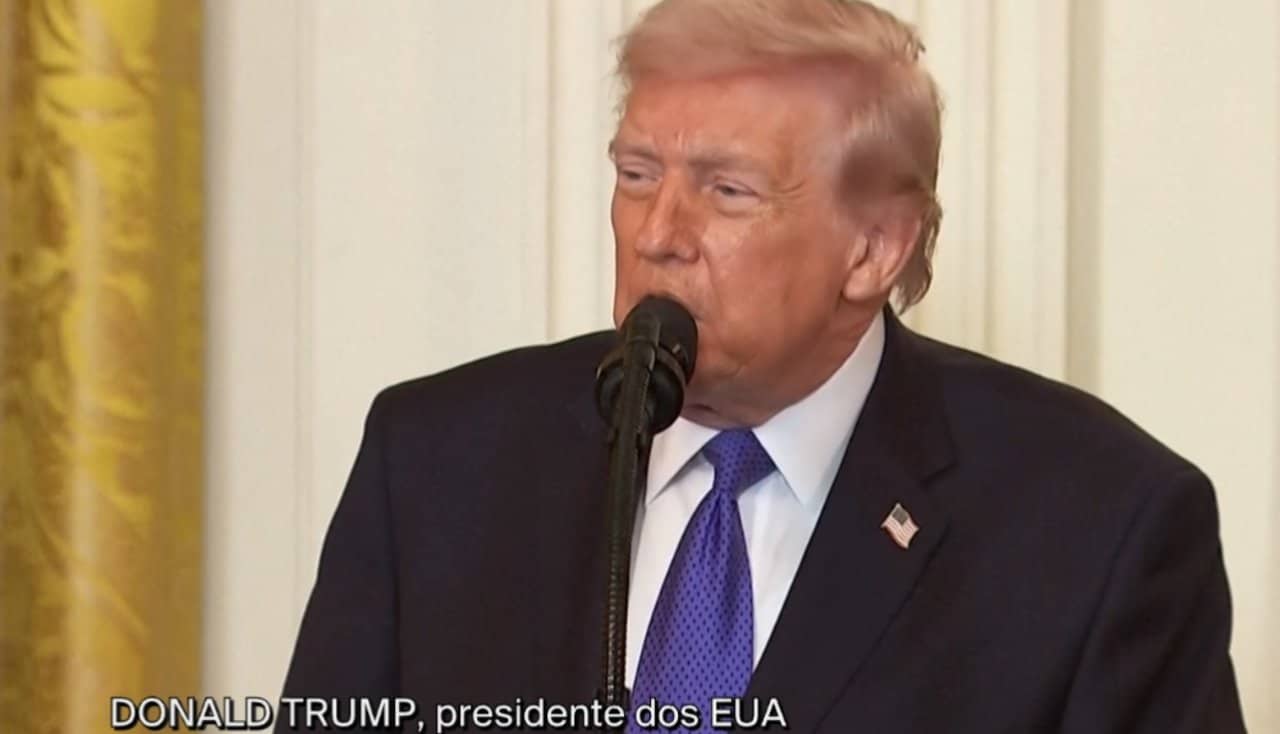
Geopolitical tension in Oriente Médio has reached a new level of severity in the last few hours, triggering a series of military and diplomatic reactions on a global scale. Após confirmation of coordinated operations that resulted in the death of the Iranian supreme leader, Ali Khamenei, and senior military commanders, the scenario quickly evolved into a direct confrontation. In response to Teerã’s moves, former President
The power vacuum left by the elimination of the Iranian leadership generated an immediate and aggressive response from the country’s remaining forces. The government in Teerã acted quickly to avoid an institutional collapse, appointing an interim leadership and establishing an urgent schedule for choosing a new definitive successor. The climate in the Iranian capital is one of total mobilization, with the official narrative classifying the Western attacks as a declaration of war against the Islamic world, a rhetoric designed to inflame support bases and justify the ongoing counteroffensives.
As military maneuvers intensify, international diplomacy is racing against time to prevent the conflict from spilling over into a widespread regional war. Turquia, a strategic member of NATO, expressed deep concern through President Tayyip Erdogan, echoing the appeals of the alliance’s secretary general, Mark Rutte. Ambos emphasized the imperative need for functional diplomatic channels to halt escalation, warning that the complete destabilization of Irã could have irreversible consequences for the security of the entire Eurasian bloc.
High-value targets and maritime retaliation
The hostilities went beyond the exchange of verbal threats and took the form of high-risk tactical actions. Relatórios intelligence indicates that Irã claimed responsibility for a direct attack on the office of the Israeli Prime Minister, Benjamin Netanyahu. The operation, which aims to reach the political heart of Israel, demonstrates the ability and willingness of Teerã to escalate the conflict to levels of decapitation of opposing leaders, mirroring the tactics used against its own commanders.
In the theater of naval operations, the situation is equally critical. Forças Iranians claimed to have fired four missiles at the aircraft carrier USS Abraham Lincoln, one of the main power projection platforms of the Estados Unidos in the region. Embora the extent of the damage or the effectiveness of the defense systems were not fully detailed, the simple act of targeting a capital asset of the North American Marinha represents a paradigm shift in the rules of engagement that were in force until then.
Instability has spilled over into vital trade routes, directly affecting global energy security. Guarda Revolucionária confirmed drone attacks on a tanker truck in Estreito of Ormuz, a neuralgic passage through which much of the world’s oil passes. The incident caused fires and raised a red alert in financial markets, which fear an interruption in the flow of commodities from producers such as Arábia Saudita, Iraque and Emirados Árabes Unidos.
Political reorganization and civil impact
The power structure in Irã undergoes a forced and dramatic reorganization. The death of Khamenei, a central figure in the country’s politics for decades, forced the expert council to accelerate succession processes amid the chaos. The choice of an interim leader aims to project an image of continuity and control, trying to mitigate the perception of fragility in the face of external adversaries and the population itself.
For civilians and expatriates living in the region, daily life has become a routine of uncertainty and fear. Cidades like Teerã and Dubai, economic and population centers, live under the constant sound of sirens and the fear of new bombings. The transport and communications infrastructure is severely disrupted, with massive cancellations of commercial flights leaving thousands of foreigners without clear escape routes and struggling to contact family abroad.
The international community is watching the developments with apprehension, while neighboring Arab countries organize emergency meetings to formulate a unified response. The objective is to create an isolation cordon that prevents the spread of the conflict to their territories, while at the same time seeking to mediate, with Western powers, a ceasefire that allows the minimum stabilization necessary for the return of economic activities and the safety of civilian populations.
Military perspectives and strategic defense
On the western side, the strategy adopted by the Estados Unidos and Israel reveals sophisticated intelligence and firepower coordination. The North American Secretário of Guerra reinforced that, although the operations have specific objectives of neutralizing the Iranian nuclear threat, they do not have an indefinite term, but will be maintained with maximum intensity as long as the aggressive posture of Teerã persists.
The rhetoric of “unseen strength” used by Trump suggests the possibility of using new weapons systems or saturation tactics that aim to paralyze the adversary’s command and control capabilities. Especialistas military personnel point out that the current focus is on degrading the Irã’s ballistic missile and drone infrastructure, reducing its ability to project force beyond its borders and ensuring air superiority in the region.
The recent history of friction, which culminated in this offensive, demonstrates that diplomatic red lines have been crossed. The global community awaits the next moves, aware that the decisions taken in the coming hours, both in Washington and in Teerã, will define the security architecture of Oriente Médio for the coming decades and the impact on the world economy.



