
Volkswagen Tiguan Allspace dominates search for used family cars with a focus on space and power

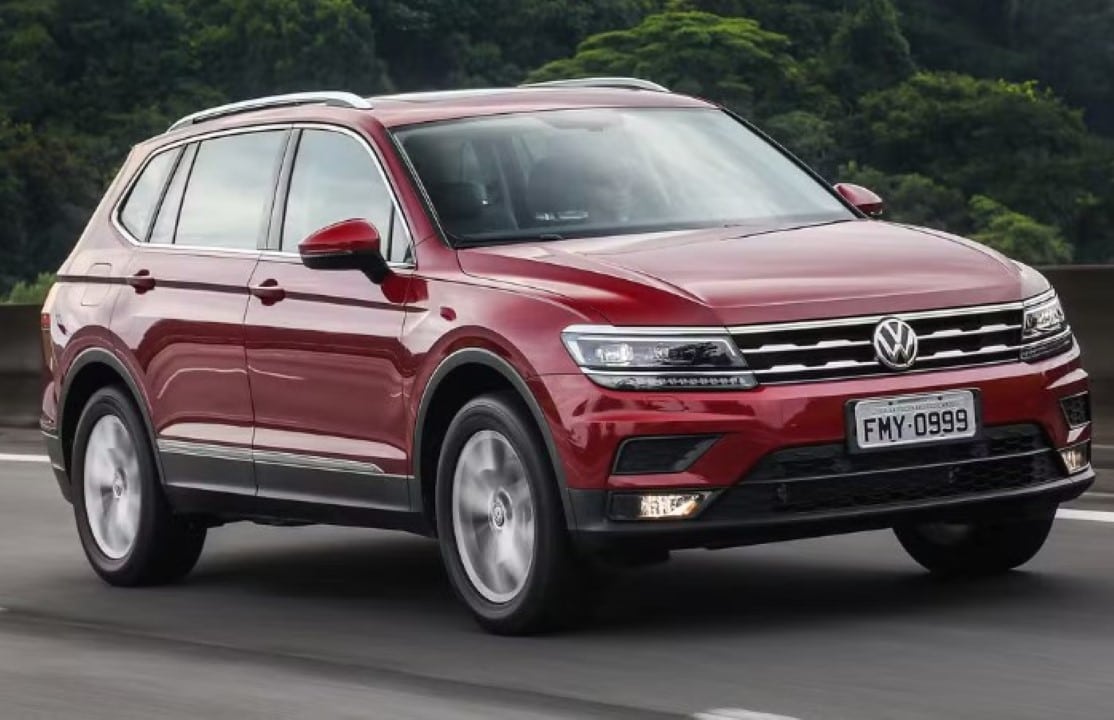
The market for medium sports utility vehicles continues to be strong in the Brasil, driven by consumers looking for vehicles capable of combining mechanical robustness and versatility for family transport. Nesse competitive scenario, the second generation of a specific model of the Volkswagen, imported from the México from 2018, has established itself as one of the most sought after options in the used segment. Construction based on the MQB modular platform allowed the development of a vehicle with a wheelbase of 2.79 meters, a technical feature that results in ample internal space and superior comfort for long-distance trips.
The vehicle’s design follows the German school of sobriety, with straight lines that prioritize functionality and the use of cabin space. Esse profile especially attracts drivers who want to migrate from traditional minivans to a car with greater ground clearance and a more robust look. The list of standard equipment, which includes advanced active and passive safety items, puts this SUV at a competitive advantage when compared to brand new models from lower categories that are currently sold for similar prices.
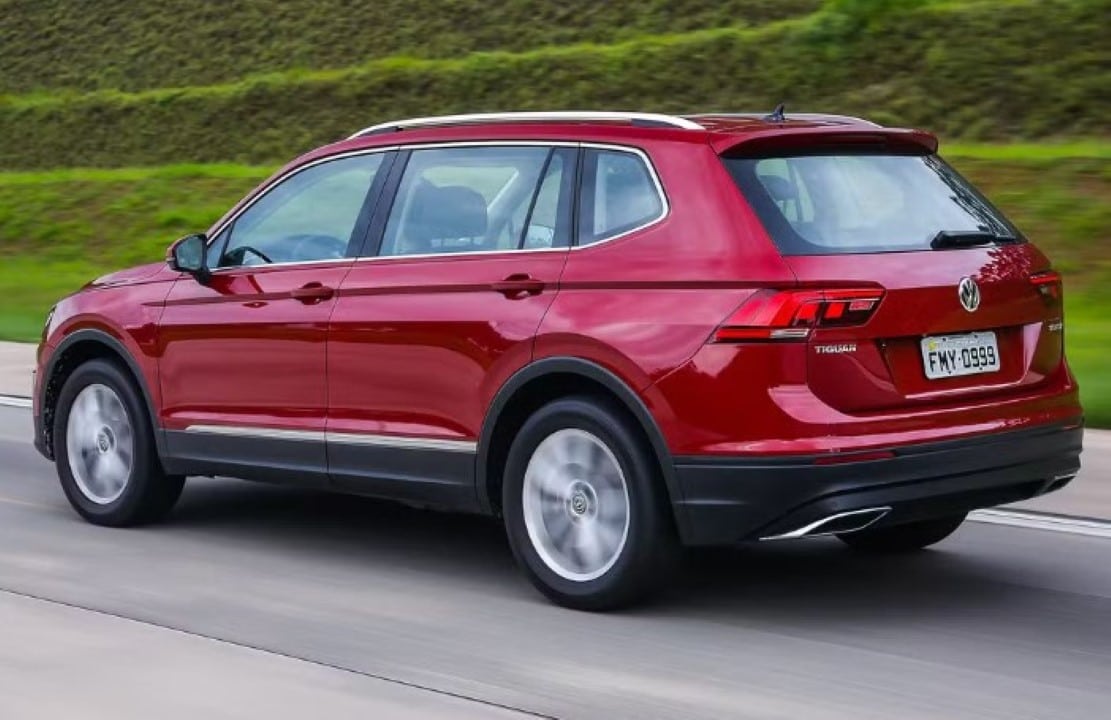
Performance and efficiency in entry-level versions
For the driver profile that uses the vehicle mainly for urban trips and conventional road trips, the configuration equipped with the 1.4 TSI engine presents itself as the most balanced choice. The engine generates 150 horsepower and 25.5 kgfm of torque, delivering enough force to move the utility vehicle with agility, without conveying a feeling of sluggishness. The calibration of the set aims at energy efficiency, allowing consumption averages close to 10.1 km/l with gasoline in the urban cycle, an expressive number for the category.
Power transmission to the front wheels is managed by a six-speed dual-clutch automated transmission (DSG). The system is recognized for its quick changes and smooth operation, enabling acceleration from 0 to 100 km/h in around 9.5 seconds. Esse performance guarantees safe restarts on highways and precise overtaking, while the occupants’ thermal comfort is ensured by technologies such as three-zone digital air conditioning.
Versatility and carrying capacity for families
The big difference between this model in the pre-owned market is the offer of seven seats in the intermediate and top-of-the-line versions. The third row of seats meets the demands of large families or those who need to transport extra passengers sporadically. Unlike limited adaptations found on some rivals, the design was designed for the effective use of these seats, even if access requires some mobility.
The trunk configuration varies drastically depending on the use of the seats. With the third row folded into the floor, the cargo compartment offers 686 liters, ideal volume for large luggage and leisure equipment. Mesmo with a maximum occupancy of seven people, the vehicle maintains 216 liters available, enough space for everyday purchases or backpacks, preserving the car’s routine functionality.
High power in sports configuration
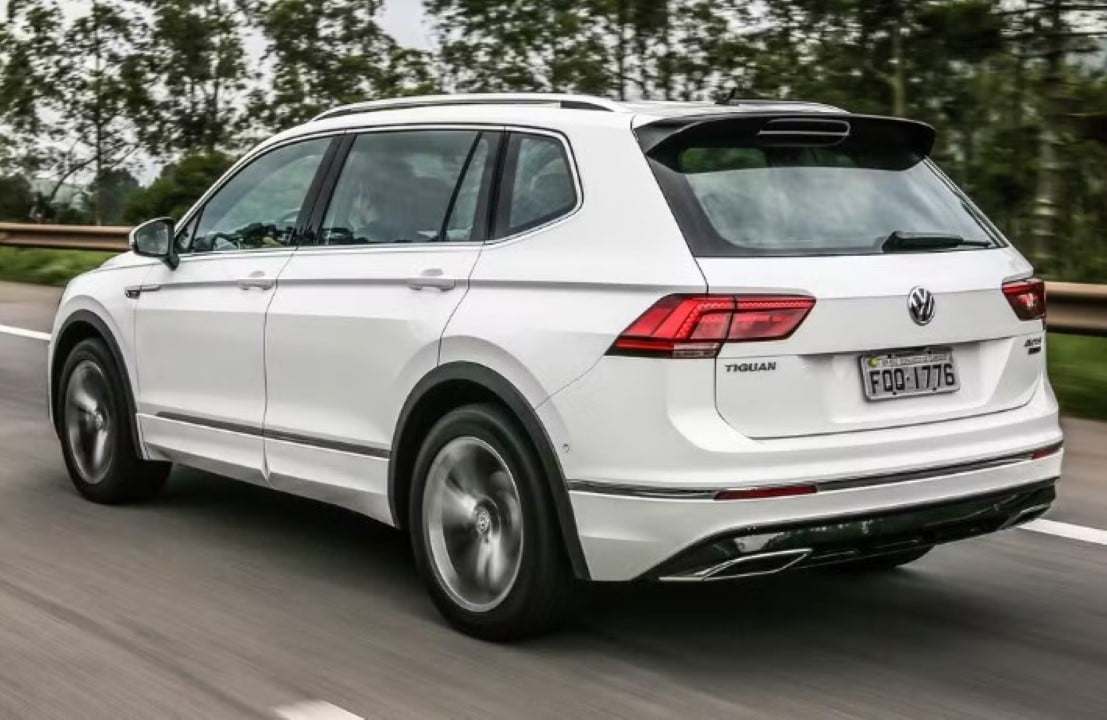
Automotive performance enthusiasts will find the R-Line version the most suitable alternative. Equipada with the 2.0 TSI engine, this variant delivers 220 horsepower and 35.7 kgfm of torque, completely changing the driving dynamics. The response to the accelerator becomes immediate and the car’s behavior gains vigor, helped by the 4Motion all-wheel drive system, which distributes force between the four wheels depending on the grip on the ground.
In this top-of-the-line version, the DSG gearbox evolves to seven gears and operates bathed in oil, working together with all-wheel drive to offer superior stability in curves and wet surfaces. The model accelerates from 0 to 100 km/h in just 7.5 seconds, figures comparable to sports sedans. The package also includes 19-inch wheels, premium finishing, configurable digital dashboard and adaptive cruise control.
Essential care with preventive maintenance
Purchasing an SUV with such a level of mechanical complexity requires careful attention to the service history. The double clutch transmission requires rigorous oil and filter changes every 40,000 or 60,000 kilometers, depending on the technical specification of the box. Failure to do so may cause premature wear of internal components, resulting in costly repairs.
The suspension also requires detailed checking, as it suffers from the weight of the vehicle and the imperfections of Brazilian roads. Itens such as tray bushings and shock absorber stops tend to show wear, identifiable by dry noises on speed bumps. Além In addition, engines with direct injection require high-quality fuel to prevent valve carbonization, making it essential to check the origin of previous maintenance.



