
Amid war, Trump says: I don’t care if Iran doesn’t play in the World Cup

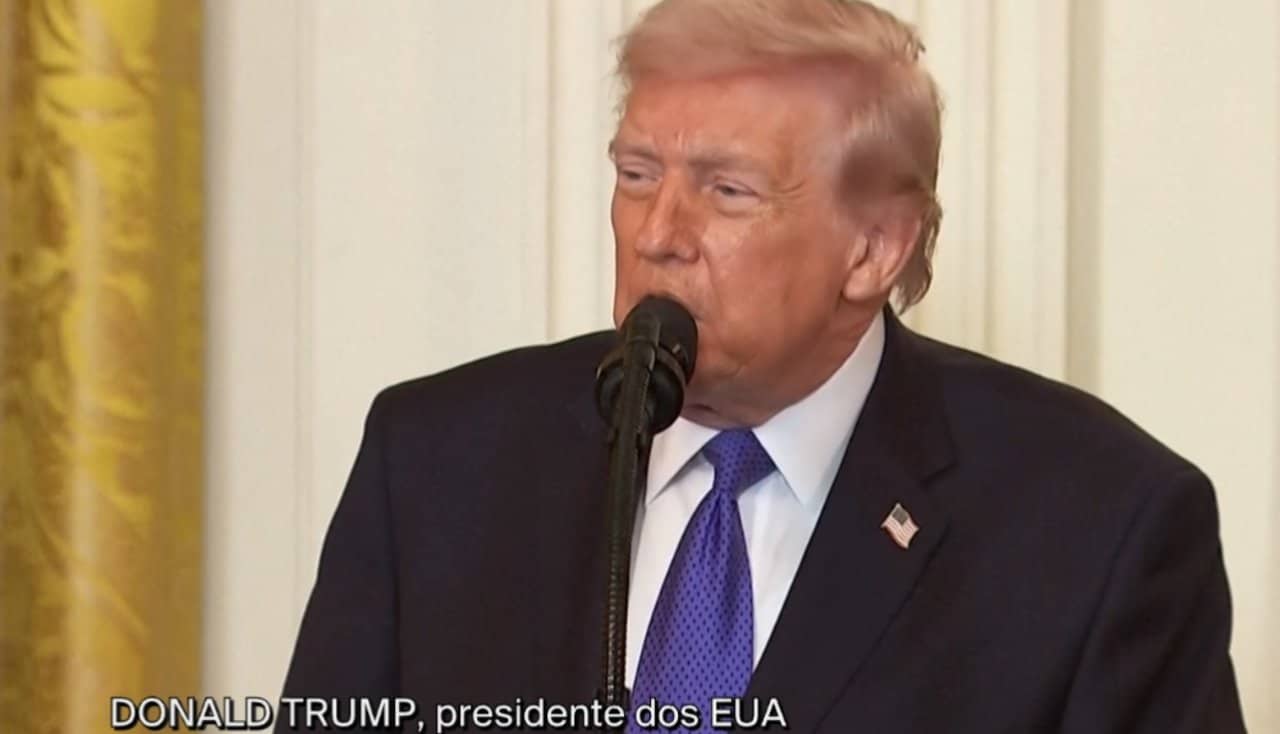
President Trump declares indifference to Iran’s possible absence from the football world cup. Donald Trump, former president of the Estados Unidos, declared in a recent interview with the website Politico, this Tuesday, March 3, that he does not care about the possible non-participation of the The statement comes against a backdrop of growing tensions between the Estados Unidos, Israel and the Irã, shedding light on the complex intersection between international politics and major sporting events. The 2026 Copa of Mundo is scheduled to take place in June, with venues at Estados Unidos,
In his statements to Politico, the former US president emphasized his indifference towards the Iranian presence in the tournament, expressing his view on the country’s geopolitical situation. Trump classified Irã as “a very defeated country”, adding that “they are functioning at their limit”, in an analysis that reflects the deep divergences and conflicts that mark relations in the region and beyond. The interview, published on Tuesday (3), quickly reverberated in political and sporting circles, sparking discussions about the implications of such positions by a figure of his global stature.
The controversy surrounding Irã’s participation in Mundial was already a topic of debate, especially given the impacts of the ongoing conflict with the US. Trump’s speech adds a new layer to this discussion, suggesting that, for him, the absence of the Persian nation on the world football stage would be irrelevant. Esse positioning clashes with Fifa’s traditional quest to maintain sport as a unifying element, transcending political and cultural barriers, a fundamental premise of major global tournaments.
Controversial statement amid tensions
Donald Trump’s declaration echoed at a delicate moment, marked by a complex geopolitical scenario involving the Estados Unidos, Israel and the Irã. O ex-presidente não apenas manifestou sua despreocupação com a ausência iraniana no evento, mas também utilizou termos incisivos para descrever a condição do país, apontando para uma nação em dificuldades extremas. Tal rhetoric, coming from a leader with significant global influence, tends to intensify the debate about the neutrality of sport in the face of acute political issues.
These observations by Trump occur in the context of already heightened tensions, where regional conflicts often spill over onto the international stage. The possibility of a country being excluded or choosing not to participate in a global event such as the Copa of the Mundo, due to political disputes, raises a warning about the principles that govern international sporting organizations and the way they deal with external pressures. A posição assertiva do ex-presidente coloca um foco ainda maior sobre o tema.
Fifa Relationship and Award History
In December 2025, Donald Trump was awarded the newly created “Award from Paz from The decoration, awarded for his “efforts for peace”, generated wide discussion about the nature of the relationship between the main entity in world football and political figures. Este award, established with the aim of promoting unity through sport, adds a layer of complexity to his recent statements about Irã.
The awarding of a peace prize to a political leader, especially one with a history of sometimes polarizing rhetoric and policies, has raised questions about Fifa’s criteria and its ability to remain impartial on political issues. The ideal of “football unites the world” seems to contrast with the declaration of disinterest in a nation’s participation due to conflicts. Este episode underlines the tension inherent when mass sport meets international high politics, where principles of neutrality are constantly tested.
The initiative to award political figures with a “peace prize” by a sports organization is a move that rarely goes without scrutiny. In the case of Trump, the award came shortly before his statements about Irã and Copa of Mundo, creating an interesting backdrop for the criticisms and defenses of his positions. Fifa, by establishing and granting such an honor, placed itself in the position of evaluator of “efforts for peace”, a responsibility that goes beyond the field of play and that generates expectations about the coherence of its values.
The international community and football lovers are closely watching how Fifa balances its mandate to promote the sport globally with the need to navigate the complex political chessboard. Trump’s statement, in light of its recent recognition by Fifa, highlights the delicate line that sporting institutions need to walk to maintain their credibility and their mission of unity in a world increasingly fragmented by disputes and ideologies. The award, which aimed to solidify football’s image as an agent of peace, now serves as a counterpoint to geopolitical tensions.
Geopolitical scenario and sport
The conflict between the Estados Unidos, Israel and the Irã represents one of the most volatile and long-lasting issues on the international agenda, with ramifications that extend far beyond the borders of the Oriente Médio. Essa dispute, multifaceted and rooted in decades of mistrust and antagonism, involves issues of regional security, nuclear programs, influence in neighboring countries and a complex web of alliances and rivalries. Donald Trump’s direct mention of this war, in the context of Mundo’s Copa, demonstrates how geopolitical issues rarely remain isolated.
Large-scale events such as football’s Copa, which attract global attention and bring together nations from all continents, invariably become stages where political tensions manifest themselves. Embora to Fifa and other sporting organizations often seek to depoliticize sport, the reality is that athletes, teams and tournaments represent their countries, making them subject to international dynamics. History is full of examples where boycotts, exclusions or protests have marked sporting competitions in response to global political crises.
Fifa, as guardian of world football, has the Herculean task of balancing the universality of sport with political realities. Sua constitution and its regulations seek to protect football from direct political interference, but external pressure and government sanctions can force the entity to make difficult decisions. The inclusion or exclusion of a national team from a tournament like the Copa of the Mundo due to political reasons is a drastic step that can have wide-ranging repercussions, affecting the image of the sport and the perception of its impartiality.
The case of Irã, in this context, is not unprecedented. Outros countries have already faced sanctions or been isolated from sports due to the actions of their governments. Essas situations place Fifa in a delicate position, where maintaining the integrity of the tournament and its united values must be weighed against the demands of ever-changing international politics. Trump’s statement is a vivid reminder that, regardless of efforts to keep sport separate from politics, the two domains are inextricably linked, and each influences the other in significant ways.
2026 World Cup and its preparations
The Copa of the Mundo of 2026 marks a historic event, as it will be the first time that three countries will act as co-hosts: the Estados Unidos, the Canadá and the México. Este expanded format promises one of the biggest editions of the tournament, with a record number of teams and games. The expectation is that the host cities in each of these countries will prepare cutting-edge infrastructure to receive millions of fans and thousands of athletes, symbolizing a celebration of football across the North American continent.
Preparations for the Mundial of 2026 are in full swing, involving an unprecedented logistical and organizational effort. Desde From modernizing stadiums to improving transport and accommodation infrastructure, each host nation works to ensure a memorable experience for everyone involved. Trump’s statement about Irã, although political, is part of this context of the countdown to one of the biggest sporting events on the planet, where the image of the host countries will be under the spotlight.
Implications of Iran’s possible absence
The possible absence of Irã in Copa of Mundo in 2026, if it occurs, would have multiple ramifications for the tournament. Do from a sporting point of view, it would mean the loss of a team that, despite geopolitical challenges, has a history of participation and a passionate fan base, especially in Ásia. Sua vacancy, consequently, would be filled by another team, changing the group plans and the dynamics of some competition brackets, requiring adjustments in the draws and calendars.
Furthermore, the absence of a nation due to political issues, even if not directly imposed by Fifa, raises questions about the universality of football and the sport’s ability to transcend divisions. Embora sports organizations seek to maintain neutrality, the isolation of a country for reasons outside the field of play always generates debate about the intersection between sport and politics. Essa situation could reverberate in the global perception of the event, influencing the climate of unity and celebration that Copa of Mundo typically seeks to inspire, instead highlighting the fractures of the international scene.
The position of other nations
In scenarios of geopolitical tensions that affect sports participation, the international community tends to closely observe the reactions of federations and governments. The stance of other nations regarding a possible Iranian absence in the Copa of the Mundo would be multifaceted, varying according to their own political alliances and interests. Alguns could show solidarity with the country, others would maintain a neutral position, while a third group could support any measure that sought to isolate Irã diplomatically, without necessarily interfering in Fifa’s decision.



