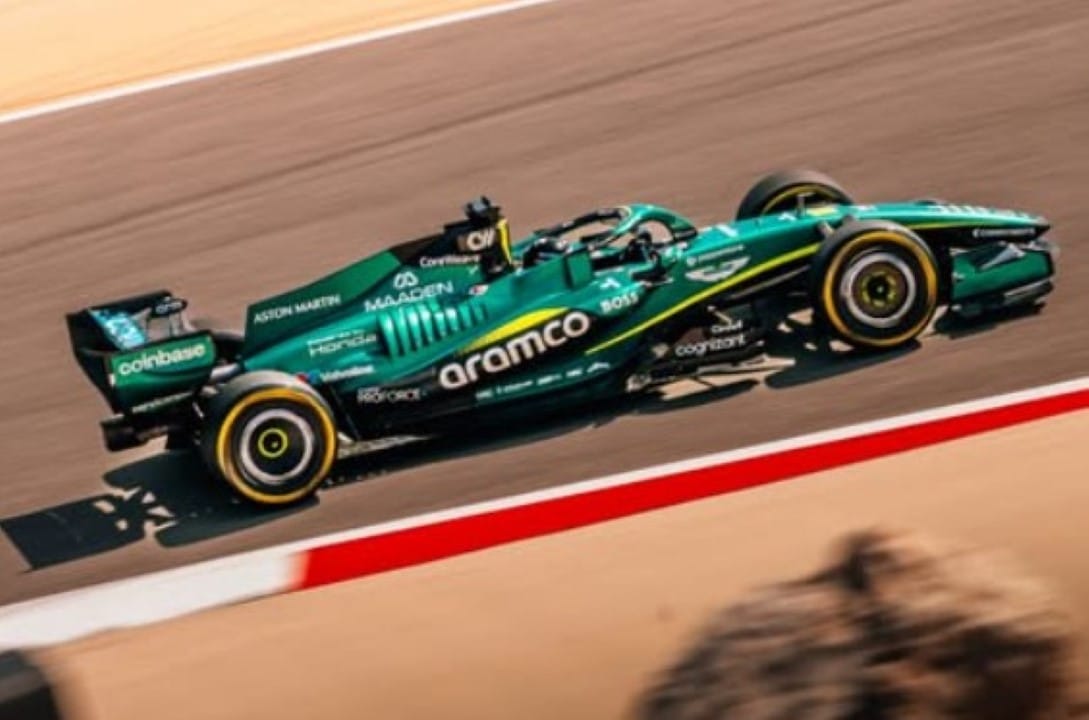
The Aston Martin Honda team faced the greatest difficulties of all formations during pre-season testing for the 2026 Fórmula 1 season. Reliability problems emerged in the first laps and prevented the accumulation of essential data for the car’s development. The lack of accumulated mileage was evident when compared to the performance of rivals.
The Barcelona and Bahrain circuits hosted the three official test sessions. The British-Japanese formation did not hold pre-shoots or shakedown sessions, unlike most competitors. Essa decision directly contributed to the setbacks observed on the track.
The total distance covered was approximately 2100 kilometers. Esse number represents the lowest record among the eleven participating teams. Mesmo newcomer Cadillac managed to double that mark despite facing her own initial challenges.
Aston Martin Honda accumulates lower mileage in F1 2026 pre-season tests with power unit problems
Faults identified in the Honda power unit during tests
Honda Racing confirmed that the main problem involved the power unit battery. Specific Vibrações generated during track driving were not detected in previous bench tests. The most serious incident occurred on the last day of activities in Bahrain.
Driver Fernando Alonso completed just six laps before stopping on the track. The team had to investigate what happened in real time and interrupted activities to avoid further damage. Honda engineers are already working on solutions to correct the defect before the start of the season.
Comparison with the history of Honda on Fórmula 1
The current scenario is reminiscent of the period of partnership between McLaren and Honda between 2015 and 2017. Naquela time the power unit also presented chronic reliability and performance problems. Fernando Alonso, now at Aston Martin, once again faces similar limitations.
Honda chose to return to Fórmula 1 in 2026 without maintaining its own factory team. Essa choose what differentiates you from the other four power unit suppliers. The integration between chassis and engine becomes even more critical when both parts undergo major regulatory changes simultaneously.
The current project requires full coordination between Aston Martin and Honda Racing. Qualquer mismatch between the two structures can generate the delays observed in the tests. The Japanese team recognizes that the downtime between 2021 and 2023 has created a development gap.
The Mercedes success model as a reference for the project
Mercedes built its current dominance from a stable structure and continuous investment. The British team began its modern phase in 2010 and quickly became a reference in organization. The German manufacturer has maintained the same core of engineers for more than a decade.
The power unit center in Brixworth has more than thirty years of continuous experience in the category. Essa longevity allows you to accumulate data from four client teams at the same time. The Mercedes AMG High Performance Powertrains supplies units to McLaren, Williams and Alpine in addition to the factory team itself.
Leadership stability also made a difference. Toto Wolff took charge and maintained the long-term vision even during regulatory changes. The result was the conquest of multiple world titles in a short time.
Aston Martin can study this path to accelerate its integration process. The reference helps to identify areas for improvement in the current structure of the British team.
Instability in the team structure
The arrival of Adrian Newey as technical partner only occurred in March 2025 due to contractual issues with Red Bull. The designer began a complete design review of the 2026 car. Essa change further delayed the already tight schedule.
The team also developed its own gearbox for the first time. Integration with the Honda power unit and the Aramco fuels required simultaneous efforts on several fronts. The workload exceeded the ability to respond in the short term.
The change of positions in the technical direction took place at the end of 2025. Vários experienced engineers left the team in the same period.
Development of the power unit and the unique position of the Honda
Honda Racing operates as a sole supplier without its own factory team. Essa condition reduces the volume of data collected compared to competitors that serve up to four teams. The Japanese manufacturer needs to compensate for this disadvantage with maximum efficiency in telemetry analysis.
The 2026 power unit incorporates new rules that significantly alter the hybrid concept. The battery and energy recovery system have gained even greater importance. Qualquer failure of these components compromises the car’s overall performance.
The team of engineers at Honda Racing has been working urgently since the end of the tests. The objective is to deliver updates before the first race of the season. Success depends on the ability to identify and resolve the weaknesses revealed in Bahrain.
The need for continuity in Fórmula 1 projects
Continuity allows you to attract and retain high-level talent. Equipes who alternate periods of entry and exit face greater difficulty in reconstructing accumulated knowledge. Honda has already experienced this situation in previous cycles.
Organizational stability also facilitates dialogue with the FIA when defining rules. Fabricantes who actively participate in initial discussions gain a competitive advantage. Aston Martin Honda is now looking to make up for lost time.
Technical details of the setbacks observed on the circuits
- Abnormal vibrations in the engine affected battery operation
- Unexpected stops occurred on high-speed sections
- The lap time was around four seconds above the leaders
- The team prioritized diagnostics over fast laps on the final day
Analysis of the collected data is ongoing at the Silverstone and Sakura factories. Engineers look for correlations between track problems and bench tests. The collaboration between the two companies will be decisive in the coming weeks.
The 2026 season starts soon and the pressure for results increases. Aston Martin Honda faces the challenge of transforming lessons learned from testing into concrete advances. The focus remains on the technical solution of hybrid components.