
Blood moon phenomenon and planetary alignment are highlights in the sky during the month of March

The month of March presents an intense astronomical calendar, marked by events that can be observed in different parts of the globe, arousing the interest of both experts and occasional admirers of the night sky. The dynamics of the solar system will provide visual spectacles that range from changes in the color of the natural satellite of Terra to the apparent alignment of neighboring planets. Esses phenomena reinforce the complexity of orbital movements and offer rare opportunities for contemplation.
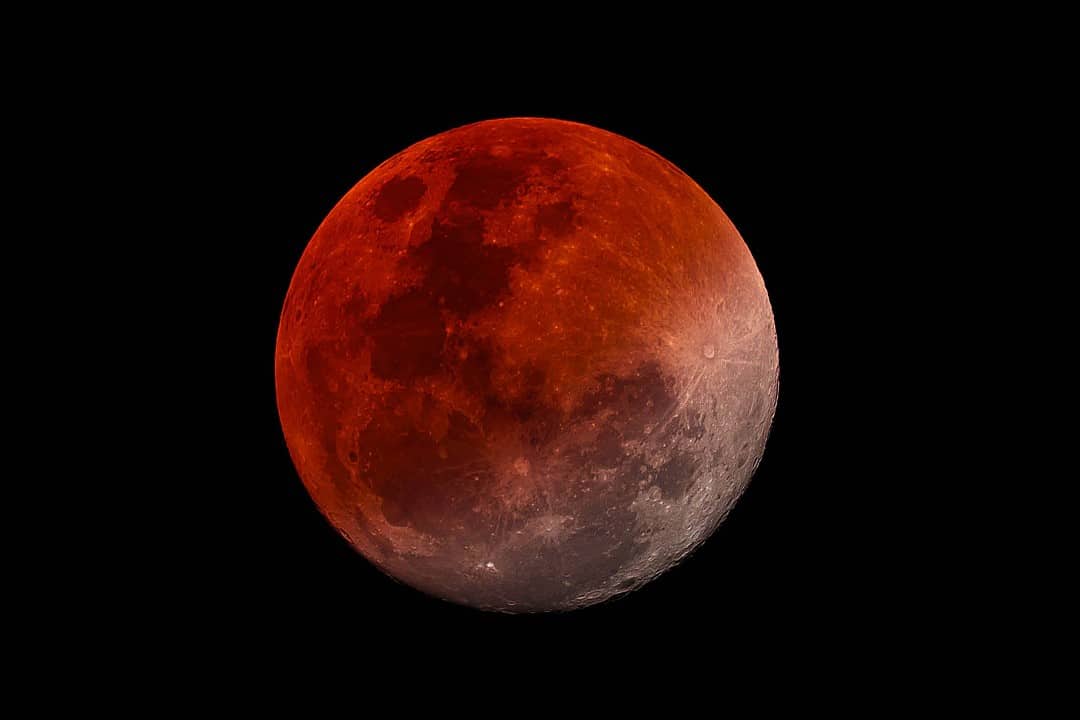
The highlight of the period is the total lunar eclipse, when Lua acquires a vibrant reddish hue, a phenomenon popularly known as “Lua of Sangue”. The event occurs due to the precise positioning of the Terra between the Sol and the full Moon, creating a game of shadows and light refraction that transforms the star’s usual appearance.
In addition to the eclipse, the night sky will be the scene of a planetary conjunction and the official change of season with the arrival of the equinox. The visibility of these events will depend on local weather conditions and the observer’s geographic position, but the magnitude of the phenomena guarantees that millions of people will be able to witness the changes in the sky over the next few weeks.
Details of the eclipse and the reddish color
Scheduled for March 3, the total lunar eclipse is expected as the main astronomical event of the month. Durante this process, Lua does not disappear completely, but takes on colors that vary from deep orange to blood red. Isso happens because the Earth’s atmosphere acts as a filter, dispersing blue light and allowing only red wavelengths to pass through and be projected onto the lunar surface, a physical effect similar to that which colors sunsets.
Observation of this phenomenon will be privileged in different time zones. Enquanto residents east of Ásia and Para who is in América of Norte, América Central and in the western part of América of
No protective equipment is required to observe a lunar eclipse, unlike solar eclipses. Viewing is safe and direct, only requiring that the sky is clear and, preferably, with little light pollution so that the color nuances of the terrestrial umbra over Lua are perceived with greater clarity and definition.
Visual encounter between Vênus and Saturno
On March 8, the western horizon will display a conjunction between Vênus and Saturno, shortly after sunset. Embora the two planets are separated by almost a billion kilometers in space, the terrestrial perspective will make them appear to be extremely close, separated by just one degree of angular distance.
Venus will stand out for its intense brightness, being easily identifiable as the “Morning Star”, while Saturno will appear next to it with a more discreet luminosity. Este alignment offers an excellent chance to compare the visual characteristics of the two planets and serves as a point of interest for photographers and enthusiasts seeking to record the orbital dance of the celestial bodies.
Equinox and the transition of seasons
March 20th marks a turning point in the annual cycle with the occurrence of the equinox. Este astronomical event signals the moment when the Sol crosses the celestial equator, resulting in an almost identical distribution of light between the northern and southern hemispheres. The phenomenon determines the beginning of spring in the northern hemisphere and autumn in the southern hemisphere.
During the equinox, day and night are practically equal in length, about 12 hours each. Historicamente, this date carries great cultural and agricultural symbolism, representing times of harvest or renewal, depending on latitude. Astronomicamente, is the official landmark that governs the calendar of seasons and directly influences the climate and the behavior of nature in subsequent weeks.
Moon phases and observation tips
To follow the events with quality, it is recommended to look for locations away from the artificial lights of large urban centers. Light pollution drastically interferes with the visibility of less bright planets like Saturno and the nuances of the lunar eclipse. Aplicativos of astronomy are useful tools for locating the exact position of the stars at the time of observation.
In addition to the main events, the March lunar cycle follows specific dates that change nighttime lighting:
– Dia March 3: Lua Cheia (coinciding with the total eclipse).
– Dia March 11: Fase of Quarto Minguante.
– Dia March 18: Lua Nova (ideal for stargazing due to the absence of lunar light).
– Dia March 25: Fase of Quarto Crescente.
The visual exploration of these phenomena connects the observer to the mechanics of the universe. Agências Space agencies, like NASA, use these events to engage the public in science and promote knowledge about the solar system, keeping curiosity alive about what exists beyond Earth’s atmosphere.




