
Interstellar comet 3I/ATLAS photographed by the Juice probe on its way to Jupiter arouses scientific curiosity

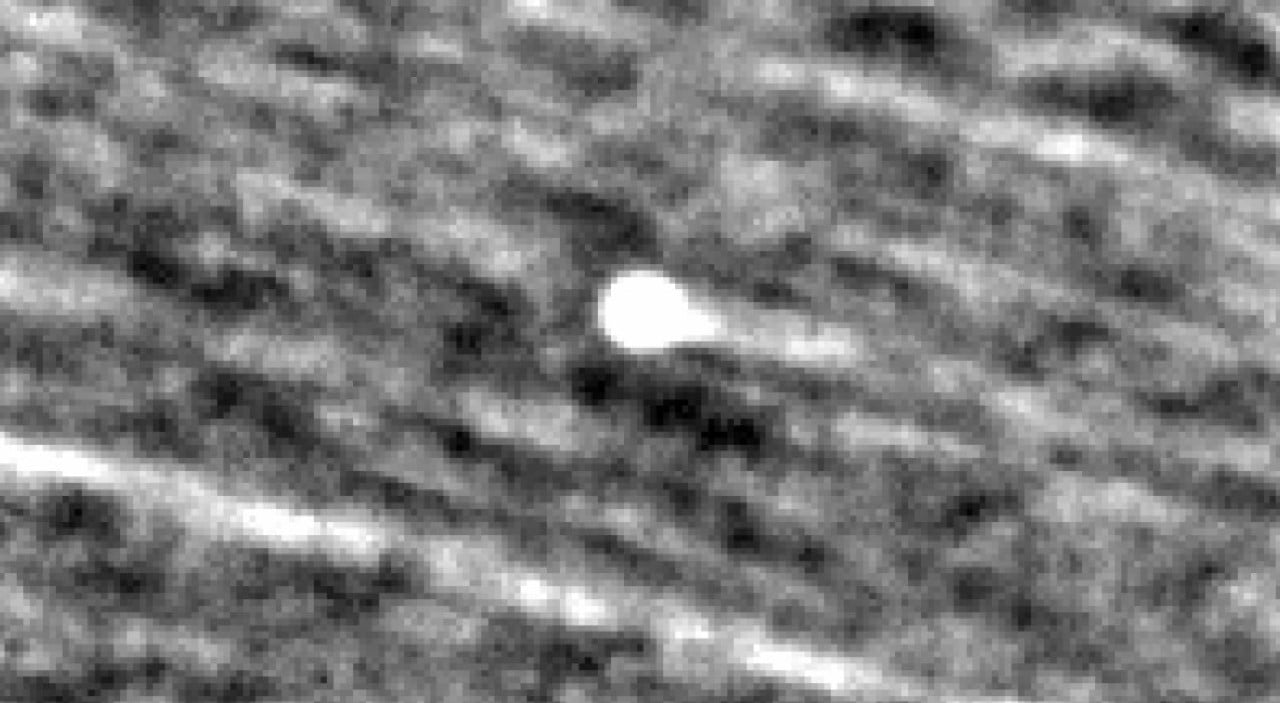
Agência Espacial Europeia recently released a stunning image of the interstellar comet 3I/ATLAS captured by the Jupiter Icy Moons Explorer (Juice) probe. The photo shows the object expelling gas and dust after its closest pass through Sol. The observation took place in November 2025, when the probe was approximately 66 million kilometers from the comet.
The JANUS camera, a high-resolution instrument on Juice, recorded the image on November 6, 2025, seven days after the comet’s perihelion. Essa proximity allowed us to capture details of the object’s coma and tail. Equipes ESA scientists are now analyzing the data to better understand the composition and behavior of the interstellar visitor.
Comet 3I/ATLAS was discovered in July 2025 by the ATLAS telescope on Chile. Sua’s origin outside of Sistema Solar makes it the third confirmed interstellar object after ‘Oumuamua and 2I/Borisov. Astrônomos have been following its hyperbolic trajectory ever since with terrestrial and space telescopes.
Image reveals details of cometary activity
The published photograph highlights the almost oval shape of the nucleus surrounded by a cloud of gas. Flechas indicate the direction of the comet’s movement relative to Sol. Essa visualization helps understand how solar heating activated ice sublimation.
Scientists note that the behavior follows the pattern expected for natural comets. The release of material occurs intensely post-perihelion. Dados collected support studies on the object’s interstellar origin.
Observations with multiple instruments
Juice used five scientific instruments during the comet’s passage. Além from JANUS, the MAJIS, SWI, PEP and UVS spectrometers recorded information. Esses data complements the images and allows detailed chemical analysis.
The probe captured more than 120 images throughout November 2025. Processing these photos reveals variations in the tail and coma. Equipes international teams collaborate to interpret the results.
Unique trajectory of the interstellar comet
3I/ATLAS travels at high speed through Sistema Solar. Após the perihelion, it heads towards the outer region, passing close to the orbit of Júpiter in March 2026. Juice, also directed towards Júpiter, took advantage of the coincidence for observation.
Other missions such as Hubble and ground-based telescopes have provided complementary images. Essas contributions enrich the available data set. Astrônomos estimate the size of the nucleus to be between hundreds of meters and a few kilometers.
Ongoing composition analysis
Researchers examine the data to identify volatiles present. Hydroxyl detection indicates water release. Essas information helps compare the comet with Sistema Solar objects.
Interstellar origin suggests formation in another stellar system. Estudos seek clues about its primitive composition. The Juice observations represent a rare opportunity due to the probe’s position.
Contribution of the Juice mission to astronomy
Juice, launched to study the icy moons of Júpiter, demonstrates versatility when observing the comet. Seus instruments designed for Jovian environments captured valuable data. Essa incidental observation expands the scope of the mission.
Scientists highlight the importance of timely captures. Relative proximity allowed for superior resolution compared to distant observations. The results strengthen knowledge about interstellar visitors.
Expectations for future observations
Juice will continue to monitor Sistema Solar on its journey. Comet 3I/ATLAS follows its outward trajectory. Novas analyzes should bring additional revelations in the coming months.
Other probes close to Júpiter may record the object. Combining data from multiple sources enriches scientific conclusions. The 3I/ATLAS study advances the understanding of interstellar objects.



