President of Flamengo explains Filipe Luís’s dismissal and admits prior dialogue with the English club


Luiz The departure of the former full-back and now coach, made official on March 3, 2026, generated a wave of speculation behind the scenes of national football, especially after the confirmation that the professional will take command of Vasco from Gama. In an official statement, the director sought to clarify the reasons that led to the interruption of work, citing differences in assessment regarding the team’s evolution and performance on the field.
The management of the football department had been under strong external and internal pressure in recent weeks, a scenario that worsened drastically after the adverse result in the state decision. Bap, as the president is known, emphasized that the institutional decision was guided by technical criteria and the need to immediately realign the objectives for the 2026 season, denying that external pressures were the isolated determining factor, but admitting that the environment had become unsustainable for the continuity of the sports project designed at the beginning of the year.

During the press conference, one of the most sensitive points discussed was the relationship with the international market and the rumors that surrounded the coach’s contract renewal in the previous period. The transparency adopted by the manager aimed to mitigate the conflicting narratives that circulated in the sports press and among fans, establishing an official chronology of the events that culminated in the change of command and the hiring of the Portuguese Leonardo Jardim.
Behind the scenes of negotiations and European interest
One of the central topics of the clarification provided by Luiz Eduardo Baptista was the confirmation of previous contacts with Chelsea. The president admitted that, during the period of contractual renegotiation with Filipe Luís, there was in fact an open dialogue with the London club, placing these conversations at a time prior to the renewal of the contract. Essa admission sheds light on the market movements that permeated the coach’s stay at Gávea until the beginning of this year.
Despite the confirmation of negotiations with the English, the Flamengo board was emphatic in dissociating this episode from the recent dismissal. Segundo the red and black leadership, the dismissal was not motivated by external interference or proposals from other clubs, but rather by a rigorous internal analysis of the team’s performance. The official narrative maintains that the decision was autonomous and based on meritocracy and the results presented within the four lines.
The management’s stance seeks to deconstruct the idea that the club had acted under the influence of third parties or that the coach had his “head in Europa”. When detailing the schedule, Bap reinforced that the commitment to the continuity of Filipe Luís was genuine at that time, but that football is dynamic and requires quick responses when performance expectations are not met as planned in the annual strategic planning.
The impact of the historic defeat in the state
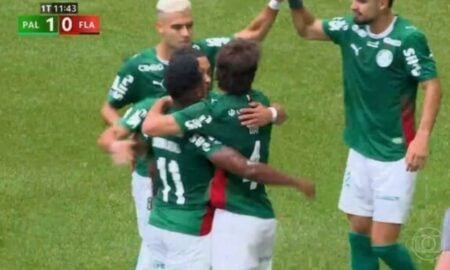
The trigger for the drastic change in technical command was, undeniably, the historic embarrassment suffered in the Campeonato Carioca final. The 8-0 defeat to the rival in the tournament’s final exposed tactical and emotional weaknesses in the squad that the board considered unacceptable for the greatness of the institution. The elastic score not only cost them the title, but also eroded confidence in the work that was being developed.
For the top management of Flamengo, the crushing setback served as a definitive diagnosis that the team was not evolving in the right direction. The internal assessment pointed to tactical stagnation and a disconnect between the ideas of the coaching staff and the execution of the players on the field. The result was treated not as a road accident, but as a serious symptom of structural problems that needed to be stopped immediately.
The negative repercussion among fans and pressure from the sports media accelerated the rupture process. The board understood that continuing the work after a result of this magnitude would be politically unsustainable and sportingly risky, compromising the rest of the competitions on the calendar, such as the Copa Libertadores and the Campeonato Brasileiro. The defeat served as clear proof that the cycle had ended prematurely and traumatically.
The train metaphor and management philosophy
When justifying the dismissal, Luiz Eduardo Baptista used an analogy to illustrate the board’s thinking in the face of the crisis. The president stated: “When you realize you got on the wrong train, you have to get off at the first station; if you wait, the error only increases.” The phrase reflects a management philosophy that prioritizes quick course correction to the detriment of insisting on projects that show clear signs of bankruptcy.
This statement suggests that the board identified planning or execution errors that would not be corrected over time alone. The “first season” symbolizes the immediate post-state moment, chosen as the cutoff point to prevent the entire season from being compromised. The statement denotes a pragmatic stance, where emotional attachment to idols or past projects cannot override the club’s urgent performance needs.
The metaphor also serves as a message for the cast and the next commander. Fica established that tolerance for route errors is low and that the demand for results and performance compatible with the investment made is the highest priority. The Bap management tries, in this way, to demonstrate a firm grip and the ability to make unpopular or difficult decisions aimed at protecting the association’s greater interests.
The arrival of Leonardo Jardim and the immediate future
With the page turned, Flamengo acted quickly in the market to fill the gap left by the departure of Filipe Luís. The hiring of Leonardo Jardim marks the beginning of a new cycle, with the bet once again falling on the Portuguese coaching school, which has a recent successful history in Brazilian football. The expectation is that Jardim will be able to reorganize the defensive system and regain the group’s confidence after the trauma of the state final.
The choice of an internationally experienced name indicates the board’s desire to have a casting manager capable of dealing with the pressure of an environment in crisis. Leonardo Jardim will have the mission of implementing his gaming philosophy in the short term, aiming for the upcoming national and continental competitions. The board hopes that the change of command will bring a “new fact” capable of mobilizing the locker room and reconnecting the team with victories.
Meanwhile, Filipe Luís’s fate was also sealed with his departure to Gama’s rival Vasco. Esse movement adds an extra layer of rivalry and narrative to upcoming local clashes. The Flamengo, now under new technical direction, seeks to leave the controversies behind and focus on rebuilding its winning identity for the remainder of 2026, with the promise of a more competitive team aligned with red and black traditions.