
Scientists warn of the risk of uncontrolled re-entry of the Hubble telescope into the Earth’s atmosphere in 2028

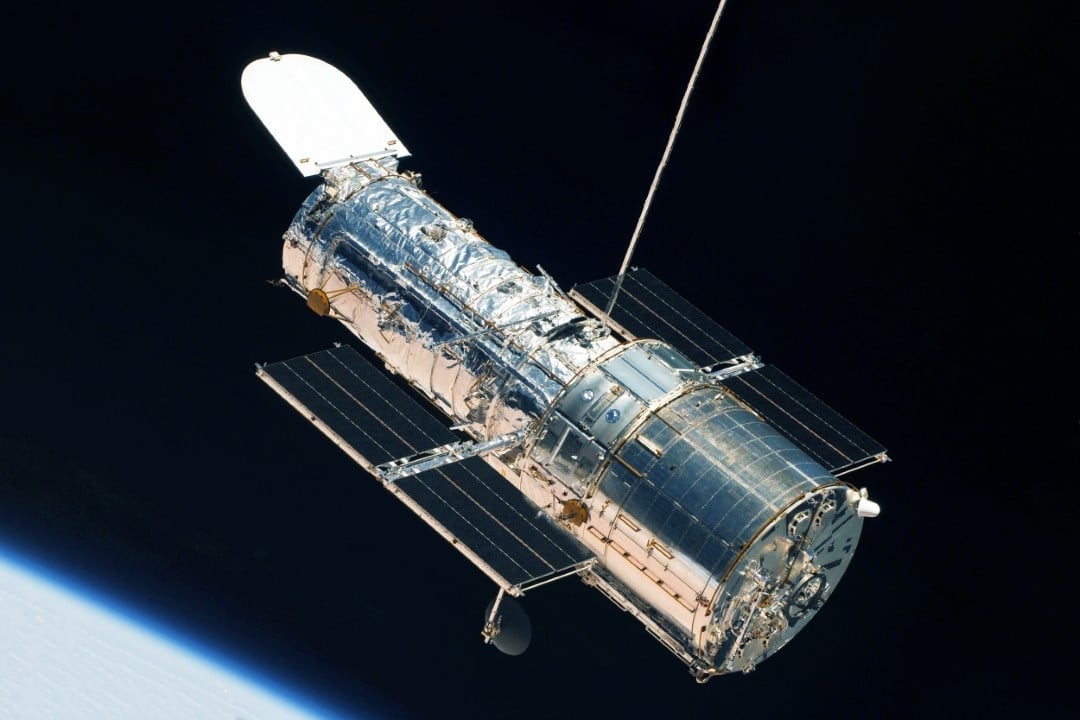
The Hubble space telescope faces an increasing risk of uncontrolled re-entry into the Earth’s atmosphere from 2028 onwards. Lançado in 1990 and without maintenance since the last service mission in 2009, the observatory lost significant altitude and today operates below 500 kilometers. Sem an approved plan to reposition the satellite, the current trajectory indicates the possibility of reentry in the coming years according to orbital monitoring updates.
Astronomers highlight that the peak in solar activity recorded in 2025 directly contributed to this process of falling faster than initially predicted. The absence of refueling or orbit raising missions worsens the situation and puts the continuity of instrument operations at risk.
Recent data shows that Hubble has already descended from an initial altitude of more than 600 kilometers to its current level, which accelerates the reentry schedule.

Orbital decay accelerates with solar influence
Elevated solar activity in recent cycles has expanded the upper atmospheric layers and increased the drag effect on the Hubble telescope. Esse phenomenon occurs naturally but was intensified by the solar peak of 2025 according to orbital tracking records. Especialistas indicate that without correction the decline could lead to complete reentry in a shorter period of time than initial projections.
The equipment continues to lose altitude steadily and updated measurements confirm the accelerated pace observed since the end of 2025.
Technical risks of uncontrolled reentry
The reentry of the Hubble telescope without prior control raises concerns about the dispersion of fragments that could reach the Earth’s surface over an extensive range. Embora most of the equipment burns during passage through the atmosphere, resistant structural remains such as metallic components represent a low but measurable residual risk.
Preliminary calculations estimate that the final trajectory will depend on the exact atmospheric conditions at the time of the fall. NASA maintains continuous monitoring to adjust predictions based on real-time data.
The lack of additional funding for support missions limits intervention options and prioritizes other ongoing space projects.
Preservation plans still under analysis
Experts are debating alternatives to avoid the total loss of Hubble, including possible partnerships with private companies for orbital elevation. The high cost of these operations and the reduction of around 30 percent in the budget allocated to the project complicate the approval of new initiatives.
The scientific community is closely following internal discussions about the future of the telescope that has already delivered fundamental discoveries over more than three decades.
Orbital Monitoring Updates
Independent astronomers have released recent graphs illustrating the steady decline in Hubble’s altitude since the last service was performed. Essas projections are based on public tracking data and indicate variations depending on solar intensity.
The observatory continues to operate normally at the moment but the scope for corrections decreases with each month that passes without action.
Impact on the continuity of observations
Hubble still produces valuable images and data for astronomical studies but the risk of sudden interruption requires alternative planning by the teams involved. Projetos complementary projects under development seek to maintain space observation capabilities even after eventual reentry.
The transition to new instruments requires additional time and resources to avoid gaps in scientific research.
Technical alternatives under discussion
Engineers are evaluating options such as docking with autonomous vehicles to propel the telescope into a safer orbit. Essas solutions require rapid approval and rigorous testing before implementation.
The debate over preservation versus controlled deactivation is gaining momentum among international space agencies.
Technical data about the current orbit
The current altitude of Hubble is below 500 kilometers with the decay rate directly influenced by variable atmospheric density. Lançado há mais de 35 anos o equipamento acumula desgaste natural que se soma ao efeito solar.
Records indicate progressive loss of height and projections point to possible re-entry between 2028 and 2033 depending on the exact conditions.
- Intensified solar activity since 2025
- Absence of service missions since 2009
- Budget reduction that limits interventions
- Continuous monitoring by tracking networks
Forecasts vary depending on solar scenarios
Conservative projections indicate re-entry most likely around 2033 while scenarios of high solar activity bring the event forward to 2028 or 2029. The variability of the solar cycle makes it difficult to fix an exact date without constant updates.
Technical teams adjust models based on new data collected daily.
Historical importance of the Hubble telescope
The observatory has revolutionized the understanding of the universe with images of distant galaxies and data on cosmic expansion over decades of operation. Sua possible reentry marks the end of an era in space astronomy but leaves room for more advanced successors.
The scientific community values the legacy left by the equipment in various areas of knowledge.
Safety measures for reentry
Space agencies are preparing protocols to minimize risks to the population and air traffic during the final phase of the fall. Modelos of debris dispersion are continuously refined to guide necessary alerts.
The complete reentry process takes place in minutes but requires prior international coordination.
Future of orbital astronomy
New telescopes under development seek to surpass the capabilities of the Hubble with updated technology and greater operational autonomy. Esses designs incorporate lessons learned from current orbital decay to avoid similar problems.
The gradual transition ensures continuity in high-precision space observations.




