
Total eclipse brings Blood Moon in March with maximum visibility in North America and Asia

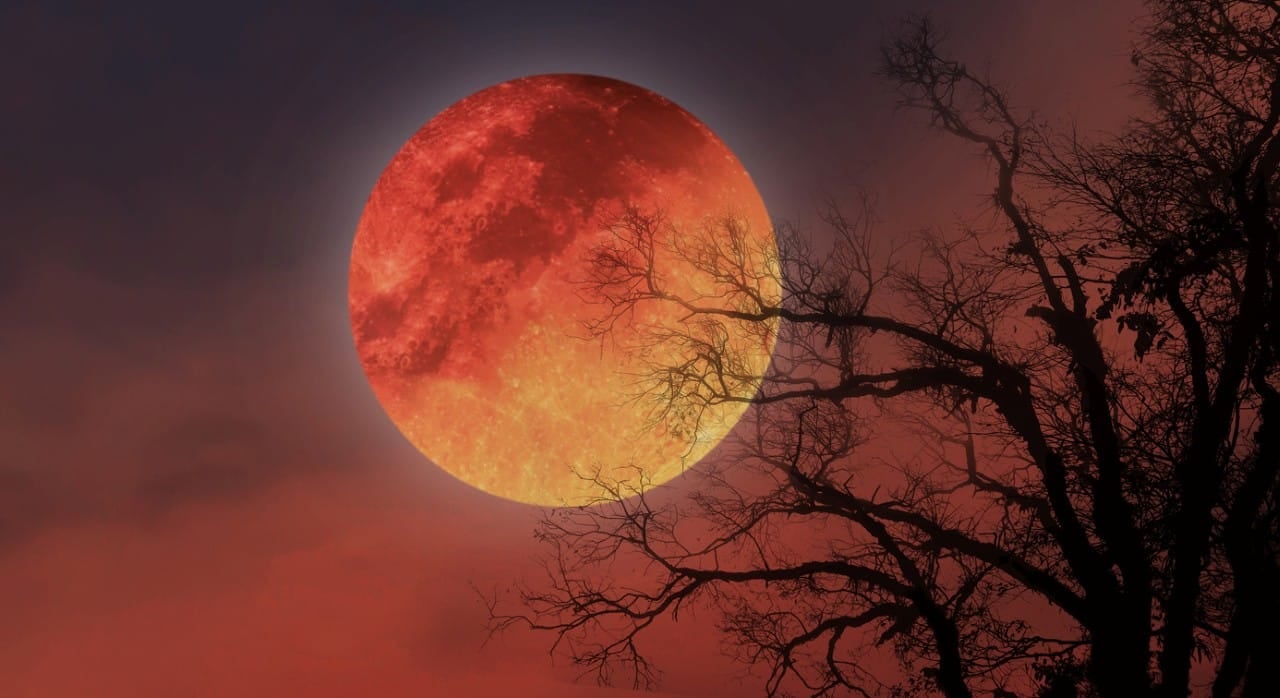
The night sky and dawn in several regions of the globe will be transformed on March 3, the date set for a total lunar eclipse of great magnitude. Conhecido popularly known as Lua from our planet’s shadow completely covers the lunar surface.
Astronomy experts and enthusiasts are eagerly awaiting the event as it offers ideal conditions for collecting orbital and atmospheric data. The rarity of the alignment over the next two years makes this March’s viewing a crucial moment for the scientific community and for amateur observers seeking to record the satellite’s changing color.

Alignment schedule and phases
The eclipse dynamics will follow a precise sequence of universal times (UTC), starting with the entry of Lua into the Earth’s penumbra early in the morning. The initial darkening, often subtle, will give way to the partial phase, when the umbra begins to cover the lunar disk. The highlight of the event, its totality, is expected to occur between 11:04 am and 12:02 pm, reaching its maximum peak of coverage at 11:33 am.
During the 58 minutes of totality, the satellite does not disappear completely, but takes on shades that vary from deep orange to dark red. Após the end of this critical phase, the process reverses, with Lua gradually leaving the shadow until the end of the penumbral phase in the early afternoon. The entire duration of the event, from the first contact with the shadows until the end, will be approximately 5 hours and 39 minutes.
Regions with best observation
Geography plays a determining role in the quality of observation of this eclipse, favoring places where the phenomenon occurs at night or in the early hours of the morning. West of América from Norte, including cities like Denver and the entire coast of No Oceano Pacífico and on isolated islands, conditions will be ideal due to the absence of continental obstructions and light pollution.
On the other side of the world, the east of Ásia and Oceania also occupy strategic positions for viewing:
– Moradores of Tóquio, in Japão, will be able to follow the event during the local night;
– Observadores in Sydney, in Austrália, will have guaranteed visibility of the phenomenon;
– Regiões of África and a large part of Europa will not see the eclipse, as Lua will be below the horizon.
The science behind color
The characteristic red coloring of Lua from Sangue is a direct effect of Earth’s atmospheric physics, specifically the scattering of Rayleigh. Quando to Terra blocks direct light from Sol, the Earth’s atmosphere acts as a lens that filters the sun’s rays. Shorter wavelength colors, such as blue, are dispersed before reaching the satellite, allowing only red and orange tones to pass through and illuminate the lunar surface.
The intensity and exact tone of red may vary depending on the atmospheric conditions of Terra at the time of the eclipse. The presence of dust particles, pollution or volcanic ash in the atmosphere can darken the Lua or intensify the reddish tone. Cientistas use these visual variations to validate climate models and better understand the composition of the Earth’s atmosphere on a global scale.
Tips for observers
For those who wish to follow the phenomenon in visible areas, no eye protection equipment is required, unlike what occurs during solar eclipses. Observation can be done with the naked eye in complete safety. However, the use of binoculars or small telescopes can enrich the experience, revealing textures of the lunar surface and nuances of color that would go unnoticed without magnification.
Planning is essential for good visualization. Recomenda – Find locations away from large urban centers to avoid light pollution, which increases the contrast between the Lua and the starry sky. Além Furthermore, checking the weather forecast is essential, as the presence of dense clouds or rain can completely block the view of the show. Espectadores in regions with a cold climate, they should prepare with suitable clothing, as the event takes place during the early hours or at night in many high visibility locations.




