
Comet 3I/ATLAS presents low ammonia levels and defies standards in our solar system

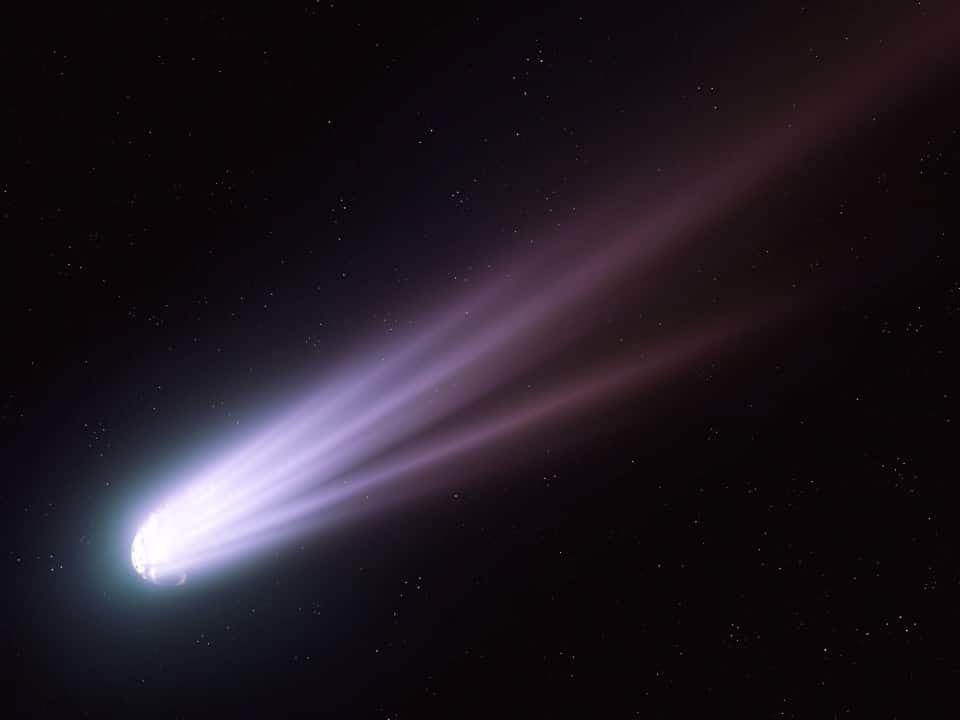
Observatório Astronômico Kamiyama, linked to Universidade Kyoto Sangyo, confirmed significant discoveries about the chemical nature of the interstellar object 3I/ATLAS. Observations carried out between the end of November and the beginning of December 2025 indicate that this celestial body has an ice composition different from comets originating in our solar system. The study was conducted with the aid of the 1.3-meter Telescópio Araki and the LOSA/F2 spectrograph, allowing a detailed analysis of the visible light emitted by the star coming from outside our stellar neighborhood.
The data collected revealed that, although the initial spectrum of 3I/ATLAS resembles that of local comets, there is an extreme deficiency of ammonia (NH₃) molecules in its structure. The Esta feature sets the interstellar object apart from nearly all living fossils mapped in the vicinity of Sol since the formation of the solar system 4.6 billion years ago. The detection was possible through the analysis of NH₂ molecules, which result from the decomposition of ammonia by the ultraviolet radiation emitted by our star.
Technical analysis and discovery of chemical components in space
The observation sessions captured emissions from molecules such as CN, C2 and C3, as well as oxygen atoms, elements that are recurrent in comets known to science. The process of photodissociation, where sunlight breaks down the original core molecules, allowed researchers to identify the lack of specific nitrogenous components in 3I/ATLAS. Esta absence suggests that the environment in which this comet formed, in a distant star system, has chemical and thermal conditions very different from ours.
The research had the fundamental participation of students from Escola of Pós-Graduation in Ciências of the university, highlighting the role of the academic Akira Tsujimoto in collecting and processing data. The involvement of young researchers in global-scale projects reinforces Instituto Kamiyama’s commitment to cutting-edge scientific training and the exploration of new horizons. Detailed results will soon be published in the journal The Astrophysical Journal Letters, from Sociedade Astronômica Americana.
Object trajectory and international astronomical monitoring
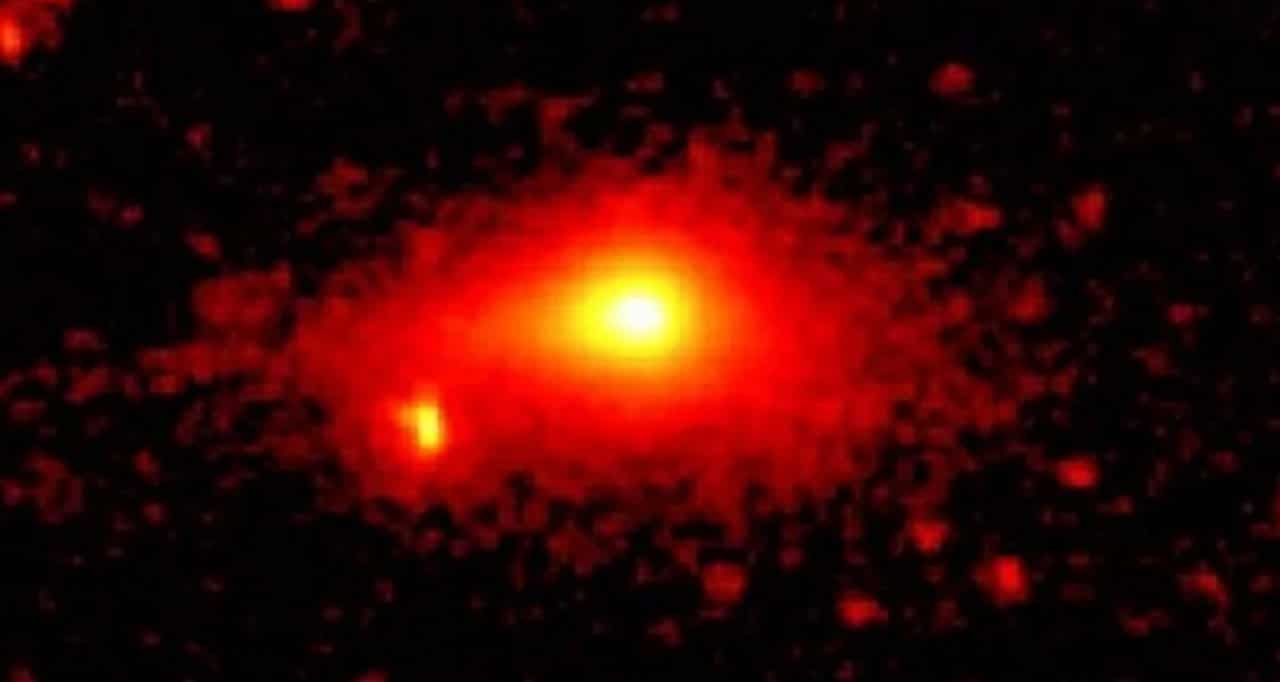
Comet 3I/ATLAS is the third object from outside the solar system to be officially confirmed, following in the historical footsteps of 1I/ʻOumuamua and 2I/Borisov. Ele reached its perihelion, the point of greatest proximity to Sol, on October 29, 2025, and then began its definitive exit into deep space. At this distance, visibility conditions were ideal for the low-dispersion spectrograph to capture the light signature of the heated core.
- The object was originally discovered in July 2025 by global monitoring systems.
- The team used Telescópio Araki to obtain data for three consecutive nights on Japão.
- The spectral resolution made it possible to distinguish gas and dust emissions with nanometric precision.
- The ground-based observations were complemented by preliminary data from NASA space telescopes.
Academic leadership and new perspectives for Instituto Kamiyama
The publication of these results occurs at a time of strategic transition for the educational institution, which is preparing for changes in its management. Astronomer Junichi Watanabe is set to take over as director of Instituto Kamiyama from Ciências Espaciais and
The arrival of the new director coincides with the international recognition of the university’s technological infrastructure in the field of astrophysics. The success in characterizing 3I/ATLAS demonstrates that academic facilities can compete on an equal level with large global space research centers. The goal now is to expand the detection network to capture new galactic visitors that cross Earth’s orbit annually.
Environmental differences in star systems of remote origin
The scarcity of ammonia in 3I/ATLAS raises hypotheses about the temperature and density of the gas cloud where the comet was formed billions of years ago. In our solar system, ammonia is a common volatile component, preserved in ice since the early days of giant planet formation. The absence of this compound in the interstellar visitor indicates that its home system may have undergone more intense heating or radiation processes than ours.
Importance of living fossils for understanding stellar evolution
Comets are considered time capsules that preserve the original chemistry of the protostellar nebula from which they emerged in the remote past. When analyzing an object like 3I/ATLAS, astronomers are, in effect, looking into the past of another sun and another planetary history. The lack of ammonia suggests that the thermal history of this foreign system followed a different path from that in our common protoplanetary disk.
Financing methodology and support for scientific research
The development of this study was possible thanks to financial support from government agencies and grants to aid scientific research in different categories. Esses resources guarantee the maintenance of sensitive equipment and the possibility of carrying out long-term observations during rare and unpredictable astronomical events. Technological collaboration also played a key technical role in supporting observations and data analysis.
Measurements taken at Observatório Kamiyama were validated by rigorous comparisons with the local night sky, ensuring that atmospheric interference was eliminated. Este methodological rigor ensures that the observed chemical deficiency is an intrinsic characteristic of the object and not an instrumental reading error. The discovery paves the way for new mathematical models about the evolution of celestial bodies in galaxies far from our own.



