
JWST reveals universe’s most distant jellyfish galaxy at 8.5 billion years old by University of Waterloo

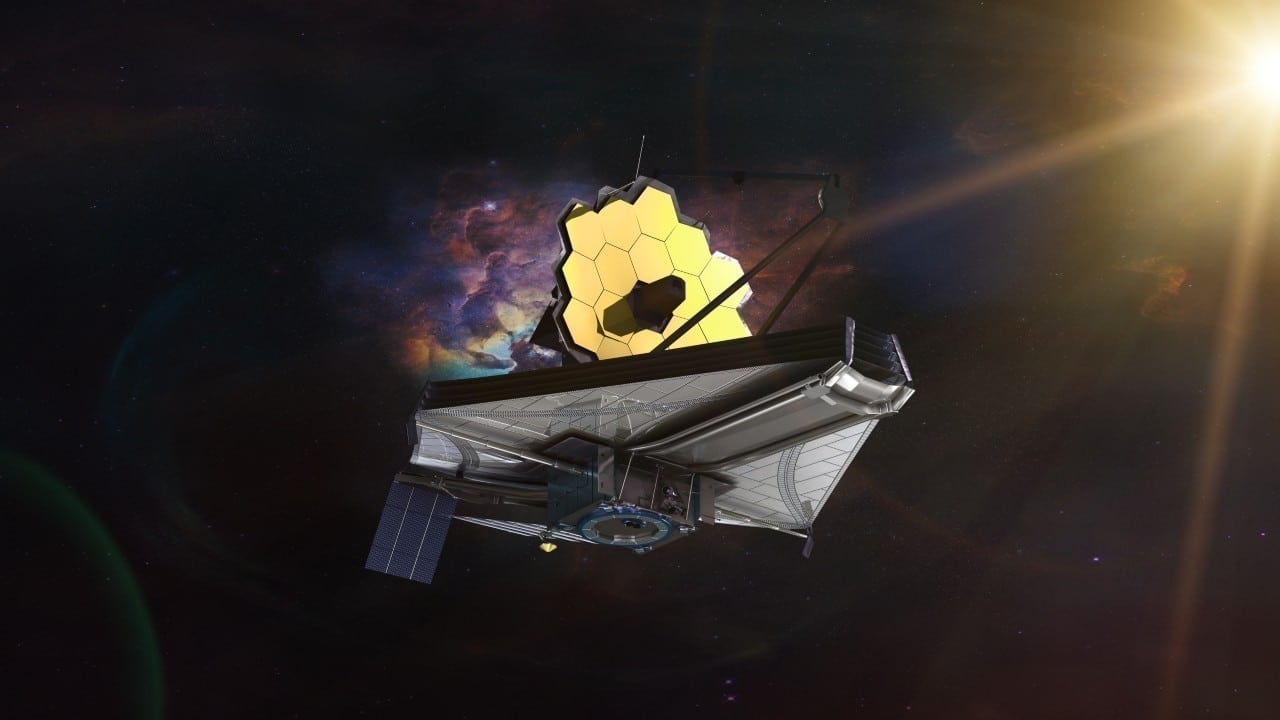
Astrophysicists at Universidade of Waterloo have announced the identification of a jellyfish galaxy that stands as the most distant ever recorded. The observation took place through data collected by Telescópio Espacial James Webb. The cosmic object dates back to a period of 8.5 billion years ago in the universe.
The galaxy displays long, tentacle-like bands of gas that stretch tens of thousands of light-years. Esse format results from the detachment process due to impact pressure. The discovery expands the understanding of how dense environments affect early galactic structures.
Scientists are now planning additional analyzes of the object’s chemical composition and internal movement. The team requests extra observation time on the same telescope. The finding indicates that hostile conditions in the cosmos emerged earlier than previous models predicted.
Details of the observation carried out with the James Webb telescope
The researchers analyzed a vast set of images and spectra obtained by JWST. The galaxy showed a redshift of z equal to 1.156. Esse value confirms that the light traveled exactly 8.5 billion years to reach the detectors.
The fingerprint of the structure immediately appeared during the review of ancient regions of space. The Dr. Ian Roberts, postdoctoral researcher at Centro of Astrofísica of Waterloo, led the initial analysis. The surprise was immediate because no previous record indicated a similar existence at this distance.
Have you ever heard of the jellyfish galaxy?
—Stephane Werner (@stephanevw)October 25, 2020
These galaxies interact with the plasma that is in the galaxy clusters and end up leaving a trail of gas with the formation of stars (in blue). Esse trail makes them resemble jellyfish.pic.twitter.com/fi9jcsvGye
Challenges to previous simulations of galactic evolution
Theoretical models indicated that galaxy clusters did not yet have enough mass to generate impact pressure 8.5 billion years ago. The presence of this jellyfish galaxy directly contradicts these predictions. The cosmic environment proved hostile much earlier than expected.
The discovery forces experts to recalibrate simulations of large-scale structure formation. Aglomerados primitives turn out to be more dynamic and capable of intense interactions. JWST data provide observational evidence that now guides new theoretical formulations.
Typical tentacular structure of jellyfish galaxies
Jellyfish galaxies constitute rare objects in the universe. Elas are so named because of the long tails of ionized gas that extend behind the main core.
The phenomenon occurs when a galaxy falls into a dense cluster and loses material due to ram pressure. The bands of gas can reach tens of thousands of light years in length.
This specific configuration appears only in environments where interaction with the intracluster environment is intense. The newly discovered galaxy exhibits exactly these features in its preserved form.
The central core holds stars and stellar material while the tails stretch backwards.
Request for additional observations by the Canadian team
The team led by Dr. Ian Roberts submitted a formal request for additional time on Telescópio Espacial James Webb. The researchers intend to map the chemical structure with greater precision. Eles also seek to measure internal velocities and gas composition in the tails.
The new data will make it possible to compare this galaxy with others of the same type observed closer. The analysis will help understand how the stripping process evolves over cosmic time. Preliminary results already indicate that the impact pressure acted efficiently even in remote times.
Context of impact pressure in the early cosmic environment
Bump pressure arises when a galaxy moves at high speed through the hot gas that fills the clusters. Esse intracluster medium removes cold gas and star-forming clouds from the infalling galaxy. The result is the formation of the characteristic tails that give the medusa type its name.
In recent times in the universe, this mechanism was already well documented in observations of nearby galaxies. However, the detection of a complete galaxy with this morphology 8.5 billion years away demonstrates that primitive clusters already reached sufficient densities and masses to produce the effect. Astronomers are now reevaluating the pace of maturation of these large cosmic groupings. The evidence suggests that the early turbulent universe favored faster and more intense interactions than previously assumed.
Immediate galaxy identification in the dataset
The galaxy appeared clearly upon first inspection of the JWST archives. Researchers searched ancient regions of space for unusual objects. The tentacular structure immediately caught attention due to its distinctive shape.
The record represents the most distant entity of its kind in the history of astronomy. The discovery consolidates the role of the telescope as an instrument capable of revealing unexpected phenomena in ancient times.



