
New hypothesis indicates that a space object may have used the Sun as a gravitational slingshot

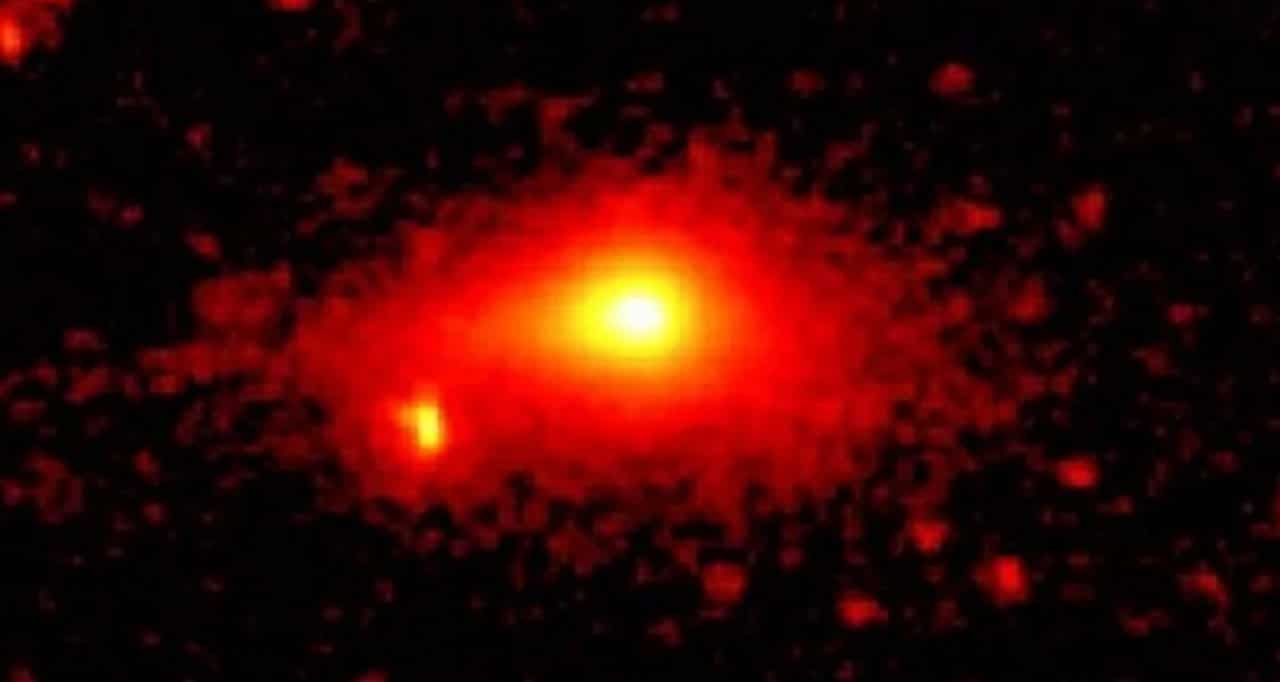
The passage of the celestial body 3I/ATLAS close to the central star of our system generated intense debates among researchers and theoretical physicists. Durante a specific interval in October, the object achieved a precise geometric alignment with Sol, which prevented its direct observation from telescopes based on Terra. Esse period of instrumental “blindness” coincided with the critical moment of its orbital trajectory.
Experts from Universidade of Harvard, led by physicist Avi Loeb, raised the possibility that this positioning was not random. The theory suggests that the occultation may have served to mask a complex orbital maneuver, known in spaceflight dynamics, precisely at the moment of closest approach to the star.

The alignment occurred eight days before perihelion, the point where the object reaches its maximum speed and is closest to the solar gravitational field. The coincidence between the loss of visibility and the ideal moment for acceleration raises questions about the nature of the interstellar visitor.
The astronomical community is now reviewing the orbital data to understand whether there has been a change in speed or direction that cannot be explained by passive gravitational interaction alone. Confirmation of any anomaly could redefine the understanding of objects that cross our system.
Strategic Concealment and Solar Alignment
The phenomenon observed on October 21st created a window of invisibility that lasted more than a week. Durante At this time, the intense brightness of Sol overshadowed any attempt at visual or radiometric tracking of 3I/ATLAS from a terrestrial perspective. Esse type of alignment is natural in celestial mechanics, but its exact occurrence before perihelion is the focus of the new hypothesis.
For an observer at Terra, the object disappeared precisely when the physical forces acting on it were most extreme. If there was any intention to carry out a course change without being detected, this would be the ideal scenario, providing natural cover against the continuous monitoring that is carried out by space agencies and independent observatories.
Orbital mechanics and the Oberth maneuver
The maneuver cited by scientists, called the Oberth effect, is a fundamental principle in modern astronautics. Ela establishes that a space vehicle gains more kinetic energy when activating its thrusters when traveling at high speed, which occurs at the lowest point of its orbit, close to the massive body it orbits.
By applying thrust at perihelion, the efficiency of the fuel or energy used is multiplied exponentially. In the context of 3I/ATLAS, the application of this technique would allow:
– A substantial gain in the final exit speed of the Sistema Solar.
– Alterações significant in the trajectory with lower energy expenditure.
– Aproveitamento maximum gravitational “help” provided by the mass of Sol.
– Otimização of resources in case of an alleged artificial origin.
If the object were a probe or ship, diving deep into the gravity well of Sol and accelerating at the right time would be the most efficient way to travel between the stars. The physics behind this maneuver is well understood and regularly used in human missions to reach outer planets.
Energy potential and recharge capacity
In addition to the gravitational advantage, the proximity to the star exposed 3I/ATLAS to extreme levels of radiation and thermal energy. On October 29, during closest approach, calculations indicate that the object received an energy load of more than 33 gigawatts.
This amount of energy is colossal, comparable to a significant fraction of the electrical production of large industrialized nations. Para a natural object, such as a comet or asteroid, this would only result in surface heating and release of gases. However, for a technological artifact, it would represent a unique resupply opportunity.
The hypothesis raised by Loeb considers that advanced systems could harvest this radiation to power batteries, thrusters or communication systems. The combination of energy recharge with the acceleration maneuver would make perihelion the most important moment of the entire passage through the system.
Monitoring and searching for anomalies
Validation of these theories now depends on observing the behavior of the object as it moves away from Sol. The exit trajectory is being accurately mapped to detect non-gravitational deviations. Corpos natural celestial bodies follow predictable paths dictated by the laws of Kepler and the influence of the larger planets.
Any extra acceleration, known as non-gravitational acceleration, that cannot be attributed to outgassing (common in comets), would be a strong indication of propulsion or artificial manipulation. The history of previous interstellar objects has already shown anomalous behavior, which keeps scientific vigilance on high alert.
The high-power telescopes remain pointed at the estimated 3I/ATLAS coordinates. Cada new data collected helps refine mathematical models and determine whether we are dealing with an exotic space rock or something that defies conventional astrophysics explanations.



