
Spanish PM warns against Trump’s ‘Russian roulette’ in the Middle East and cutting ties

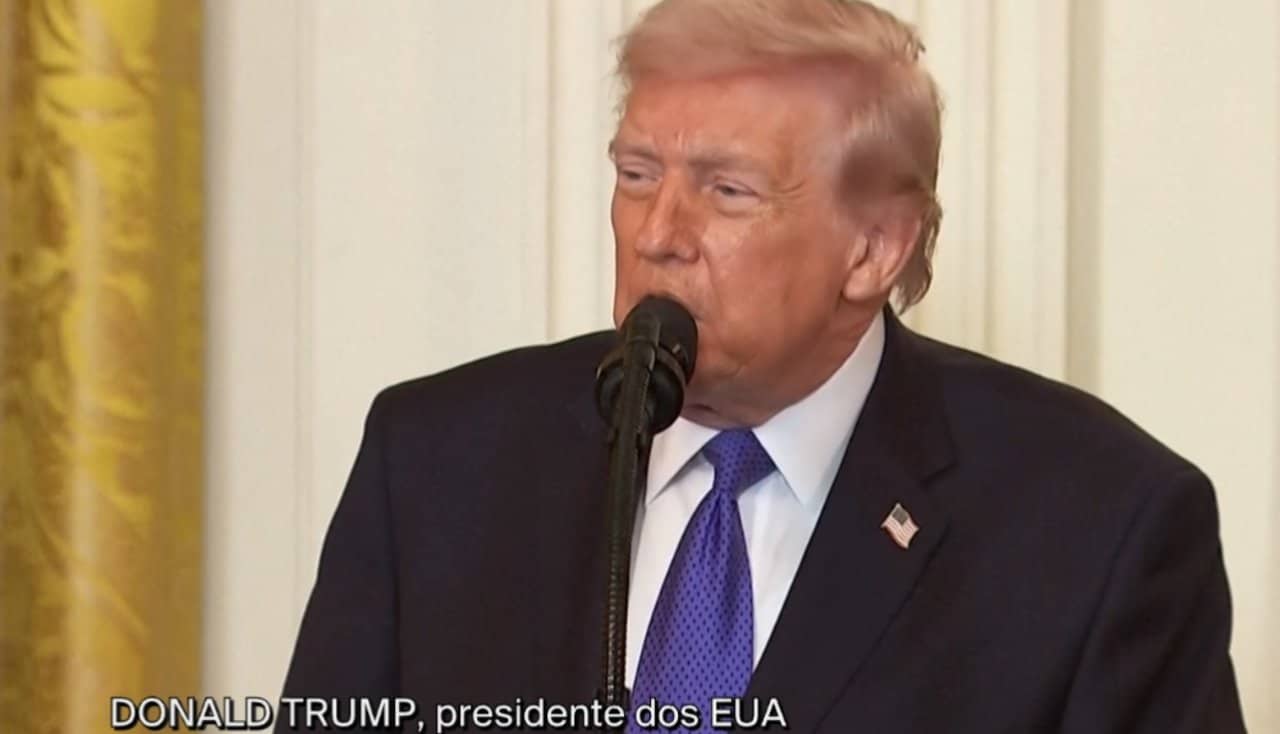
The Prime Minister of the Espanha, Pedro Sánchez, declared this Wednesday that the president of the Estados Unidos, Madri’s firm stance underlines that Espanha will not become complicit in US actions, not even under the pressure of possible trade retaliation. The public condemnation comes at a time of escalating tensions, with significant implications for global diplomacy and transatlantic relations.
The Spanish rebuke came after Donald Trump threatened to cut trade relations with Espanha, a decision motivated by the European country’s refusal to allow the use of its military bases for attacks against Irã. Este impasse exposes fissures in the Western alliance, calling into question the principles of national sovereignty and international law, especially in scenarios of armed conflict.
The União Europeia, in turn, expressed unrestricted support for the Espanha, reinforcing the stance that the Estados Unidos must adhere to the norms of international law and bilateral trade agreements that govern relations with the bloc. The threat and counter-threat scenario highlights the complexity of current geopolitical dynamics, where the use of military force and economic retaliation can have far-reaching consequences.
Spanish position and criticism of “Russian roulette”
The Spanish government, led by Pedro Sánchez, demonstrated an intransigent position regarding the use of its territory for the military offensive of the Estados Unidos against the Irã. The denial of the use of naval and air bases in the south of Espanha to launch attacks was justified by concern about the worsening regional crisis and global instability. Madri argues that such permission would place the country in a position of co-participation in actions that it considers reckless and contrary to international law.
The “Russian roulette” metaphor used by Espanha reinforces its commitment to peace and diplomatic conflict resolution, distancing itself from any initiative that could precipitate a humanitarian catastrophe or intensify violence.
Washington trade retaliation and European defense
Donald Trump was quick to respond to the Spanish refusal, announcing its intention to cut off all commercial relations with Espanha. Essa trade threat, directed at a long-time ally in Organização of Tratado of Atlântico Norte (NATO), raises questions about solidarity within the bloc and mutual respect between nations. The Estados Unidos decision, if implemented, could have serious economic repercussions for both sides, changing the balance of supply chains and existing trade agreements.
Comissão Europeia promptly intervened in defense of Madri, declaring itself “ready” to protect the interests of União Europeia. Essa manifestation of solidarity reinforces the bloc’s unity in the face of external pressure and highlights the importance of Estados Unidos respecting the rules of international law and bilateral trade agreements established with the EU. The European position highlights the primacy of diplomacy and multilateralism in the management of international relations.
Historical precedents and the anti-blood vision of Madri
The Spanish Prime Minister invoked the “negative side effects of Guerra of Iraque” as a clear warning about the possible consequences of the current offensive against Irã. Ele recalled that past conflicts resulted in a rise in jihadist terrorism and soaring energy prices, arguing that history offers valuable lessons that cannot be ignored. The memory of these historical events serves to support Madri’s prudence.
Sánchez expressed the “position of the Spanish government can be summarized in three words: ‘No to war'”. Essa categorical statement reiterates pacifism as a pillar of Spanish foreign policy, highlighting the belief that violence and bombings are not viable solutions to complex global challenges.
Espanha reaffirmed that it will not be complicit in actions that it considers harmful to the world and contrary to its fundamental values and interests. The decision to resist pressure, even in the face of threats of reprisal, demonstrates firmness in defending moral and strategic principles.
The Spanish government maintains that military escalation will not lead to a fairer or more stable international order. Pelo On the contrary, it is feared that violence will only create more instability and suffer unpredictable repercussions across the geopolitical scenario, affecting the security and well-being of populations in different parts of the globe.
Trump toughens his speech on the use of military bases
Donald Trump, in an interview on Casa Branca, reiterated the US intention to cut all commercial relations with Espanha, justifying the measure by Madri’s refusal to authorize the use of its military bases for attacks on Irã. The statement highlighted the American leader’s frustration with the Spanish position and his perception of disrespect for his military authority.
Trump’s statement that the US could “just fly in and use” the bases, regardless of Spanish permission, generated strong international controversy. Essa statement openly challenges the principles of national sovereignty and diplomatic agreements that govern the use of military installations on foreign territory, increasing bilateral tension.
Actions against Irã and the US perception of success
Durante made the same statement, Donald Trump addressed the offensive against the Irã, stating that “everything was destroyed” in the Persian country and that the Estados Unidos are “very well” in their operations. Essa optimistic assessment of the situation on the battlefield contrasts with international concerns about the escalation of the conflict and its consequences.
The American president mentioned “another attack on the new leadership”, referring to the bombing of the Assembleia building of the Peritos, the body responsible for choosing the next supreme leader of the Irã. Trump expressed the desire to see someone “better” take power, indicating a strategy of pressure for regime change in the country.
Além Furthermore, Trump condemned the Iranian government, accusing Teerã of attacking civilians and countries that “have nothing to do with what is happening”, targeting only “civilian installations”. Essa narrative seeks to justify American and Israeli actions, while simultaneously discrediting Iranian conduct in the conflict.
Iranian warning: economic reprisals in the East
In response to the Israel and Estados Unidos bombings of the Irã, a general from the Iranian Guarda Revolucionária, Ele warned that if the attacks continue, Oriente Médio’s “all economic centers” will become targets of Iranian retaliation, raising the level of threat to vital infrastructure in the region.
The severity of the warning was complemented by the mention of Estreito of Ormuz, a crucial sea route for global oil transport. Jabari stated that the strait had been closed, directly impacting the price of a barrel of oil, which had already exceeded 80 dollars and, according to him, “will soon reach 200 dollars”, signaling a potential global energy crisis.
Impact on the oil market and regional instability
The tension in the Oriente Médio and the threats of interruption in oil supplies were quickly reflected in international markets. The barrel of Brent, a global reference, surpassed 85 dollars for the first time in months, demonstrating the sector’s sensitivity to geopolitical events in the region. The prospect of an escalation in the Iranian conflict raises uncertainty about price stability.
The potential projection of a barrel of oil reaching 200 dollars highlights the risk of a collapse in energy security and the serious economic consequence that an expanded war in Oriente Médio could entail. Além of the direct costs of the conflict, the volatility of oil prices affects global economies, generating inflation and slowing growth in several countries dependent on the commodity.



