
Study details plan to reach interstellar object 3I/ATLAS scheduled for launch in 2035

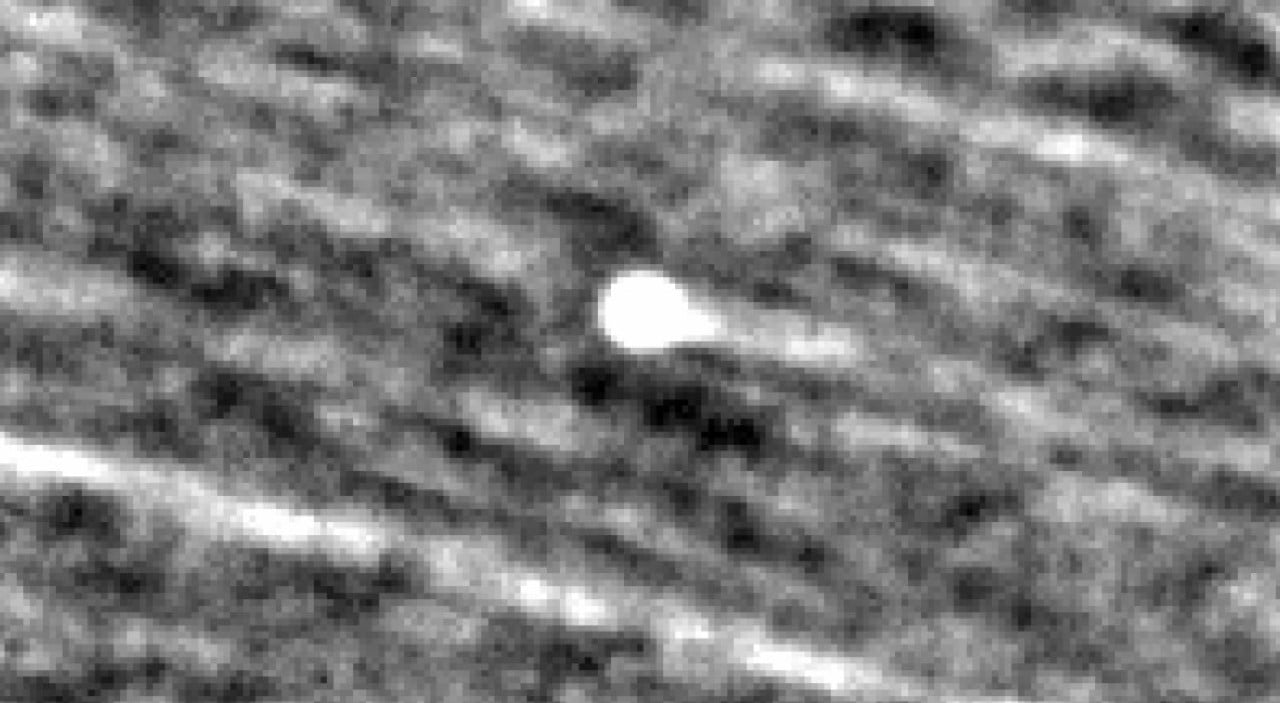
Aerospace researchers are developing a complex strategy to intercept the 3I/ATLAS object, identified as the third interstellar visitor to cross Sistema Solar. The high speed of the celestial body, calculated at more than 60 km/s, added to its extremely inclined orbit, makes any attempt at orbital docking or direct interception with currently available propulsion technology unfeasible. Diante In this challenging scenario, the scientific community focuses its efforts on a single viable alternative: a high-speed flyover.
The proposed mission depends on a specific launch window and flawless execution of gravitational maneuvers. The main objective is to collect invaluable scientific data during a brief passage close to the comet, allowing the study of materials originating outside our planetary system. Para For this to be possible, the spacecraft will need to perform a sequence of precise alignments over several decades, requiring long-term planning rarely seen in the history of space exploration.

The celestial body was originally detected in July 2025 by the ATLAS monitoring system, located in the southern hemisphere. Sua passage through perihelion occurred in October of the same year, reaching a distance of 1.4 Unidades Astronômicas from Sol. Desde then, terrestrial and space telescopes have monitored its trajectory, confirming intense cometary activity, with the release of gases such as methane, carbon dioxide and water vapor, characteristics that reinforce its interstellar origin.
Orbital analyzes indicate that the ideal opportunity for the mission to begin will be in 2035. Nesta date, planetary alignments will allow the necessary thrust to place the probe on the correct route. The complexity of the operation requires that each stage be completed with mathematical rigor, as any minimal deviation at the beginning of the journey would result in a separation of millions of kilometers at the time predicted for the meeting, decades in the future.
Trajectory strategy and gravitational maneuvers
The flight plan drawn up by scientists establishes an orbital choreography that begins with the launch of Terra towards Júpiter. The immense gravity of the gas giant will be used for the first gravitational assistance, changing the probe’s route and redirecting it back into the interior of Sistema Solar. Essa step is crucial to gaining the kinetic energy needed for subsequent phases of the journey.
After passing through Júpiter, the spacecraft will perform a dangerous dive towards Sol. At the point of closest approach to the star, known as perihelion, the main engines will be activated to execute the Oberth maneuver. Esse procedimento físico aproveita a velocidade máxima atingida no ponto mais baixo da órbita para maximizar a eficiência da queima de combustível, gerando um ganho de velocidade heliocêntrica impossível de ser obtido apenas com foguetes convencionais.
The resulting escape trajectory will project the probe into the outer regions of the system, placing it on a calculated collision course with 3I/ATLAS. The encounter is expected to occur between the years 2070 and 2085. The margin of error for the dates of passage through Júpiter and Sol is practically non-existent, requiring millimeter precision in interplanetary navigation.
Thermal barriers and equipment protection
One of the biggest engineering obstacles to the mission is the need for solar approximation. Para perform the Oberth maneuver efficiently, the probe will need to withstand extreme temperatures, which requires the installation of a high-performance thermal shield. Esse component is vital to guarantee the integrity of the electronic systems and scientific instruments on board, preventing intense heat from rendering the spacecraft unusable even before it begins its final journey towards the comet.
The inclusion of a robust heat shield has direct consequences for the mission design, especially in terms of weight. The considerable increase in the probe’s total mass reduces the volume available for other essential components such as propellant and scientific payload. Engenheiros and scientists face the dilemma of balancing necessary protection with observation capabilities, forcing rigorous choices about which instruments can be shipped.
Limitations in scientific instrumentation
Due to mass constraints imposed by the heat shield and fuel, the scientific instrument package will be selected strategically. The project envisages the use of high-resolution cameras, essential for recording the morphology of the comet’s nucleus, as well as spectrometers operating in the infrared and ultraviolet bands. Detectores of dust and particles are also expected to analyze the immediate environment around the object.
Operation of these instruments will occur in extremely short time windows during the high-speed flyby. The goal is to capture as much information as possible about the chemical composition, surface structure and emission of volatile materials. To mitigate the risk of failures during this critical time, automatic observation sequences and redundant systems will be implemented, ensuring that data is collected and transmitted even if partial problems occur.
Challenges of longevity and knowledge management
The duration of the mission represents an unprecedented organizational and technological challenge. Studies indicate that the most efficient trajectory will require a total flight time of between 35 and 50 years. Missões with lower durations were discarded, as they would not be able to overcome the difference in relative speed necessary to reach the target. Isso means that the probe launched in the middle of the next decade will only deliver its main results in the second half of the century.
Maintaining equipment operating in the harsh environment of space for so many decades requires exceptionally durable hardware. The materials used in the construction of the ship will need to be highly resistant to cosmic radiation, and the energy systems, probably based on nuclear sources, must guarantee a stable supply for half a century. Além of engineering, there is the human challenge: ensuring continuous funding and preservation of technical and scientific knowledge over several generations of researchers.
Scientific relevance and data refinement
The 3I/ATLAS interception offers a unique opportunity to study the physical and chemical processes of another stellar system “in situ.” The volatile-rich composition and activity observed after passing through perihelion in 2025 suggest that the object originated in a distinct region of the early solar nebula. Comparar this data with current knowledge about local comets and asteroids could revolutionize the understanding of the formation of planetary systems.
Currently, continuous monitoring carried out by telescopes such as the Nórdico Óptico and other space instruments is fundamental to the future success of the mission. Essas observations constantly refine data about the object’s position and speed, reducing the margins of error in trajectory simulations. With each new measurement, the reliability of the 2035 launch window increases, allowing fine adjustments in planning that could define the success or failure of this ambitious interstellar undertaking.



