
Unprecedented mission projects probe launch in 2035 to reach interstellar object in the far reaches of space

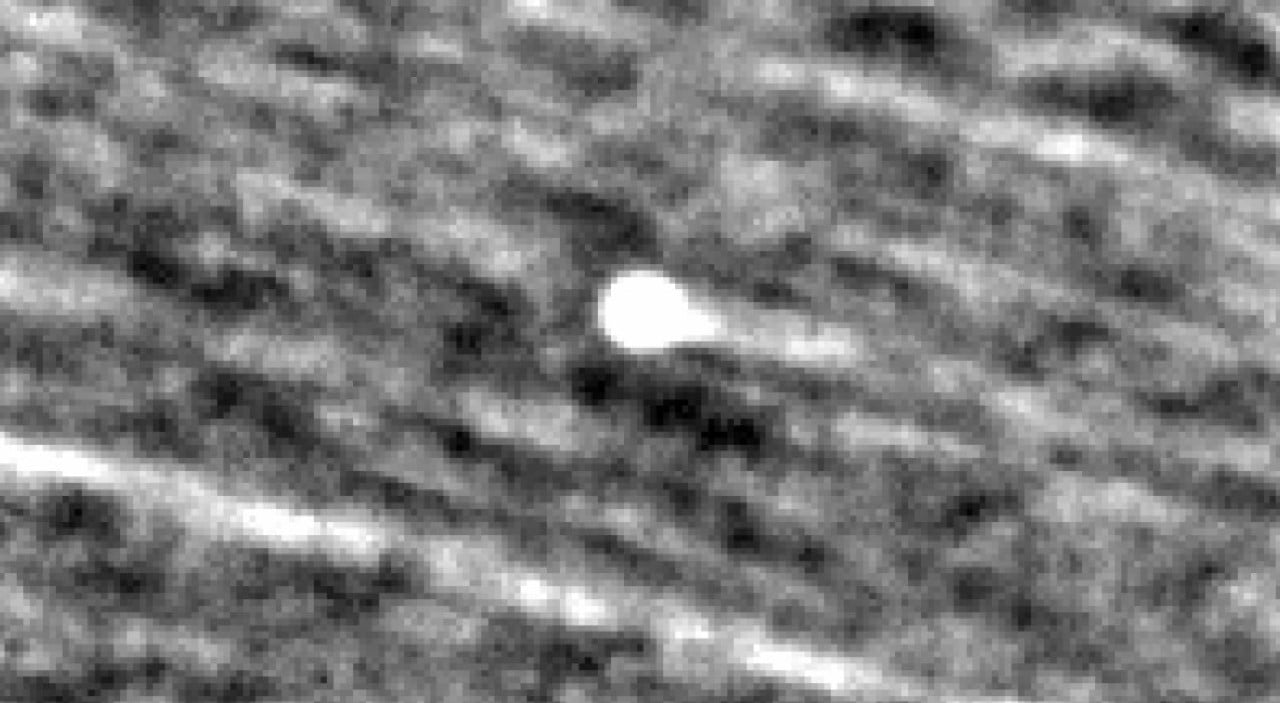
Aerospace researchers are developing an ambitious strategy to study the celestial body 3I/ATLAS, identified as the third interstellar visitor to cross our system. The initiative aims to overcome the limitations of current propulsion technologies, which make smooth docking or entry into orbit impossible due to the object’s extreme speed. The central plan involves the development of a high-speed kinetic impactor designed to intercept the target in a mission that challenges the limits of modern engineering.
The object, which was initially detected by the ATLAS monitoring system in the southern hemisphere in July 2025, passed through perihelion in October of the same year, approaching 1.4 astronomical units from Sol. Desde then, ground-based and space telescopes have tracked its trajectory, confirming volatile activities and the release of gases such as methane and diatomic carbon. The calculated speed of the celestial body exceeds 60 kilometers per second, which requires an unconventional approach to exploration, discarding traditional methods of space rendezvous.

To make it possible to reach the object, the ideal launch window was calculated for the year 2035. The mission will depend on complex gravitational maneuvers and a path that will require the probe to withstand extreme temperatures. Orbital physics dictates that, to gain the kinetic energy necessary to pursue such a fast target, the vehicle will need to make passes close to Sol, using the Oberth effect to maximize its final acceleration towards deep space.
The complexity of the operation lies not only in the speed, but also in the duration and resistance of the materials. Diferente of conventional missions lasting a few years, this project is a multigenerational effort, with interception expected to occur hundreds of astronomical units from Terra. Data collection will depend on the scheduled collision, which will allow analyzing the internal composition of the object through the debris generated by the impact.
Technical challenges and thermal protection
Successful execution of this mission requires significant advances in thermal protection. Para perform the solar gravitational assistance maneuver, the probe will need a high-performance thermal shield, capable of withstanding the intense heat during its approach to the star. Este component is vital to ensuring the integrity of onboard electronic systems and scientific instruments, which would be rendered useless without a robust barrier against radiation and high temperatures.
In addition to heat protection, probe autonomy is a critical factor. Como the mission will extend over decades, traveling to regions where sunlight is insufficient to generate energy, the use of nuclear sources, such as radioisotope thermoelectric generators, will be indispensable. The longevity of communications and data processing equipment will also need to be ensured, ensuring that the spacecraft remains operational until the crucial moment of rendezvous with 3I/ATLAS.
Navigation accuracy is another hurdle to overcome. Pequenos deviations from the initial trajectory can result in errors of millions of kilometers after decades of travel. Therefore, autonomous navigation systems and course corrections based on stellar observations will be essential to keep the impactor on the correct route, allowing fine adjustments as the probe moves away from the inner solar system.
Extended timeline and scientific legacy
Projections indicate that the interception of the object will occur between 2070 and 2085, making this one of the longest missions ever conceived. The long delay between launch and arrival at the target means that the scientists who designed the spacecraft are unlikely to be on the job when the data is finally transmitted. Isso requires rigorous planning to preserve knowledge and communication infrastructure on the ground.
The expected scientific impact is immeasurable. Upon colliding with 3I/ATLAS, the probe will release materials from its surface and subsurface, allowing instruments to analyze the chemical composition of an object formed in another star system. Essas information could offer unprecedented clues about the formation of other planetary systems and the distribution of organic matter in the galaxy.
The mission represents a fundamental step in human ability to interact with interstellar objects. The success of this endeavor will not only provide valuable data on the nature of these cosmic visitors, but will also validate long-duration propulsion and navigation technologies, paving the way for future explorations beyond the boundaries of our solar system.



