

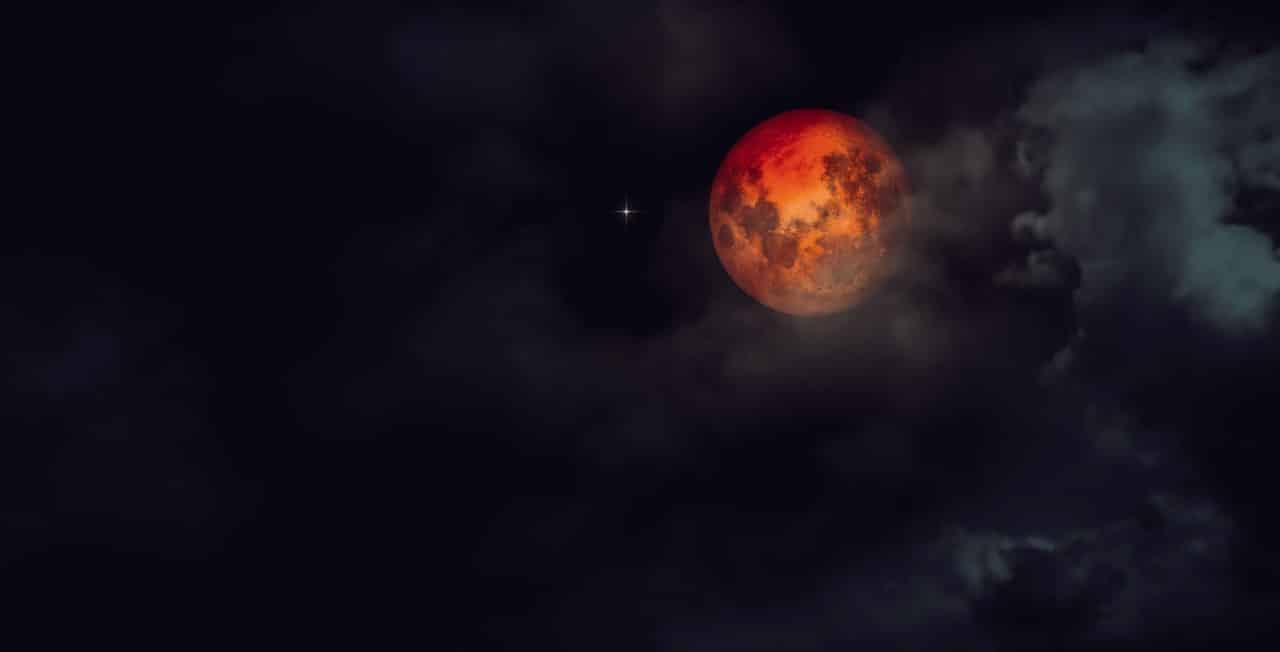
A unique celestial spectacle captivated observers in several regions of Japão on the night of March 3, 2026, when a total lunar eclipse transformed the full moon into a copper-red disk. The phenomenon, which coincided with the celebration of Hinamatsuri, Dia of Meninas, marked a rare opportunity for the Japanese population to witness an astronomical event of such magnitude.
Apesar the presence of a low pressure system that brought rain and snow to several parts of the archipelago, certain areas were fortunate to enjoy clear skies, allowing perfect visibility of the eclipse. Localidades like Hokkaido, Chugoku, Shikoku, Kyushu and Okinawa were privileged, offering unobstructed views of the moon’s transition through the shadow of
Este event was particularly notable not only for its beauty but also for its infrequency. Para astronomy enthusiasts and the general public at
The astronomical phenomenon and its rarity
A total lunar eclipse is an astronomical event that occurs when Terra is positioned directly between Sol and Lua, casting its complete shadow on the natural satellite. Durante this precise alignment, sunlight is blocked from reaching Lua directly, but some of it can be filtered and refracted by the Earth’s atmosphere, reaching the lunar surface and giving it a color that varies from orange to copper-red.
Essa’s peculiar hue, often referred to as a “blood moon,” is due to the same physical principle that causes the reddish sunset on Terra, known as Rayleigh scattering. Blue light waves are dispersed more intensely by the Earth’s atmosphere, while red light waves can pass through more easily, projecting onto the Lua.
The occurrence of a total lunar eclipse visible from a specific region of the planet is not a daily event. Although lunar eclipses occur with some regularity each year on a global scale, the visibility of a total eclipse in a given location depends on several geographic factors and the lunar orbit, which gives the March 2026 event an extra layer of exclusivity for Japanese observers.
The anticipation and expectation surrounding such events are palpable, mobilizing communities, amateur and professional astronomers, as well as attracting the attention of the media and the general public, all eager to capture or simply contemplate the beauty and grandeur of these celestial spectacles.
Observation details in the archipelago
Apesar of the initial projections of unstable weather, specific regions of the Japão enjoyed exceptional visibility of the total lunar eclipse. The atmospheric circulation, although it brought a low pressure system that resulted in precipitation across much of the country, ensured that areas such as northern Hokkaido, western Honshu (Chugoku), Shikoku, Kyushu and the islands of Okinawa had predominantly clear skies.
Essa clarity allowed residents and visitors to these locations to position their telescopes, binoculars or simply look at the sky with the naked eye, witnessing the fascinating process of Lua gradually changing its color. Muitos Photographic records and videos were shared, documenting the phases of the eclipse, from the beginning of twilight to totality and the subsequent recovery of lunar luminosity.
Characteristics of the red moon
The copper-red coloration of Lua during a total eclipse is one of the most striking and intriguing aspects of the phenomenon. Essa hue is not a mere whim, but rather a direct consequence of the way sunlight interacts with the atmosphere of Terra. Quando to Lua enters the shadow of Terra, the light from Sol that reaches it must pass through the Earth’s atmosphere. Durante this passage, the particles and gases present in the atmosphere disperse shorter wave colors, such as blue and violet, more efficiently. Longer wavelength colors, such as red and orange, can penetrate with less dispersion and are refracted, bending into Terra’s shadow and ultimately reaching the lunar surface. The intensity of red can vary depending on the amount of dust and clouds present in the atmosphere of Terra at that time, making each total eclipse a slightly different and unpredictable spectacle in its color nuance.
Weather conditions during the event
The observation of astronomical events such as eclipses is always subject to meteorological conditions. In the case of the March 2026 total lunar eclipse, a low pressure system had established south of Honshu, the largest island in Japão, generating broad areas of rain and snow. Tal scenario typically compromises the visibility of any celestial object, covering the sky with a dense layer of clouds.
Contudo, atmospheric dynamics in some regions, especially at the edges of the low pressure system, resulted in openings in the sky. Esses pockets of clean air formed in a localized manner, providing windows of opportunity for observers.
Apesar of the general severe weather forecast, enthusiasts in Hokkaido, Chugoku, Shikoku, Kyushu and Essa particularity highlighted the unpredictability of the climate and the luck of the residents of these areas.
Preparation for such events often includes constant monitoring of weather forecasts for the best observation chances, which was crucial to successful eclipse viewing in parts of Japão.
Understanding lunar eclipses
A lunar eclipse invariably occurs during the full moon phase, when the Sol, Terra and Lua align almost perfectly in space. Terra, positioned in the center of this alignment, projects its shadow on the natural satellite, which crosses this dark region. There are three main types of lunar eclipses: penumbral, partial and total, the latter being the most dramatic and visually impactful.
In a penumbral eclipse, Lua passes only through the outermost and least dense part of the Earth’s shadow, called the penumbra, resulting in a subtle darkening that is often imperceptible to the casual observer. Já in partial eclipse, a part of Lua enters the umbra, the darkest and central part of the shadow, while the rest remains in the penumbra or outside it, presenting a darkened “piece” of
A total eclipse, like the one observed in March 2026, is when the entire Lua plunges into the umbra of Terra, providing the characteristic reddish color due to the refraction of sunlight by the Earth’s atmosphere. While lunar eclipses are relatively common events on a global scale, the chance of observing a total eclipse from a specific location is less frequent, which increases the value of each occurrence.
The date of Hinamatsuri and the eclipse
The March 3, 2026, total lunar eclipse took on additional significance as it coincided with Hinamatsuri, or Dia of Meninas, a traditional Japanese celebration. Nesta date, families celebrate their daughters’ health and happiness by displaying ornate dolls on special platforms.
The observation of a phenomenon as grand as a total lunar eclipse on the same night as such a beloved and symbolic festival created an even more magical and memorable atmosphere for those who were able to witness it, uniting cultural tradition and astronomical spectacle in a single moment.
Projections for future celestial events
Após the memorable observation of the total lunar eclipse in March 2026, astronomy enthusiasts at Japão are already awaiting the next big opportunity. The next event of similar visibility in the country is scheduled for January 1, 2029, offering a new chance to contemplate the majesty of a total lunar eclipse and continue the rich tradition of celestial observation that unites science and popular wonder.