
Analysis of interstellar comet surprises scientists with lack of ammonia and indicates mysterious origin

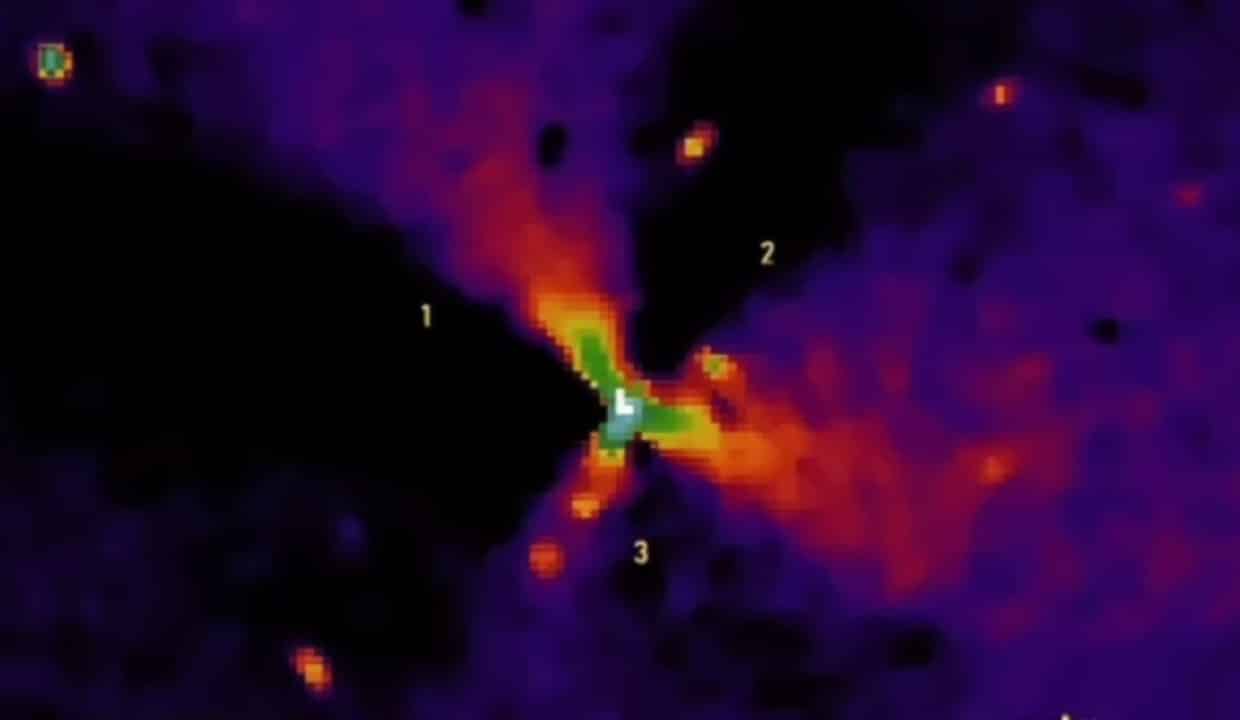
An investigation conducted by researchers at Universidade Kyoto Sangyo has revealed unprecedented chemical characteristics in a cosmic visitor that crossed the solar system. Detailed observations of the object, identified as 3I/ATLAS, indicate a significant absence of ammonia in its structure, which points to its formation in a galactic environment with exotic conditions different from those that gave rise to the known celestial bodies in our planetary neighborhood.
The scientific team used Telescópio Araki, located at Observatório Astronômico Koyama, to monitor the passage of the celestial body. Data collection took place strategically between the end of November and the beginning of December, shortly after the object reached its closest approach to Sol. Esta observation window was crucial, as solar heat causes the sublimation of surface ices, releasing gases that can be analyzed using spectroscopy to determine the molecular composition of the nucleus.

Discoveries about chemical composition
The results of the spectral analysis showed the clear presence of cyanogen and carbon chains, common elements in comets. However, the chemical signature corresponding to the NH2 molecule, which derives from the breakdown of ammonia by sunlight, was found at extremely low levels. Esta scarcity suggests that 3I/ATLAS formed in a region of space where nitrogen in the form of ammonia was rare or non-existent, drastically differentiating it from the chemistry observed in the comets orbiting our Sol.
This particularity places 3I/ATLAS in a category of its own when compared to other previously detected interstellar visitors, such as Oumuamua and comet Borisov. Enquanto o
Technology and scientific impact
To obtain this precise data, astronomers employed the LOSA/F2 low-resolution spectrograph, attached to the 1.3-meter telescope. The high sensitivity of the equipment allowed it to capture the faint light of the object even when it was already moving away from Terra. The ability to perform fast and accurate analysis on targets of opportunity like this is fundamental to modern astronomy, as these celestial bodies cross the solar system at high speeds and remain visible for short periods.
The study, which will be published in The Astrophysical Journal Letters, not only documents the third confirmed detection of an interstellar object, but also validates theoretical models about the formation of stellar systems. The research highlights the importance of monitoring the sky for these distant travelers, as each of them brings with them a physical sample of regions of the galaxy that humanity cannot yet reach directly, functioning as cosmic time capsules.



