
ESA’s Juice probe reveals detailed images of interstellar comet 3I/ATLAS in deep space

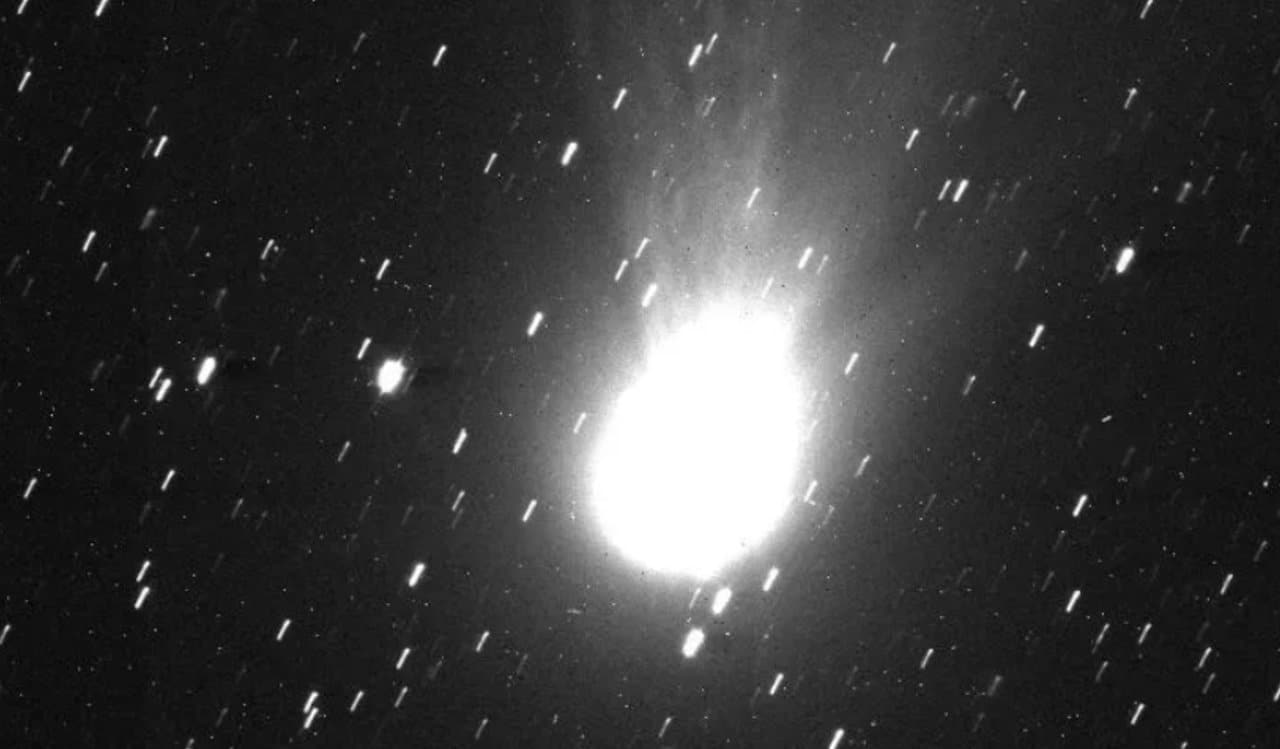
Agência Espacial Europeia (ESA) has released an unprecedented set of more than 120 images of the interstellar comet 3I/ATLAS, captured by the Juice spacecraft’s advanced JANUS science camera. The observations, carried out in November 2025, provide the most detailed look yet at a cosmic object originating from outside our solar system.
Essas revelations allow scientists to examine the comet’s complex structure, offering valuable clues about its formation and the environment from which it came. The Juice mission, on its journey towards Júpiter and its icy moons, took advantage of a rare opportunity to unravel the mysteries of this cosmic visitor.
Analysis of these captures promises to deepen understanding of the fundamental ingredients of life in the universe. Comet 3I/ATLAS, with its interstellar nature, represents a time capsule of other regions of Via Láctea, bringing with it crucial information for contemporary astrophysics.
Breakthrough in interstellar comet observation
ESA’s Juice probe, developed to explore Júpiter and its enigmatic icy moons, carried out a sequence of observations of comet 3I/ATLAS on November 6, 2025. Utilizando the JANUS scientific camera, the spacecraft managed to record in a wealth of detail never before seen the structure and behavior of the comet as it passed close to Sol. Este event represents a milestone in space exploration, as it offers a unique window into the study of objects that formed in other star systems.
The new images surpass previous captures, taken with the Juice navigation camera, designed mainly for probe guidance. With JANUS, researchers obtained higher-resolution data across a wider range of wavelengths, allowing them to identify subtle features in the comet’s coma and tail. The ability to direct scientific instruments at 3I/ATLAS as it approached Sol allowed astronomers to study the expulsion of dust and gas, revealing dynamics essential to understanding cometary evolution.
Composition and structure details
The developed images of comet 3I/ATLAS exposed a bright halo of gas around its head, a phenomenon known as coma. Essa dense cloud of sublimated material is an indication of the intense activity of the comet as it is heated by solar radiation. A long, imposing tail was also captured, displaying beams, jets, currents and filaments stretching millions of kilometers into space.
Cientistas are analyzing these jets to infer the rotation of the comet’s nucleus and the distribution of its gas and dust sources. The presence of these complex structures offers an overview of the volatile composition of 3I/ATLAS, suggesting the existence of a variety of ices and organic materials that have been preserved since its primordial formation. Detecting elements such as water, carbon dioxide and other complex molecules can provide insights into the building blocks of life in different regions of the galaxy.
Probe Juice: primary mission and celestial deviations
The Juice probe was launched with the main mission of investigating the Galilean moons of Júpiter – Ganimedes, Europa and Calisto – searching for subsurface oceans that could harbor conditions for life. The presence of a liquid ocean beneath the frozen crust of some of these moons makes them prime targets in the search for extraterrestrial life. Juice’s journey to the gas giant offers a unique opportunity to observe various astronomical phenomena along the way.
The 3I/ATLAS observation was a strategic detour on the probe’s route, highlighting the versatility of its scientific capabilities. At the time of capturing the most recent images, Juice was approximately 66 million kilometers away from the comet. Essa distance allowed a unique perspective of the object, complementing observations made by ground-based and space-based telescopes. The ability to perform observations of unexpected celestial objects adds a layer of flexibility and discovery potential to Juice’s core mission.
Scientific methodology and instruments
Para To obtain the vast amount of information about 3I/ATLAS, the Juice probe employed five of its scientific instruments. JANUS, the scientific camera, was responsible for capturing more than 120 images across a wide range of wavelengths, revealing the comet’s morphological characteristics. Além In addition, the MAJIS (visible and infrared imaging spectrometer) and UVS (ultraviolet spectrometer) instruments collected spectrometric data, which uses light to determine the chemical composition of the comet.
SWI (submillimeter and radio waves) collected information about the composition of specific gases, while PEP (particles and plasmas) recorded data on the charged particles and plasma fields around the comet. Após observations, Juice was on the opposite side of Sol in relation to Terra, a position that protected the probe from excessive heat, but delayed data transmission. The scientific teams waited until the end of February to receive and begin full processing of the 3I/ATLAS information.
The rarity of cosmic visitors
Comet 3I/ATLAS is notable not only for its beauty and activity, but mainly for its origin. Classificado as an interstellar comet, it formed outside the boundaries of our Sistema Solar, in another region of Via Láctea. Sua passage through our cosmic neighborhood is a rare event, which makes it one of the few objects of this type ever identified by science. The analysis of its trajectory and composition offers clues about the conditions of planetary and cometary formation in distant star systems.
Acredita 3I/ATLAS is believed to be older than Sol itself, carrying with it primordial material from an era long before the formation of our system. Sua detection, on July 1, 2025, opened new avenues for astronomical research, allowing the direct study of raw material from other stars. The opportunity to observe an interstellar comet with a probe already on mission represents a significant advance in astrophysics, connecting our solar system to other parts of our galaxy.
New perspectives in space research
The study of comet 3I/ATLAS by the Juice probe not only expands our knowledge of interstellar comets, but also demonstrates the technological capacity of space missions to adapt their objectives and capture valuable data on unexpected phenomena. The information collected continues to be analyzed by dedicated scientific teams, and more discoveries are expected to be announced in the coming months. Essas observations provide a foundation for future missions and studies focused on the origin and evolution of our universe.
The findings contribute to a broader understanding of how interstellar matter is distributed and how planetary systems form in different galactic environments. Comet 3I/ATLAS, a messenger from distant worlds, continues to intrigue scientists with its unique journey and the secrets it may yet reveal about the cosmos.




