India beats England in a duel with record points and guarantees a place in the T20 World Cup final
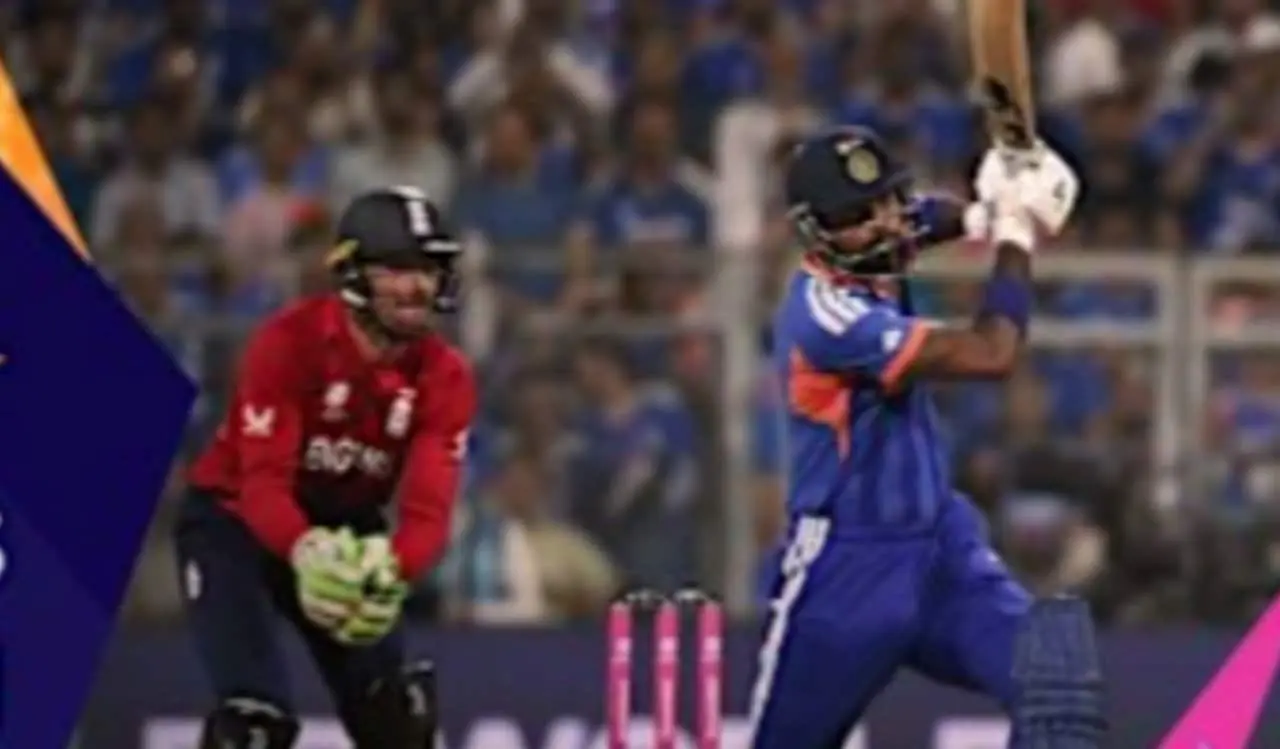
The Estádio Wankhede witnessed a definitive chapter in the history of international cricket this Thursday, March 5, with the Índia team securing their qualification for the Copa and Mundo T20 grand finals. In a match that defied the sport’s conventional statistics, the hosts overcame Inglaterra by a narrow seven-run margin. The match was characterized by absolute dominance of the batsmen over the bowlers, resulting in a combined score that set new benchmarks for high-level competitions.
The Indian victory was built on an overwhelming offensive performance, which allowed the team to successfully defend a massive total in the face of an equally aggressive English response. The public present witnessed a display of technique and strength that kept the result open until the last moments, consolidating Índia as a dominant force capable of resisting pressure in decisive moments of the tournament.
Battle of attacks and unprecedented scoring
The first half of the game saw Índia set a monumental target as they ended their appearance with 253 runs for 7 wickets. Esta score not only put immense pressure on the opponents, but also established itself as one of the highest scores ever recorded in a World Cup knockout stage. The Indians’ offensive strategy worked from the beginning, exploring the dimensions of the field and capitalizing on every scoring opportunity.
Faced with a scenario that required a near-perfect conversion rate, Inglaterra responded bravely, reaching a total of 246-7. Under normal circumstances, such a score would be enough to guarantee a comfortable victory, but the atypical nature of this duel turned the feat into an honorable defeat. England’s chase for the score demonstrated the tactical evolution of the T20 format, where scoring barriers previously considered unattainable are now regularly challenged.
The sum of the scores of both teams resulted in the game with the highest number of runs in the history of the tournament. The mutual aggressiveness was evident in the “sixes” statistic, with Índia alone recording 19 hits outside the boundary, a number that illustrates the difficulty faced by defenses in containing the batsmen’s momentum on a night where the attack prevailed.
English resistance and individual performance
Despite the elimination, Inglaterra had outstanding individual performances that maintained the hope of a historic turnaround until the end. Jacob Bethell led the British resistance with a performance that combined technical precision and daring, taking it upon himself to maintain the run rate required to challenge the Indian total. Sua ability to find spaces in the opponent’s defense was fundamental in taking the game to the limit.
Leia Também



The final moments of the match were marked by palpable tension, with Jofra Archer making a dramatic final effort. The English player connected three consecutive “sixes” in the last valid balls, reducing the final difference to just seven runs. Although the late effort was not enough to reverse the score, it underlined the competitiveness of the match and the minimal margin that separated the two giants of the sport in this semi-final.
Impact on sport statistics
The confrontation at Wankhede served to rewrite several negative defensive records for both nations. Tanto to The match goes down in the annals of sport as a clear example of the offensive “explosion” that has characterized the current cycle of world cricket.
Now classified, Índia turns its attention to preparing for the final, taking with it the confidence of having won a fiery test, but also the awareness of the need for defensive adjustments after giving up so many runs. Para to