
New engine and suspension adjustments raise the level of the medium pickup truck manufactured in Argentina


The automotive industry is closely following Stellantis’s strategy to consolidate its presence in the utility vehicle segment. The reformulation of the Titano line, now assembled in the Córdoba industrial complex, represents a direct response to consumer demands for more power and comfort. By replacing the old 2.2 BlueHDi engine, the manufacturer is betting on a robust mechanical package already known in the national market to face historical competitors. Essa industrial movement not only changes the production logistics, previously based on the Uruguai, but also redefines the vehicle’s technical capabilities.
The changes implemented aim to correct aspects that were the subject of critical observations shortly after the initial launch of the model in Brasil. With the introduction of a new powertrain and extensive recalibration of the undercarriage systems, the pickup aims to offer a more refined driving experience. The objective is clear: to deliver a product that combines the robustness necessary for heavy work with the level of comfort required by urban and recreational users.
Mechanical evolution and performance
The center of attention in this update is the adoption of the 2.2 turbodiesel Multijet engine. Este engine, which already equips other large vehicles in the group, now delivers 200 hp at 3,500 rpm. Torque also received a significant increase, reaching 45.9 kgfm at 1,500 rpm. In practice, these numbers represent a gain of 20 hp and more than 5 kgfm compared to the previous engine, allowing the vehicle to have more agile responses when overtaking and regaining speed.
To accommodate the new engine in a longitudinal position, engineering had to make important structural modifications to the chassis. Specific Coxins were developed by Brazilian suppliers to mitigate vibrations, ensuring that the extra force does not translate into discomfort in the cabin. Official data indicates acceleration from 0 to 100 km/h in 9.9 seconds, a mark that positions the model competitively against rivals equipped with similar engines.
In addition to brute strength, energy efficiency and durability were priorities in the development of this new set. Mechanical integration required fine adjustments to ensure that superior performance did not compromise autonomy, keeping the vehicle in line with the segment’s operating cost expectations.
New transmission and off-road capability
Engine power management now goes through an eight-speed automatic transmission, supplied by ZF. Esta gearbox replaces the previous six-speed system in the most complete versions, providing smoother shifts and a scaling that favors both economy at cruising speed and torque delivery at low revs. Para the entry-level version, the six-speed manual option remained, focused on strictly commercial use.
The 4×4 traction system, essential for the category, features reduced speed and rear differential lock in all configurations. Testes practical tests demonstrated that the new electronic calibration eliminated the delay in the system’s responses, allowing the vehicle to overcome obstacles with greater ease. The towing capacity remains robust, being able to pull up to 3,500 kg, which reinforces its vocation for agribusiness and heavy services.
Comfort and driving dynamics
One of the most sensitive points of the previous version was the behavior of the suspension, often classified as excessively rigid or unstable on uneven surfaces. The brand’s engineering team dedicated considerable efforts to reversing this situation. Foram installed new springs with adjusted compression, shock absorbers with optimized stroke and reinforced bushings that better isolate the cabin from imperfections in the ground.
The result of these changes is a quieter and more controlled ride. The effect of excessive body sway, common in pickup trucks when empty, has been drastically reduced. Agora, the vehicle can absorb potholes and speed bumps with a competence similar to that of market leaders, making long journeys less tiring for driver and passengers.
Technology and security assistants
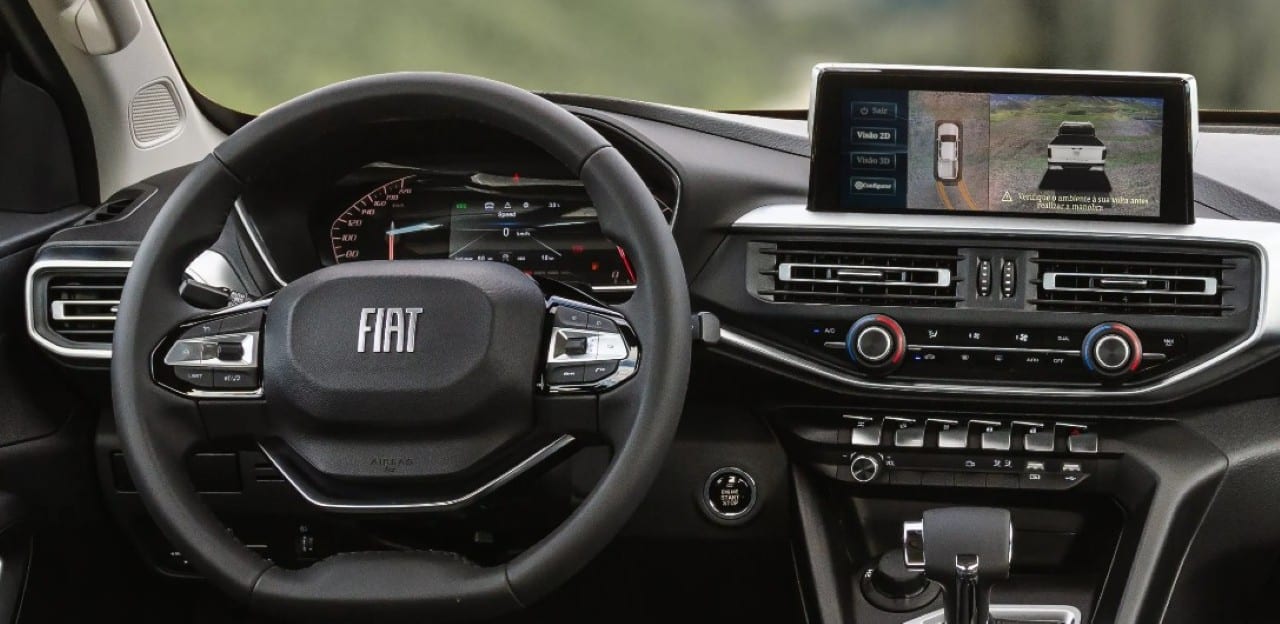
The model update also brought a denser technological package, especially in the top-of-the-line version. The highlight is the advanced driving assistance systems (ADAS). The vehicle now offers adaptive cruise control, autonomous emergency braking and blind spot monitoring, features controlled by radars and sensors integrated into the front design. The steering, which abandoned hydraulic assistance in favor of an electrical system, now offers greater precision and lightness in urban maneuvers, in addition to contributing to safety at high speeds.
Market and production scenario
The transfer of the assembly line to Argentina is part of the KP1 project, which received millionaire investments to transform the Córdoba plant into a pickup truck export hub for América Latina. Essa strategic change allows for greater flexibility in production and facilitates distribution logistics for the region’s main markets.
With prices ranging between R$233,990 and R$285,990, the model has undergone adjustments that reflect the increase in technology and performance. Embora has lost part of its initial price advantage, the brand is betting on the cost-benefit ratio of new equipment and the discount policy for direct sales as tools to maintain competitiveness in the face of consolidated opponents such as Toyota Hilux and Chevrolet S10.



