
Passage of interstellar comet by Jupiter changes trajectory and mobilizes space probes for analysis


The rare object 3I/ATLAS, confirmed as the third interstellar visitor in history, reaches a critical point in its journey through the solar system this month. Identificado by NASA’s warning system last year, the celestial body makes a strategic approach to the planet Júpiter, an event that will modify its orbit due to the intense gravitational forces involved before its definitive departure into deep space.
Dynamics of the gravitational encounter
According to the most recent orbital calculations, the moment of closest approach occurs on March 16, 2026. The comet will pass at an estimated distance of 0.355 astronomical units from the gas giant. Neste interval, the object enters the so-called sphere of Hill of
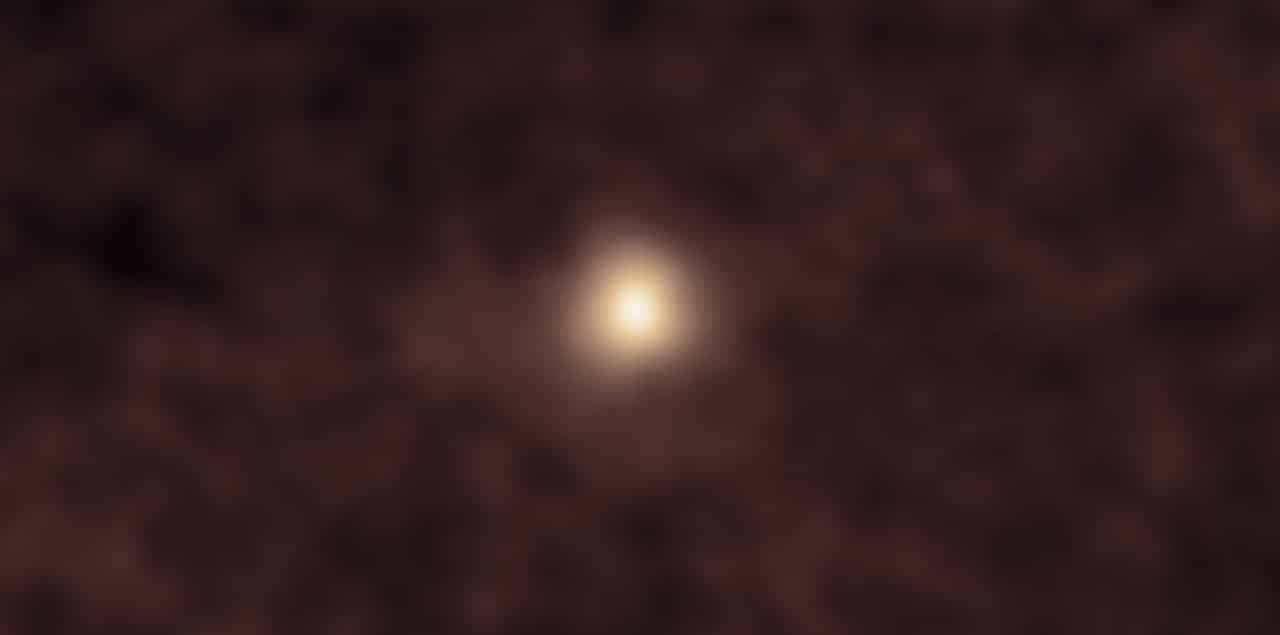
3I/ATLAS travels at an impressive speed of 58 km/s on a hyperbolic trajectory, which confirms that it is not gravitationally tied to our star. The interaction with Júpiter works as a natural gravitational assist, slightly altering the comet’s exit vector. Modelos Mathematicians indicate that, after this involuntary maneuver, the visitor will head towards the constellations of Cão Maior and Popa, never returning to the vicinity of Terra.
Monitoring by active probes
The temporal coincidence of the comet’s passage allows for a unique opportunity for on-site observation. NASA’s Juno probe, which has been orbiting Júpiter since 2016, is in a prime position to collect data. The ideal observation window extends until March 22, allowing the spacecraft’s instruments to capture information about the composition and dynamic behavior of this interstellar traveler.
Previously, the JUICE mission, from Agência Espacial Europeia (ESA), had already contributed to the characterization of the object. Imagens captured in November 2025 revealed faint cometary activity, essential to confirm its nature and distinguish 3I/ATLAS from common asteroids. Combining data from these two missions gives astronomers a detailed profile of the formation of celestial bodies in other star systems.
Origin and scientific context
3I/ATLAS joins ‘Oumuamua and comet 2I/Borisov in the restricted group of confirmed objects that originated outside our solar system. Analysis of its trajectory suggests that it comes from the galactic disk of Via Láctea, differing chemically from comets formed in clouds of young stars. Estudar these objects is fundamental to understanding organic chemistry and the distribution of materials in the galaxy.
It is important to emphasize that the comet’s passage does not pose any risk of collision with Terra or the main planets. Sua route maintains a safe distance, serving only as a passing laboratory for modern astrophysics before disappearing again into the darkness of interstellar space.



