
Registration at INPI reveals definitive look of Fiat’s new hatch with hybrid system and modern base

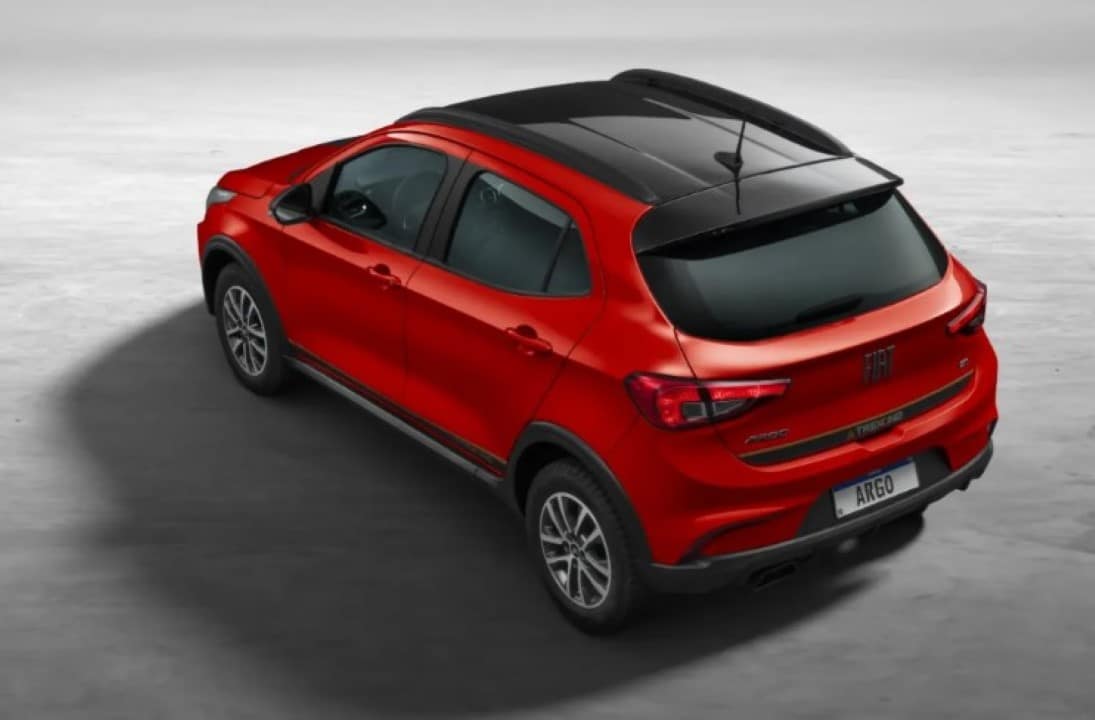
The Instituto Nacional by Propriedade Industrial made public the industrial designs that confirm the lines of the Italian automaker’s next bet for the Brazilian market. The approved documentation reveals a vehicle with a revitalized aesthetic, abandoning the smooth curves of the previous generation in favor of a more straight and robust profile. The project, handled internally under the F1H code, represents a crucial strategic step for the manufacturer, which celebrates five decades of operation in the country in 2026 and seeks to consolidate its leadership in the compact segment.
The images revealed detail a model that shares visual DNA with the European Grande Panda, but with engineering and design solutions exclusive to the reality of the América of the Sul. The front features an optical set with a signature pixel, a global trend that gives the car modernity and technological appeal. The front grille, more vertical, integrates with the headlights in a fluid way, creating an imposing visual identity that reminds us of the brand’s SUVs, although it maintains the proportions of a hatch.

The vehicle is expected to reach dealerships in the second half of this year, marking a new phase in the renewal of the company’s portfolio. The launch strategy coincides with a moment of growth in the sector, where the demand for more efficient and connected vehicles has dictated the rules of competition. Production will be concentrated in Polo Automotivo of Betim, in Minas Gerais, a unit that received massive investments to modernize assembly lines and implement new modular platforms.
Automotive market experts believe that the radical change in design is not just aesthetic, but functional. The squarer lines allow better use of internal space, a common criticism of current compact hatchbacks. Além In addition, the simplification of side stampings, visible in the records, suggests an optimization in production processes, which can result in lower maintenance costs for the end consumer and greater competitiveness in direct sales and to fleet owners.
Technical architecture and expanded dimensions
The backbone of this new project is the Smart Car platform, a modular architecture already established within the Stellantis group and used in models such as the Citroën C3. The choice for this technical basis is not random; it allows for superior constructive flexibility and the integration of state-of-the-art electronic components. With a wheelbase estimated at 2.54 meters, the new base promises to solve the legroom equation in the rear seat, offering more comfort for the occupants.
In terms of overall dimensions, the hatch should show discreet growth, but significant for habitability. The total length should be approximately 3.99 meters, while the width will be around 1.75 meters. The height, slightly increased to 1.57 meters, reinforces the proposal of a car prepared to face the uneven pavement of Brazilian cities, without necessarily classifying itself as a sports utility vehicle. The trunk also benefits from this new geometry, with increased volume to meet family needs.
The torsional rigidity of the Smart Car platform is another highlight. Testes carried out with prototypes indicate that the structure is capable of absorbing impacts more efficiently, raising passive safety standards. The architecture also facilitates the installation of driving assistance systems, which will become standard items in several versions, anticipating future requirements of national traffic legislation.
Mechanical evolution and energy efficiency
Under the hood, the big news lies in the light electrification of the powertrain. The more sophisticated versions of the model will feature a 12-volt micro-hybrid system coupled to the Turbo 200 engine. It is the brand’s response to the increasingly stringent environmental standards of the Proconve program.
For the entry-level configurations, intended for large sales volumes, the automaker will maintain the renowned 1.0 Firefly aspirated engine. Este propellant, known for its robustness and low maintenance cost, delivers up to 75 horsepower. The focus here is the urban economy, serving app drivers and corporate fleets that prioritize the cost per kilometer driven. The engine calibration was refined to ensure agility in heavy metropolis traffic.
Transmission options will follow current market logic. The five-speed manual transmission will equip the naturally aspirated versions, offering precise engagement and durability. Já the turbo and hybrid variants will receive the CVT automatic transmission, which simulates seven speeds. Esse gearbox is praised for its ride comfort and its ability to always keep the engine in the ideal speed range, optimizing both performance and energy efficiency on roads.
Technological interior and connectivity
The cabin of the new hatch will undergo a digital revolution. The analog instrument panel will give way to configurable screens in more complete versions, allowing the driver to personalize the information displayed. The floating multimedia center, with a screen measuring up to 10 inches, will be the vehicle’s command center, offering wireless mirroring for smartphones via Android Auto and Apple CarPlay, eliminating the need for cables hanging from the console.
Active safety will also receive a considerable upgrade. The equipment package will include autonomous emergency braking, lane change alert and tire pressure monitoring. The presence of six airbags – front, side and curtain – will be standardized across a large part of the range, aiming to obtain maximum marks in the Latin NCAP crash tests. The seat structure has been redesigned to offer better ergonomic support on long journeys.
In terms of finishing, the automaker focuses on textures and materials that increase the perception of quality, even using rigid plastics. The use of sustainable and easy-to-clean fabrics in the coverings demonstrates concern for durability in daily use. Acoustic insulation has also been improved, reducing the intrusion of wind and rolling noise into the cabin, a critical point in vehicles in this segment.
Market positioning and competition
The arrival of this new model reconfigures the brand’s commercial strategy in the Brasil. The current hatch will not be discontinued immediately; it should be repositioned as an entry-level option, possibly renamed, to fill the gap left by old popular cars. The new vehicle, in turn, will aim for the top of the segment, competing directly with consolidated rivals such as the Volkswagen Polo,
The price list must reflect this technological evolution. Embora official values have not yet been released, it is estimated that the initial versions will start from a competitive level to attract consumers looking for their first new car. The top-of-the-line configurations, packed with technology, will compete with customers who, in other times, would migrate to entry-level compact SUVs, offering a superior equipment package for a similar price.
Local production in Betim is a logistical asset. The proximity to the supplier base and the nationalization of components guarantee agility in the replacement of parts and shield the model, in part, from exchange rate fluctuations that affect imported vehicles or those with a low localization index. Exports to neighboring countries of América Latina, such as Argentina and Colômbia, are also in the plans, reinforcing the role of Brasil as the company’s export hub.
Differences in relation to the European model
Although the inspiration in Grande Panda is evident, the Brazilian model has its own identity. Adaptations for the local market go beyond the raised suspension. The design of the doors, for example, is cleaner, without the complex creases and side protection bumps seen in the European version. Essa decisão visa não apenas a estética, mas a redução de custos de funilaria em caso de pequenos acidentes, uma preocupação constante do consumidor brasileiro.
The color palette will also be distinct. Enquanto at Europa the focus is on vibrant tones and exotic combinations, at Brasil the offer should focus on more sober and commercial colors, with some standout options for the launch versions. The interior also follows a more conservative and functional logic, adapted to the tropical climate, with high-capacity air conditioning systems and materials resistant to intense sunlight.
The rear lid of the national model adopts an exclusive design, integrating the lights in a more conventional way to facilitate opening and closing. The rear bumper is more robust, designed to better resist impacts common during parking maneuvers. Essas nuances demonstrate the engineering care in tropicalizing the project, ensuring that the car is not just a copy, but a product tailored to local needs.
Sustainability and the future of mobility
The launch of this vehicle is part of a larger context of decarbonization of the national fleet. The bet on flex hybrid technology is seen as the ideal bridge to total electrification in a country of continental dimensions like Brasil. By allowing the use of ethanol in conjunction with electrical assistance, the model offers one of the lowest carbon footprints on the market, even surpassing some electric vehicles recharged with energy from non-renewable sources.
The Betim factory is also advancing its sustainability goals, with production processes that use less water and energy. The supply chain is being engaged to reduce waste and increase the use of recycled materials in vehicle components. The new hatch, therefore, was born with the responsibility of being an ambassador of these environmental practices, proving that it is possible to combine mass production with ecological responsibility.
With the official revelation by INPI, the countdown to launch intensifies. Protótipos camouflaged vehicles are already undergoing final durability tests in various regions of the country, validating the latest calibration adjustments. Expectations are high, and the market is waiting to see if the bold design and mechanical innovation will be enough to keep the brand at the top of the sales rankings for the next few years.



