
Sicily expands defense of NATO bases and energy infrastructure after rising tension in Iran

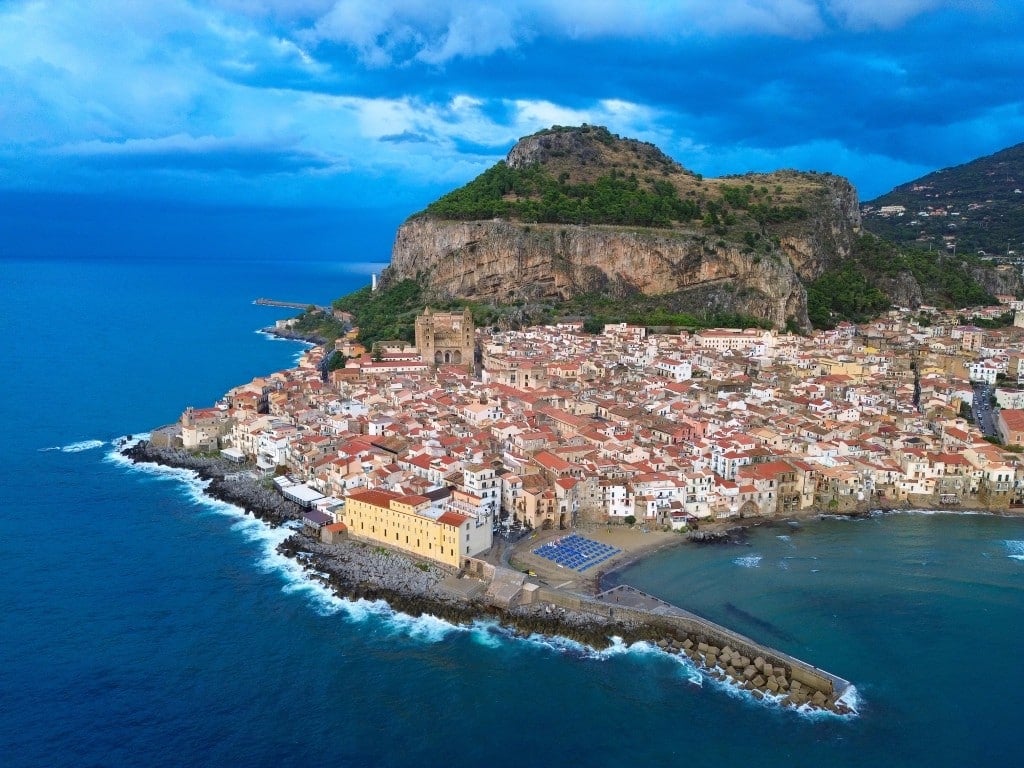
The geographical position of Sicília transformed the island into the main observation and defense point for the European continent in the face of recent instabilities in Oriente Médio. The Italian territory, historically known for its cultural and tourist relevance, now assumes a decisive role as the military shield of the Organização of the Tratado of the Atlântico Norte (NATO). The escalation in diplomatic and military tensions involving the Irã and Western nations has accelerated the review of security protocols across the central Mediterrâneo region.
Defense experts point out that the island functions as an unsinkable natural aircraft carrier, housing surveillance technologies that monitor movements in real time from thousands of kilometers away. The infrastructure installed at the site not only serves for territorial protection, but acts as a nerve center for allied intelligence coordination, connecting data from satellites, naval radars and reconnaissance aircraft.
Despite the feeling of normality on the streets of Sicilian cities, the military behind the scenes operates at a high level of readiness. The convergence of vital energy routes to Europa and the presence of US military assets make the location a strategic asset that requires constant protection against possible asymmetric or conventional retaliation, even if the front line of the conflict appears geographically distant.
Technological fortress and aerial surveillance
The Sigonella complex emerges as the centerpiece of the Mediterrâneo defense board, serving as the primary logistical base for the Marinha of the Estados Unidos and for the surveillance operations of the Otan. It is from these runways that the RQ-4 Global Hawk drones operate, high-altitude unmanned aircraft capable of carrying out long-duration reconnaissance missions over the Oriente Médio and the Golfo Pérsico. Estes equipment provides visual and signals intelligence, allowing allied commands to anticipate hostile movements and adjust regional security strategies with surgical precision.
In the province of Caltanissetta, the Niscemi station houses the MUOS system (Mobile User Objective System), a state-of-the-art satellite network fundamental to information superiority. Esta technology ensures the integrity of global military communications, ensuring that command orders, navigational data and tactical coordinates are transmitted without interference to operational naval and air forces. The ability to maintain secure communication channels is considered, by military analysts, as vital as firepower itself in modern warfare scenarios.
Complementing the defense network, the Trapani-Birgi base, headquarters of the 37th Ala of Força Aérea Italiana, expanded its functions beyond standard air policing. The site integrates the early warning system with AWACS radar aircraft and is preparing to become an international training hub for F-35 fighter pilots. Para To shield these installations against air attacks, SAMP/T missile batteries were deployed, creating a protective dome capable of intercepting ballistic threats and hostile aircraft before they reach sovereign airspace.
Ballistic range analysis and real threats
Military intelligence reports indicate that the Iranian arsenal has evolved significantly, with ballistic missiles reaching between 1,500 and 2,000 kilometers, with advanced vectors reaching 2,500 kilometers. However, geography plays in favor of Sicilian security at this particular moment. The physical distance between the launch bases on Irã and Sicilian territory exceeds the 3,000 kilometer mark, placing the island outside the immediate range of most known conventional projectiles.
Strategists’ concern, however, lies with the use of long-range drones, which have flight profiles that are more difficult to detect and have reduced operational costs. Embora a direct attack requires these devices to cross an airspace densely monitored by the Otan’s integrated defense system on the Mediterrâneo Oriental, the theoretical possibility keeps defenses on alert. The probability of interception is considered very high, given the density of radars and warships patrolling the maritime corridor between Chipre and Itália.
Naval maneuvers and anti-missile shield
Otan’s response to geopolitical uncertainties materializes through continuous exercises and reinforcement of naval presence. The annual “Dynamic Manta” exercise, held in the coastal waters of Sicília, tests the readiness of Allied forces in anti-submarine warfare and surface combat. Estas maneuvers involve submarines, surface ships and maritime patrol aircraft from several nations, simulating highly complex scenarios to ensure that the alliance can respond to any hostile incursion in Mediterrâneo.
In addition to the exercises, the permanent presence of North American destroyers equipped with the Aegis combat system expands the region’s anti-missile defense capabilities. Este system, integrated with ground radars and mobile batteries, forms a multilayer shield. The redundancy of defense systems is intentional, aiming to ensure that, in the event of an interception layer failing, there are others ready to neutralize the threat, protecting both military bases and adjacent civilian populations.
Energy security and critical infrastructure
While the risk of a direct military attack is mitigated by distance and active defense, the vulnerability of energy infrastructure requires increased attention. Sicília houses petrochemical complexes essential for European supply, such as the Priolo-Augusta and Milazzo refineries. Estas facilities not only process crude oil, but serve as logistics hubs for the distribution of refined fuels across the continent, becoming critical points for the economic stability of União Europeia.
The management of these resources has undergone recent strategic changes to reduce geopolitical dependencies:
– Diversificação of suppliers: Substituição of Russian oil through imports of Cazaquistão, Líbia, Iraque and Estados Unidos;
– Reestruturação logistics: Adaptação of port terminals to receive different types of tankers;
– Proteção reinforced: Aumento surveillance at the port of Augusta, which serves both energy trade and logistical support for the US Sexta Frota.
The port of Augusta, in particular, stands out for its functional duality. Além being one of the largest oil ports in Mediterrâneo, it offers technical support and refueling for ships in Otan. Esta convergência de interesses civis e militares eleva o status do porto a uma infraestrutura crítica de nível máximo, cuja interrupção causaria impactos imediatos nos preços da energia e na capacidade operacional das frotas aliadas na região.
Impacts on tourism and local economy
The Sicilian economy, which had been celebrating a robust recovery in the tourism sector, is observing international developments with caution. Dados consolidated results from 2025 showed a growth of almost 12% in the number of visitors, reaffirming the island as one of the most sought after destinations in Europa. The hotel and services industry intrinsically depends on the perception of security to maintain these positive indices.
The fear of business owners and local authorities is that the narrative of tension in Oriente Médio will contaminate the image of Mediterrâneo as a safe vacation destination. Perceived instability, even if it does not materialize into real physical threats to tourists, has the potential to alter travel flows. Visitantes internationals, especially from outside




