
Unprecedented space mission plans to intercept interstellar object with extreme maneuver around the Sun

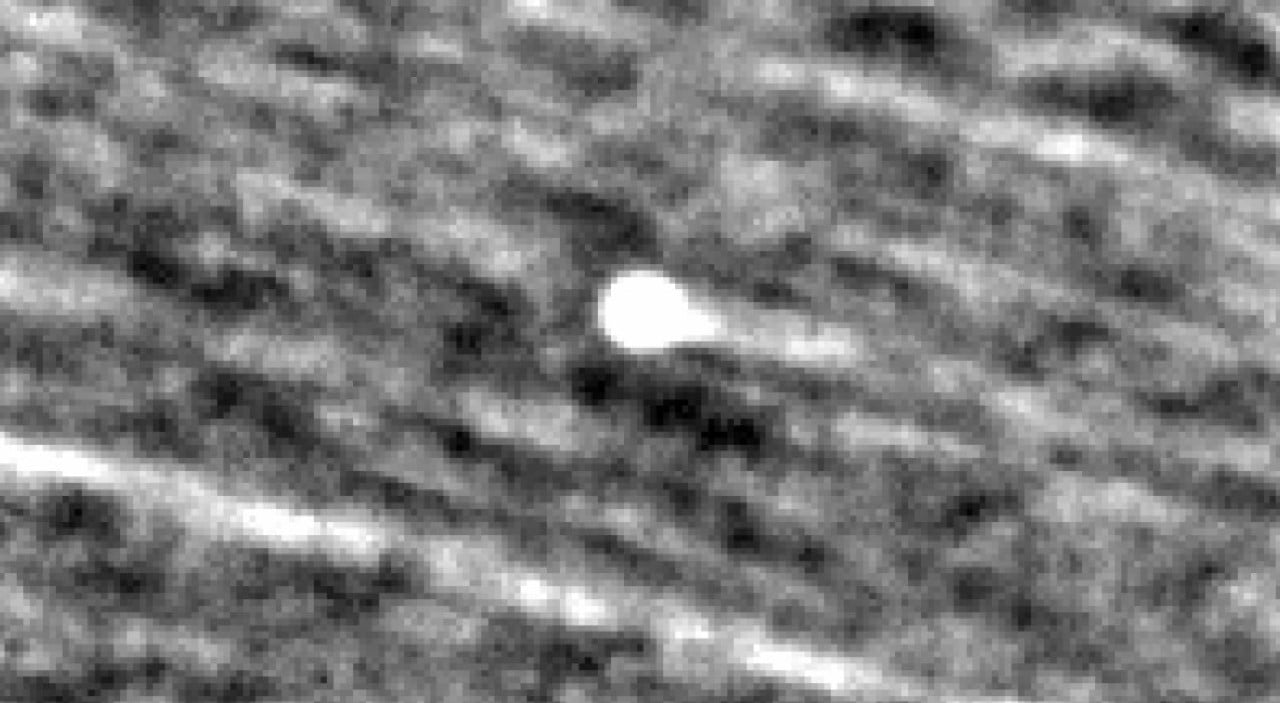
Aerospace researchers are finalizing details of an ambitious proposal to pursue and study the third celestial body confirmed to originate outside our solar system. The target of the mission is the object called 3I/Atlas, whose trajectory and speed require a highly complex flight strategy, challenging the limits of current engineering to enable interception beyond Earth orbit.
To reach the celestial body, the necessary cruising speed exceeds 60 kilometers per second, a mark unattainable only with conventional chemical propulsion or simple orbital docking. The physical solution scientists have found involves using the largest body in the solar system as a natural booster, relying on high-energy gravity-assist maneuvers.

The object was initially detected in July 2025 by the ATLAS monitoring system in the southern hemisphere and passed through its perihelion in October of the same year. Desde then follows its trajectory out of the solar system, quickly moving away from Terra and Sol, which generates a sense of urgency in the scientific community for the recognition and development of the project.
To ensure mission integrity and data collection, the project incorporates rigorous technical requirements that differ from traditional space missions:
– Desenvolvimento of advanced thermal shields to withstand extreme heat during solar flyby.
– Sistemas long-distance communication capable of transmitting data from deep space.
– Fontes of nuclear energy, such as radioisotope thermoelectric generators, to operate away from sunlight.
– Equipamentos autonomous navigation to correct the trajectory without depending on real-time commands from the Terra.
Launch strategy and thermal protection
The flight plan stipulated by engineers requires the use of high-capacity rockets, such as the Space Launch System (SLS), to place the probe on the correct initial trajectory. The first stage of the journey will not be towards the target, but towards the central star, using the gravity of the Sol to brake the ship and dive towards the center of the solar system.
When carrying out this maneuver, the probe will face extreme environmental conditions, requiring the development of an innovative heat shield. The equipment will need to withstand temperatures capable of melting most known metals, ensuring that the scientific instruments remain operational after the acceleration maneuver for the interstellar cruise phase.
The approach uses the Oberth effect, where burning fuel at the point of maximum speed — in this case, close to Sol — generates a significantly greater increase in kinetic energy than at any other point in the orbit. Isso is essential to reach the speed necessary for interception.
Time window and scientific relevance
The ideal launch schedule for this mission is calculated to occur around 2035, taking advantage of planetary alignment to ensure gravitational assistance from Júpiter before the solar maneuver. Mesmo with the projected theoretical speeds, the trip to the 3I/Atlas body will be long, requiring patience from space agencies and long-term planning.
Trajectory estimates indicate that the physical interception of the object will only occur between the years 2070 and 2085.
The distance of the encounter at the time of interception will far exceed the orbit of the dwarf planet Plutão. Neste scenario, the probe will only have a short period to collect information while crossing the object at high speed, making the precision of the instruments and the automation of the system critical requirements for the scientific success of the endeavor.
Importance of interstellar data
The scientific interest in 3I/Atlas lies in its origin outside the solar system. Diferente of local asteroids and comets, this body carries the chemical signature of another star or protoplanetary cloud, offering a unique opportunity to study the composition of materials formed in other regions of the galaxy.
Observations carried out during the object’s passage in 2025 have already indicated the presence of volatile elements and clear cometary activity. The proposed mission aims to transform these remote observations into concrete data, allowing humanity to touch, for the first time, matter that was not born under the light of our Sol, expanding understanding of the chemistry of the universe.
Continuous tracking by ground-based and space-based telescopes, such as Observatório Vera Rubin, has been key to refining orbital calculations. Reducing uncertainty with each new measurement allows mission planners to fine-tune launch parameters, ensuring the rocket will be on the launch pad within the next decade to begin this historic chase.



