
Asteroid 2024 YR4 will pass close to the Moon in 2032 and NASA eliminates chance of impact

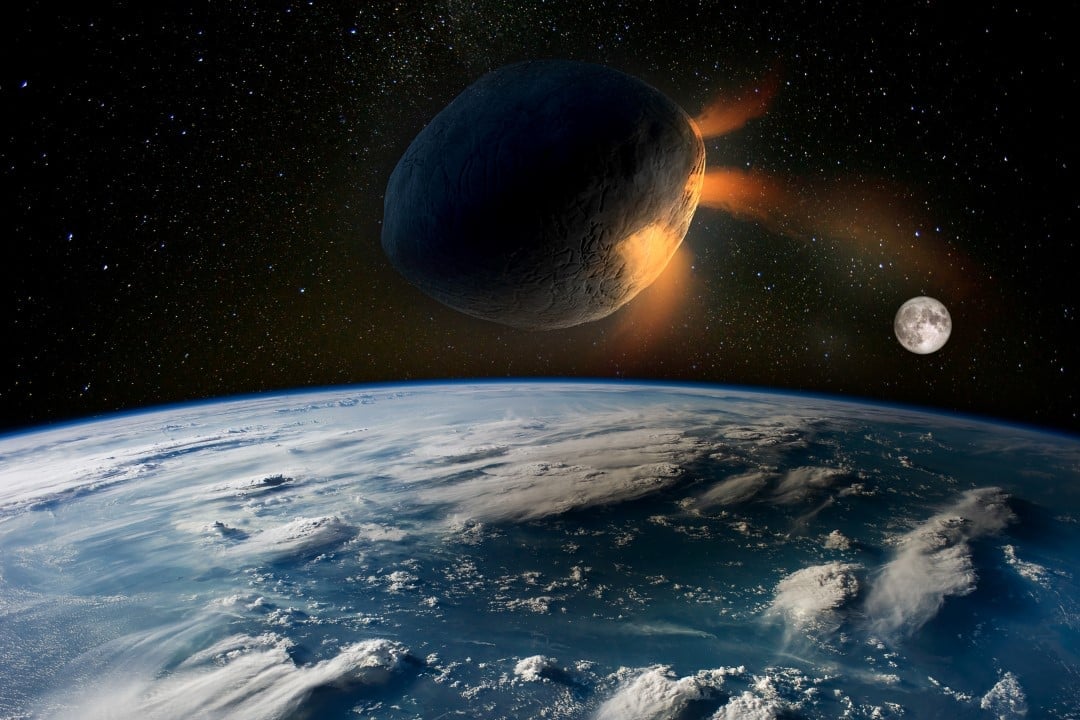
NASA’s Centro from Estudos from Objetos Próximos to Terra announced that asteroid 2024 YR4 does not present any risk of collision with unprecedented. The projected minimum distance is now approximately 21,200 kilometers from the lunar surface, a value that completely eliminates the possibility of impact. Anteriormente, initial estimates indicated a 4.3% probability of collision, a number that dropped to zero after the new data was incorporated.
The asteroid was first detected in December 2024 by an ATLAS system station on Chile, funded by the North American space agency. At the time, preliminary calculations generated a temporary warning about a possible risk for Terra in 2032, but subsequent observations eliminated any threat to the planet over the next century. With the exclusion of terrestrial risk, the focus became the gravitational interaction with Lua. The close pass will not significantly alter the lunar orbit or cause noticeable effects on Terra.
Orbital refinement with James Webb telescope
The James Webb telescope captured infrared images of the asteroid even when the object was hundreds of millions of kilometers away. Essas observations represent one of the most complex technical challenges ever faced for detecting small, dark asteroids. The precision achieved allowed the uncertainty in the future position to be reduced from tens of kilometers to a few kilometers.
Scientists processed multiple series of images taken on different dates. Combining this data with ground-based measurements accumulated since the discovery resulted in a much more reliable orbit. Nenhum unexpected deviation in the trajectory was identified during the analysis.
Safety distance confirmed at 21,200 km
The new projection indicates that the asteroid will pass 21,200 kilometers from the surface of Lua. Essa distance is about 5.5% of the diameter of the average lunar orbit. Para comparison, geostationary satellites orbit Terra at approximately 36 thousand kilometers altitude.
The safety margin is considered wide by planetary monitoring standards. Qualquer gravitational variation caused by the passage will be minimal and will not affect the dynamic balance of the Terra-Moon system.
Physical characteristics of asteroid 2024 YR4
The celestial body has an estimated diameter of between 53 and 67 meters, with an average value of around 60 meters. Sua composition appears to be rocky-carbonaceous typical of main-belt asteroids that have migrated to orbits close to Terra.
The asteroid’s rotation is estimated to take around 10 to 15 hours per complete revolution. The albedo (capacity to reflect light) is low, which explains the initial difficulty of detection with smaller telescopes.
Chronology of monitoring since discovery
- December 2024: Initial detection by the ATLAS system on Chile
- January 2025: Inclusion on NASA’s Sentry risk list with low initial probability for Terra
- February 2025: Additional observations eliminate terrestrial risk
- February-March 2026: James Webb telescope takes critical images
- March 2026: Official update rules out lunar impact in 2032
Monitoring follows standard protocol for NASA’s planetary defense program. Cada new observation reduces orbital uncertainty and generally eliminates initial apparent risks.
Upcoming observing opportunities in 2028
The asteroid will return to the neighborhood of Terra in 2028, when it will be in a favorable position for new measurements. Large terrestrial Telescópios and possibly James Webb itself will be used again.
These observations will allow us to confirm the long-term orbit and further refine the object’s physical parameters. The 2028 interval will be decisive to definitively classify the 2024 YR4 as a harmless object.
Importance of early detection systems
The case illustrates the effectiveness of the international system for monitoring objects close to Terra. Redes like ATLAS, Catalina Sky Survey and Pan-STARRS identify thousands of new asteroids every year. Integration with space telescopes increases the accuracy of calculations for small objects.
Planetary defense programs continue to invest in tracking and characterization technologies. Current capabilities allow us to detect and characterize asteroids years or decades in advance.
Passage of 2032 does not generate noticeable consequences
The approach in 2032 will occur without visible effects of Terra. Nenhum fragment will be ejected from Lua, and there will be no measurable change in tide or lunar rotation. The event will be purely astronomical and without practical implications.
The asteroid will remain cataloged and routinely monitored as part of the database of objects near Terra.




