
Career in the Indian Merchant Navy attracts young people with high salaries and rigorous demands

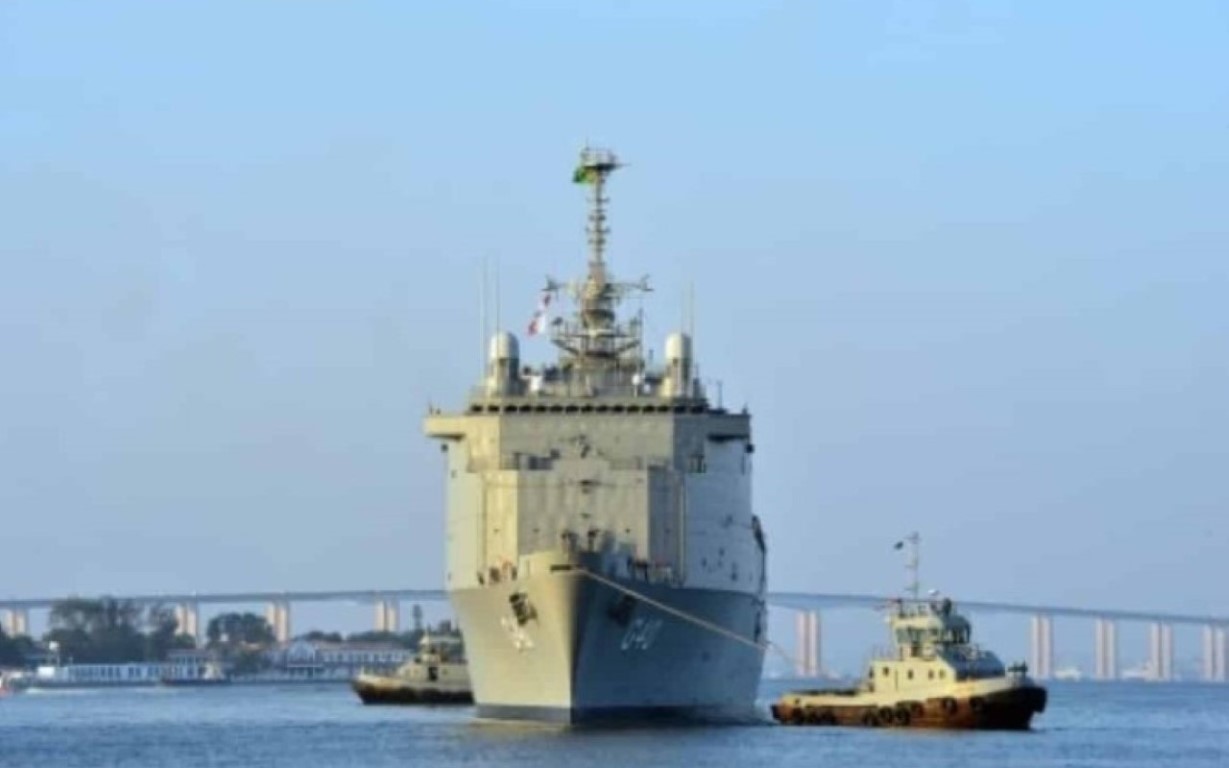
The continuous operation of international logistical transport intrinsically depends on maritime transport, a sector where Índia plays a prominent role through the supply of technical and qualified labor. The commercial aspect of navigation represents a strictly civil professional path, focused on the movement of cargo between continents, completely differentiating itself from the state armed forces. Atualmente, Indian sailors make up a seven percent share of the entire global maritime workforce, operating on deep-draft oil tankers, bulk carriers and container ships. The local government established an official guideline with the aim of generating a significant number of direct and indirect jobs in the maritime area by the middle of the century, boosting the internal economy. The country’s port structure sustains this demand robustly, with twelve large facilities and approximately two hundred smaller terminals that manage a huge volume of goods daily. The attractiveness of the profession lies in the combination of high salaries from the first stages of the career and the possibility of rapid advancement to technical leadership positions. Jovens recent graduates find the opportunity to take responsibility for equipment and loads with high added value, which requires an early level of maturity. The trade-off for these financial benefits involves adapting to a lifestyle characterized by long months of ocean isolation and inflexible operational discipline.
The distinction between the commercial and military aspects is the first concept assimilated by aspirants seeking to enter the maritime job market. Enquanto the merchant fleet operates under the logic of profitability and the transport of consumer goods for private companies, the state naval force focuses on protecting territorial waters and national sovereignty. Military training takes place at government defense academies, while civilian training follows university guidelines focused on logistics, astronomical navigation and propulsion engineering.
Entry into this area requires specific academic preparation, focused primarily on exact sciences and proficiency in foreign languages. Fluency in the English language becomes a safety tool on board, allowing standardized communication between crews of multiple nationalities and maritime traffic control centers. The confined work environment requires clear and objective communication to avoid operational failures during maneuvers in restricted waters or during complex loading and unloading operations at terminals.
Expansion of Asian port infrastructure
The development of Indian coastal zones reflects the need to accommodate increasingly larger and more efficient vessels. The country’s twelve main ports are undergoing constant modernization, implementing automated crane systems and container terminals capable of operating uninterruptedly. Essa modernization requires commercial marine officers to have up-to-date knowledge of cargo management and ship stability software.
The network of two hundred smaller terminals complements the flow of agricultural and industrial production from the interior of the country to international maritime routes. Esses locations function as essential distribution hubs, where cabotage vessels transship goods to long-haul ships. The efficiency of this logistics network directly depends on the competence of deck and engine officers trained at local academies.
The goal of creating jobs in the maritime sector by the year 2047 encourages the opening of new training centers and the updating of academic curricula. Government planning aims not only to meet the internal demand for labor, but also to consolidate the country as the main exporter of maritime officers for the large shipping companies of Europa and Ásia. Esse strategic movement strengthens the entry of foreign currency into the local economy through financial remittances sent by crew members to their families.
The increase in the volume of foreign trade requires an operational and safe merchant fleet, free from delays caused by mechanical failures or navigation errors. The responsibility for keeping this gear running falls on the shoulders of young officers who, immediately after graduation, take on duty shifts on the bridge or in the engine room. Rigorous training ensures that these professionals can handle severe storms, heavy traffic in international straits, and rigorous inspections by port authorities.
Division of departments on vessels
The organizational structure of a commercial ship is divided into main departments to ensure the safe and efficient running of all operations during the voyage. The navigation department takes care of the safe route, monitoring weather conditions and supervising the loading of holds. Professionals in this area enter through a diploma or degree in nautical sciences, starting their careers as cadets and progressing to third officer, second officer, mate and, finally, captain.
The machinery department is responsible for the maintenance of the vessel’s main engines, power generators, boilers and all technical and hydraulic equipment. Entry is via a degree in marine engineering or adaptation courses for mechanical engineers. The positions progress from practicing engineer to fourth, third, second engineer and culminate in the position of chief engineer, the highest authority in the engine room.
Strict academic and physical eligibility criteria
Candidates seeking a place in training academies must present a school record with performance above sixty percent in the subjects of physics, chemistry and mathematics. The academic requirement reflects the complexity of stability, thermodynamics and astronomical navigation calculations that will be part of the routine studies and work on board. The minimum grade of fifty percent in English is non-negotiable, given the globalized nature of the profession and the ships’ technical documentation.
The physical demands are equally strict, with a special focus on visual acuity and general body health. The vision must be perfect, without the need for correction for deck officers, ensuring the correct identification of navigation lights and night markings. The age range for entry into most initial training courses is between seventeen and twenty-five years old, aiming to mold young professionals who are adaptable to the hierarchy and routine at sea.
Selection process and centralized entrance exams
The main access route to maritime higher education occurs through a centralized university with campuses distributed in several strategic cities in the country. Essa institution carries out a unified entrance exam annually that assesses candidates’ knowledge of exact sciences, logical reasoning and general knowledge. Passing this test is the first filter to guarantee a place on the most competitive and prestigious undergraduate courses in the sector.
The volume of interested parties reflects the attractiveness of the career, with tens of thousands of candidates taking the exam each edition. Além from the central university, hundreds of private institutes offer training programs, as long as they are rigorously approved and audited by the government’s general directorate of navigation. Essa state agency ensures that curricula, bridge simulators and machine shops meet the standards required by international maritime conventions.
Annual tuition fees vary depending on the chosen institution, requiring financial planning on the part of students’ families. Nos central public university campuses, fees are around two hundred and fifty thousand rupees per academic year, covering accommodation, food, uniforms and teaching materials. Academias renowned universities located in coastal centers also offer scholarships sponsored by shipping companies to students with the best academic performance.
Structure of courses and specialized technical training
Training options are designed to meet the specific needs of each department on the ship, with varying durations and focuses. The basic diploma in nautical sciences lasts one year after high school, focusing on the accelerated preparation of deck cadets for immediate embarkation. Após the period of pilotage at sea, these professionals return to the classroom to take the official exams required by the competent authorities.
The complete degree in nautical sciences extends over three years of theoretical and practical studies in state-of-the-art simulators. The curriculum covers oceanographic meteorology, international maritime law, vessel maneuvering and advanced first aid. Students live in boarding school, undergoing a routine of daily graduations, accommodation inspections and physical activities, simulating the disciplined environment they will find on board.
Remuneration and progression of operational ranks
The financial return begins during the mandatory internship period, when students embark as cadets to complete the sea time required for certification. Nessa practical learning phase, the monthly remuneration is around thirty thousand rupees, an amount intended to cover personal expenses while accommodation and food are provided by the shipping company. Após passing the competency exams and promotion to junior officer, salaries jump to a range between forty-five thousand and ninety thousand rupees per month.
Progression to command positions brings substantial financial rewards, reflecting the enormous civil and criminal responsibility assumed by these professionals. At higher levels, such as long-haul captain or chief engineering engineer, the remuneration reaches significant figures, varying according to the type of cargo transported and the route operated. Navios that transport hazardous chemicals or liquefied natural gas offer significantly higher payments due to the inherent risk of the operation. As a global economic comparison, these values far exceed the minimum salaries for ground functions, which in several South American economies start at a base of R$1,621 for simple operational functions.
Psychological demands and work routine on the high seas
The reality of work on board requires an unusual psychological resilience, shaped to withstand contracts that often last six uninterrupted months away from the continent. Durante During this period, the crew lives and works in the same steel environment, facing the monotony of long ocean crossings and the constant pressure to meet arrival times at destination ports. Isolation is compounded by limited internet connectivity in the middle of the ocean, which restricts contact with family and friends to brief text messages or rare voice calls. Discipline on board does not allow for failures in attention, as an error in interpreting the radar or in maintaining a fuel valve can result in serious environmental accidents or human losses. Work takes place around the clock, including early mornings, weekends and holidays, requiring the seafarer’s biological clock to quickly adapt to different time zones and fragmented sleep patterns. Confinement also requires a high degree of tolerance and interpersonal skills to live peacefully with colleagues from different cultures, religions and eating habits within a restricted space. Maintaining mental health becomes a priority, with shipping companies implementing onboard wellness programs, providing fitness centers, libraries and recreation areas to mitigate occupational stress. Returning home after the end of the contract brings a period of extended vacation, generally lasting three to four months, compensating for the prolonged absence with full free time with the family.
Ideal profile for commercial navigation
The profession attracts individuals with a natural affinity for heavy technology, large machines and satellite navigation systems. The ability to work under pressure in strictly hierarchical environments, while maintaining physical strength for deep hold inspections or deck work in inclement weather, defines long-term career success. The search for early financial independence and the willingness to experience the culture of dozens of different countries over the years form the profile of those who thrive in the commercial maritime sector.



