
Harvard astrophysicist criticizes scientific community’s resistance to unconventional ideas

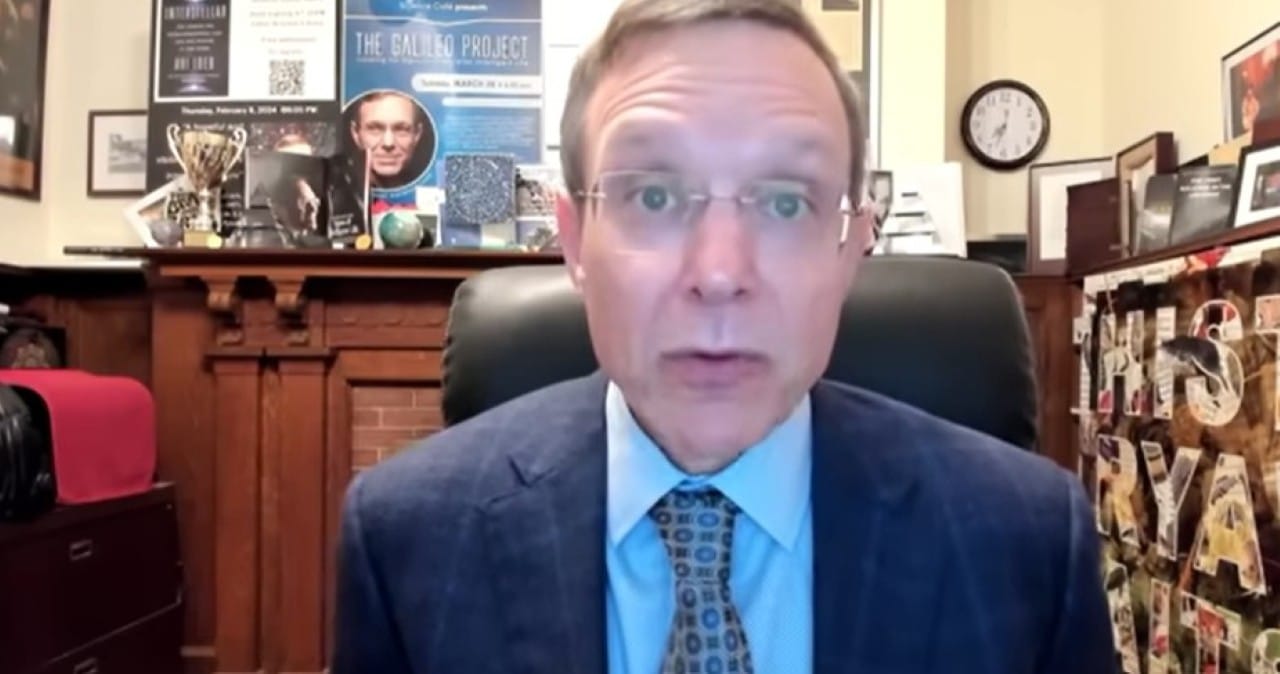
Astrophysicist Avi Loeb, professor at Universidade of Harvard, made public a series of complaints involving what he classifies as academic harassment and institutional persecution within the scientific community. The researcher claims that several of his recent articles on interstellar objects are being systematically blocked by editors of specialized journals, preventing the standard peer review process. Segundo Loeb, this resistance occurs due to his unconventional position on the origin of spatial phenomena, such as the ‘Oumuamua object, which he suggests has characteristics of artificial technology.
- The systematic blocking of three scientific articles on interstellar objects in recent months.
- The practice of “gaslighting” by editors who have the power to publish in renowned journals.
- Concern about the impact of this culture of silencing on early career scientists.
- The contrast between the popular and artistic support received by the researcher and the hostility from academic colleagues.
Editorial blocks and the crisis in peer review
Freedom of scientific research is facing a moment of tension with reports from Loeb about the difficulty of publishing data that diverge from the established consensus. The professor details that the peer review process, a pillar of scientific validation, is being ignored by editors who act based on personal prejudices even before technical analysis. Esta conduct prevents new evidence about objects such as 1I/’Oumuamua from being discussed openly and democratically in the academic environment.
For the astrophysicist, the behavior of certain editors constitutes an abuse of power that harms the advancement of human knowledge about the cosmos. Ele highlights that science should be driven by curiosity and data analysis, but it has become an environment where dogmas are maintained. The refusal to evaluate articles that propose artificial origins for interstellar objects limits the possibilities for discovering technological civilizations outside of Terra.
Persecution and hostility in the academic environment
The scenario described by Avi Loeb reveals a deep divide between researchers seeking innovation and groups he identifies as “haters” inside and outside academia. Entre the fiercest critics would be scientific popularizers and astronomers who, according to the physicist, act out of jealousy of the public attention dedicated to their research. Essa hostility manifests itself in personal attacks and attempts to discredit a lifetime’s work dedicated to cutting-edge science.
Loeb points out that academic harassment is a form of emotional abuse that makes researchers question their own perceptions and memories. Esse phenomenon, known as gaslighting, is used to destabilize those who decide to leave the traditional research path to explore audacious hypotheses. The situation raises a warning about the mental health and professional safety of anyone who dares to challenge conventional explanations for complex astronomical phenomena.
Vulnerability of young scientists in the face of power
One of the biggest concerns expressed by the professor of Harvard refers to the future of young researchers who do not have the same professional stability as him. Loeb recognizes that his position as a full professor and his established career allow him to denounce the system without the immediate fear of losing his job. However, early career scientists can easily be silenced for fear of retaliation from superiors and influential editors.
- Difficulty in financing projects that do not follow the dominant editorial line.
- Fear of retaliation in processes of obtaining academic stability (tenure).
- Social and professional isolation of researchers who support controversial theories.
- Giving up on brilliant careers due to the toxic environment of competition and censorship.
The lack of safe channels to report abuse of editorial power makes the scientific environment vulnerable to personal interests. Loeb reinforces that the exploration of unconventional ideas is a “perfectly reasonable deviation”, citing physicist Richard Feynman. Sem the necessary protection for these deviations, science runs the risk of stagnating in comfortable, but possibly incomplete or erroneous, theories.
Art and popular support as a counterpoint to isolation
Despite the turmoil in academia, Loeb’s work has inspired many artists and enthusiasts around the world, creating an ecosystem of external support. Recentemente, the scientist’s office received works of art that celebrate the search for intelligent life and space exploration. Essas donations, which include paintings and sculptures, symbolize civil society’s interest in topics that formal academia sometimes tries to marginalize or ignore completely.
The works received, such as the painting titled “It’s a Freaking Spaceship” by Jennifer Denning, reflect the connection between science and the human imagination. Para Loeb, this recognition is fuel to continue your investigations, even under strong pressure from your peers. Public support serves as a reminder that the scientist’s role is also to answer humanity’s biggest questions, regardless of the bureaucratic barriers of scientific journals.
The debate over the interstellar object oumuamua
The center of academic disagreement lies in the interpretation of data collected during the ‘Oumuamua object’s passage through the solar system. Enquanto most astronomers defend the thesis that it is a comet or asteroid of natural origin, Loeb presents physical anomalies that suggest something different. The object showed an acceleration not explained by outgassing, in addition to a highly unusual shape, which supports the hypothesis of a probe or technological artifact.
Loeb’s insistence on treating the artificial hypothesis as a legitimate scientific possibility generated a rift in the community. Muitos colleagues consider the proposal sensationalist, while Loeb argues that dismissing the hypothesis without rigorous analysis is the real scientific error. Blocking articles that detail these anomalies prevents the global community of astrophysicists from having access to the calculations and models proposed by the Harvard researcher.
Consequences of censorship for technological innovation
Resistance to accepting new ideas in astrophysics can have consequences that go beyond theoretical debate, affecting the development of observation technologies. By censoring studies on spacecraft or extraterrestrial technology, the academic system discourages the creation of new instruments capable of detecting such artifacts. Isso creates a cycle where a lack of evidence is used to justify a lack of research, ignoring that active searching is necessary for any meaningful discovery.
Editorial transparency is essential for the scientific method to fully function and ensure that all data-based hypotheses are tested. Loeb argues that secrecy and prior blocking of articles undermine public trust in science and transform knowledge into a political field. The researcher’s fight now is for scientific evaluation metrics to return to focusing on facts, and not on reputation or the comfort of established groups.



