
Images capture religious leader pushing elderly woman in Los Angeles temple and spark protests

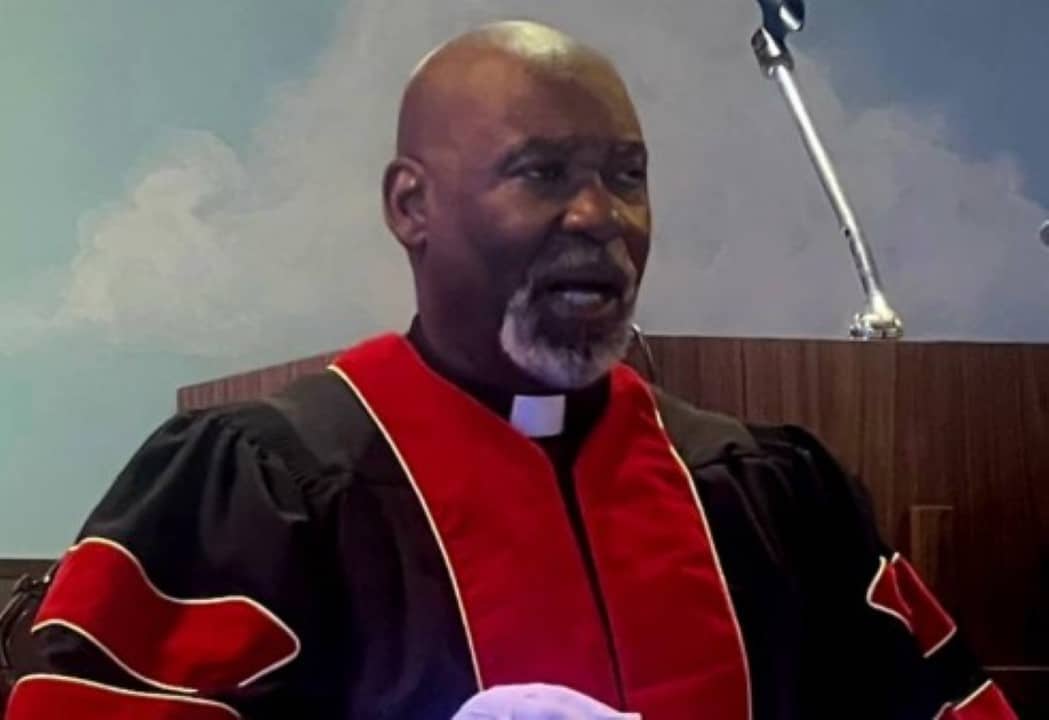
A case of violence recorded by security cameras at a religious institution in the southern region of Baía of Los Angeles continues to generate legal and social consequences. The episode involves physical aggression against an elderly woman who served as an elder of the Beulah Land Missionary Baptist Church congregation, located in the city of Gardena. CCTV footage captured the exact moment the victim was thrown against a gate and fell down a concrete staircase.
The original incident occurred in October of the previous year, but gained new proportions after the organization of recent public demonstrations. Membros members of the community and local visitors expressed outrage at the accused’s continued leadership role. The individual’s return to the pulpit, a few days after being detained by local authorities, became the main point of questioning by a significant group of faithful.
Los Angeles County authorities maintain an active case, investigating the circumstances of the fall and the injuries sustained by the victim. The dissemination of video material among church participants served as a catalyst for mobilization, exposing fractures in the institution’s administrative structure and raising debates about the safety of elderly people in congregational environments.
Dynamics of the incident on the temple premises
Records from the property’s surveillance system provide a clear picture of the sequence of events that resulted in the elderly woman’s injuries. The audiovisual material shows the religious leader, identified as Lorenz Roseman, approaching the woman while they were both near one of the building’s access doors. The interaction quickly evolves into abrupt physical contact.
According to the analysis of the images, the man pushes the victim with disproportionate force. The direction of the impact throws the woman directly against a metal gate installed outside. The metal structure, designed for access control, cannot support the weight and force of the sudden impact, giving way immediately and opening to the outside.
The failure of the gate results in the old woman falling violently down a flight of concrete stairs. The victim hits the ground abruptly, without having time to use their hands or arms as a form of effective protection against the impact on the rigid steps. The unevenness of the terrain contributed to the severity of the body’s projection.
Witnesses who had access to the video and participated in subsequent demonstrations reported that the action represented an extreme risk. The woman’s advanced age and the hardness of the concrete surface were pointed out as factors that could have led to fatal consequences, transforming the record into a centerpiece for demands for justice.
Physical consequences and medical care
After falling down the stairs, the elderly woman required immediate medical attention to assess the physical damage. Clinical and radiological examinations carried out at the health unit confirmed the existence of multiple injuries resulting from the impact against the ground and the metal structure. The main diagnosis indicated significant fractures in the wrist and fingers of one of the feet.
The recovery period has required the use of orthopedic equipment to immobilize the affected limbs. Durante recent public appearances, the victim was seen wearing a visible splint, showing that the process of bone healing and physical rehabilitation is still ongoing months after the incident occurred.
Action by county police authorities
The security forces’ response to the incident was immediate on the day of the incident. The Los Angeles county sheriff was called and proceeded with the arrest of Lorenz Roseman in the act on the premises of the city of Recording the incident included collecting initial statements and formally requesting images captured by the Beulah Land Missionary Baptist Church security circuit.
Despite the seriousness of the images and the initial detention, legal procedures allowed the accused to be released within a short space of time. The fact that the religious leader returned to his normal activities in the pulpit just two days after being booked by the authorities generated an immediate shock among part of the congregation, establishing the beginning of a prolonged institutional crisis.
Grassroots Organizing for Accountability
Dissatisfaction with the handling of the case culminated in a demonstration organized on the first day of March. A large group of believers gathered on the sidewalk in front of the temple to demand the definitive removal of the religious leader. Participants held posters with messages demanding ethics, respect for the elderly and the immediate resignation of Roseman.
During the event, several people who have frequented the place for years made public statements. One of the protesters highlighted that the religious environment must be a space of welcome and protection, categorically stating that aggressive physical contact is unacceptable under any justification. The presence of local media amplified the group’s demands beyond the city limits of Gardena.
The central agenda of the protest was based on the incompatibility between the actions recorded in the video and the moral precepts required for the leadership position. The organizers of the movement stated that the accused’s continued position of power compromises the integrity of the institution and drives away new members who seek a safe environment.
Statements from community leaders
Community activist Najee Ali was present at the protest to show solidarity with the victim and endorse demands for transparency. In his speech, he drew attention to the injuries still visible to the elderly woman, using the orthopedic splint as material proof of the violence suffered. The activist reinforced that the external community will follow the case closely until the judicial and administrative bodies take definitive measures.
Defense arguments and justifications presented
In response to the accusations and protests, Lorenz Roseman presented his version of the facts and justified his stay in office. The religious leader argued that his return to pastoral duties was supported by a collective decision. Segundo him, an internal vote was carried out with the participation of the majority of the regular faithful, resulting in a favorable opinion for his continuation in the administration of the church.
In addition to defending the legitimacy of his position, the accused transferred responsibility for the crisis to a specific group of members. Ele alleged that the organizers of the protests were involved in irregular practices within the congregation. Roseman stated that he had conducted internal investigations that culminated in the removal of these individuals, characterizing the allegations of aggression as internal political retaliation.
Judicial issues and administrative disputes
The conflict between church factions went beyond the limits of the temple and reached the civil courts. Tentativas formal attempts to remove the pastor through the application of Beulah Land Missionary Baptist Church’s internal statutes faced legal obstacles. Representantes legal officials from Paralelamente to administrative disputes, the criminal case conducted by the Los Angeles county prosecutor’s office remains active. The ongoing formal accusation involves classifying assault by means of force capable of causing serious bodily injury. The Califórnia judicial system keeps the case under scrutiny, with the collection of expert evidence and detailed analysis of security video forming the basis of the criminal investigation.
Tense atmosphere among regulars
The congregation’s routine was profoundly altered by the polarization generated by the incident. On the one hand, a portion of the attendees maintain unrestricted support for Roseman, validating his allegations of internal persecution and normally participating in the ceremonies conducted by him. Esse group supports the narrative that the images may be out of context or that the reaction was provoked by undisclosed circumstances.
On the other side, a dissident faction refuses to accept the authority of the current leader. Esse segment of the church argues that no administrative justification or internal disagreement authorizes the use of physical force, much less against an elderly person. The division has caused the emptying of some activities and the transfer of historic members to other religious institutions in the region.
Role of digital evidence in investigation
The existence of the camera monitoring system proved to be the decisive element in formalizing the complaints. Sem the visual record, the case could have been classified simply as an accident on the stairs, depending exclusively on conflicting testimonies. The clarity of the images eliminated doubts about the authorship of the push and the mechanics of the fall.
Sharing the video file through messaging applications among church members accelerated popular mobilization. The democratization of access to material evidence prevented the case from being hushed up internally by leadership bodies favorable to the accused, forcing a public debate about the attitudes recorded.
Property security experts point out that installing cameras in common areas of non-profit institutions has become standard practice. The main objective is to guarantee the physical integrity of attendees and provide legal support in litigation situations, exactly as occurred in the episode recorded in Gardena.
Protection measures and institutional protocols
The episode raised questions at the regional level about control and audit mechanisms in independent religious organizations. Diferente of business corporations with strict ethics councils, many churches operate with statutes that concentrate excessive powers in the figure of the main leader, making preventive removal processes during criminal investigations difficult.
Groups defending the rights of the elderly began to use the case as an example of the need for stricter protocols to protect vulnerable people in these spaces. The discussion includes the creation of independent reporting channels and the mandatory temporary removal of any employee or volunteer who is the target of police investigations involving physical violence.
Claims presented during the public event
During the structuring of the protest, the organizers prepared an informal document containing the main demands of the dissatisfied part of the community. The demands were read aloud to those present and symbolically forwarded to the building administration. The central points of the demands agenda included the following practical topics:
– The voluntary departure or immediate dismissal of the current leader from all administrative and spiritual functions.
– The formation of an independent transition committee to manage the finances and activities of the temple.
– Reimbursement of all medical and orthopedic costs incurred by the victim since the day of the attack.
– Complete revision of the congregation’s statute to include automatic removal clauses in cases of police indictment.
Expectations about the legal process
The progress of the investigation in the county of Los Angeles will dictate the next steps in the dispute. Advogados criminal experts who independently follow the case note that the classification of aggression with the potential for serious bodily harm carries severe penalties under state legislation, and may result in a conviction with deprivation of liberty if guilt is proven at trial.
While the judicial system operates within its prescribed time frame, the victim maintains her routine of physical therapy and medical appointments. The local community remains on alert, organizing weekly meetings to discuss the future of Beulah Land Missionary Baptist Church and ensure that the episode is not forgotten by the competent authorities.



