
Iran’s chancellor defies US with warning about ground invasion and confirms new lethal weapons

The scenario of instability in Oriente Médio reached a critical level this week after blunt statements from Iranian authorities about the evolution of the current conflict. The minister of the Relações Exteriores of the Irã, Abbas Araghchi, categorically stated to the American broadcaster NBC that the country is fully prepared to face a possible land invasion by the forces of the Estados Unidos. The speech comes amid the seventh day of intense hostilities, which began this March, and signals that Teerã does not intend to back down in the face of Western military pressure.
Guarda Revolucionária Islâmica reinforced the diplomatic position with promises of prolonged and costly resistance to any invading force. The Iranian military command indicated that the national defense was reorganized to withstand a long-term clash, ensuring the continuity of the chain of command and the protection of the country’s supreme leadership, even under direct attack.
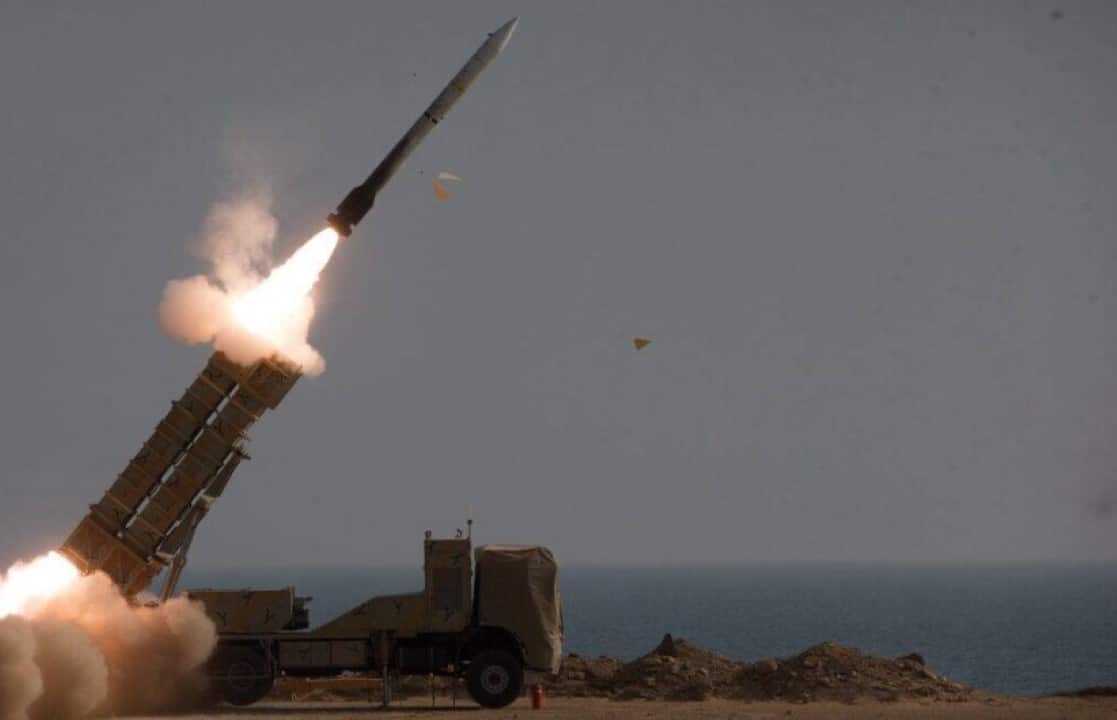
Global security experts observe with apprehension the entry of new technological vectors onto the battlefield. The firing of Khayber missiles against Tel Aviv marks a significant escalation, demonstrating that the Irã has the ability to hit strategic targets with precision, using weapons that until then were kept secret or in the testing phase.
The involvement of approximately twenty nations, directly or indirectly, turns the crisis into a global problem. Regional alliances are being tested, and the risk of the conflict spilling over into neighboring countries is considered imminent by international analysts, who see the current situation as one of the most dangerous moments in recent decades.
Defense strategy and war rhetoric
The stance adopted by Teerã seeks to dissuade an American ground operation through the promise of an unacceptable human and material cost. Abbas Araghchi was emphatic in declaring that Irã troops await the arrival of American soldiers, suggesting that the terrain and tactical preparation would favor the defenders. Iran’s geography, made up of mountains and difficult-to-access areas, has historically represented a complex logistical challenge for invading armies.
At the same time, the internal structure of Guarda Revolucionária underwent significant adjustments to ensure the regime’s resilience. The strategic replacement of commanders and the shielding of the supreme leader aim to prevent the collapse of the military hierarchy in the event of the decapitation of the political leadership, a common tactic in modern wars.
The official Iranian discourse tries to mobilize the population and the armed forces for what they call a “sacred and legitimate war”. The narrative of defending sovereignty is used to justify the use of all available means, including the arsenal of ballistic missiles and drones, in an attempt to inflict severe damage on the military infrastructures of adversaries in the region.
Unreleased arsenal and threats to Tel Aviv
Brigadier General Ali Mohammad Naeini, spokesperson for Guarda Revolucionária, brought alarming information to the public about the country’s military modernization. Segundo the official, the Irã is introducing advanced weaponry that has never been used on a large scale in previous conflicts. Esta technological upgrade aims to surprise the anti-missile defenses of Israel and Estados Unidos.
Among the capabilities highlighted by military authorities and observed in recent days are:
– Disparo of Khayber high-precision missiles against urban centers like Tel Aviv;
– Introdução of defense systems that surpass the technology used in the war of 2025;
– Preparação for “painful blows” in new rounds of offensive attacks;
– Mobilização of technologies that have not yet been fully revealed to the West.
The comparison with last year’s twelve-day conflict serves as a basis for Iranian rhetoric that the country is stronger and better prepared. The insistence on the existence of “new initiatives” suggests that the Irã arsenal may contain tactical surprises capable of altering the balance of power in the theater of operations.
Political interference and leadership succession
While battles take place on the military field, a political war unfolds behind the scenes, driven by statements from the president of the Estados Unidos, Donald Trump. In an interview, the American leader openly expressed his desire to influence the succession of Líder Supremo from Irã, rejecting names linked to the current hard line, such as Mojtaba Khamenei.
Trump compared the current situation with his strategy applied in Venezuela, where external pressure aimed at replacing leadership. The American president argues that choosing a moderate leader would be essential to prevent the Estados Unidos from being drawn into a cyclical war every five years, seeking a definitive solution to the enmity between nations.
The public rejection of Mojtaba Khamenei, the son of current leader Ali Khamenei, classified by Trump as “unacceptable”, adds a layer of diplomatic tension. Essa stance indicates that Washington seeks not just a military victory, but a complete reconfiguration of the Iranian political landscape, aiming to align Teerã’s future government with Western security interests.
Global impact and perspectives of the conflict
The internationalization of the crisis is one of the factors that most worries the diplomatic community. With around twenty countries involved in different capacities, from logistical support to intelligence, the war in Irã is no longer a bilateral issue. The involvement of global and regional powers creates a complex chess game where any miscalculation could result in a much larger conflagration.
Military analysts consider that the American decision on a ground invasion will depend on the effectiveness of air strikes and the resistance capacity demonstrated by the Irã in the coming days. The political cost of a prolonged war, especially in an election year or one of economic instability, weighs on the decisions of the Casa Branca, which seeks to balance the show of force with the need for stability.
The immediate future of the region remains uncertain, depending on the willingness of both sides to escalate or contain hostilities. The introduction of new weapons by Irã and the American determination to change the regime in Teerã suggest that the conflict is far from a peaceful resolution, heading towards an outcome that could redefine the borders and alliances in Oriente Médio for decades to come.



