
Juice probe data exposes chemical and visual secrets of new comet coming from outside the solar system

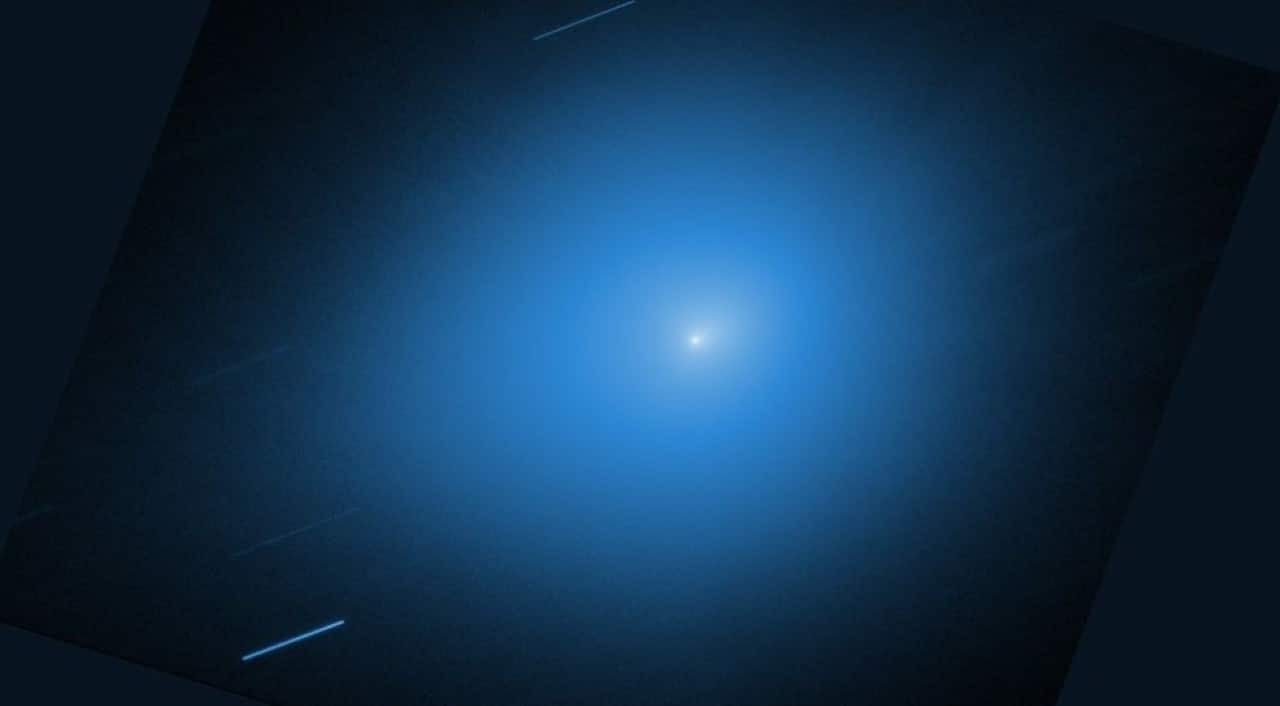
New frontiers in space exploration were broken with the recent release of data by Agência Espacial Europeia (ESA), which brought to light crucial information about the composition of objects formed in other star systems. The analyzes focus on celestial body 3I/ATLAS, a rare visitor that crossed the vicinity of Sol and was closely monitored by the Juice mission. Embora The probe’s main objective is to study the icy moons of
The records obtained by the probe’s instruments highlight fundamental characteristics that differentiate this object from common asteroids or local comets. Entre the main findings stand out: • Confirmation of an active tail extending over millions of kilometers; • The presence of volatile elements essential for prebiotic chemistry; • A hyperbolic trajectory that proves its origin outside the solar system; • Variações density in the expelled material as the distance from the Sol increased.
High resolution monitoring and image capture
The JANUS scientific camera played a central role in documenting this astronomical phenomenon. Durante the period of closest approximation, between November 2nd and 25th, 2025, the equipment recorded a sequence of approximately 120 detailed images. Diferentemente of observations made from the Earth’s surface, which suffer from atmospheric distortions, the probe’s privileged position in space allowed it to capture the evolution of the comet’s activity with unprecedented clarity.
The photographs revealed a dynamic structure, composed of an active nucleus surrounded by a luminous coma. Preliminary visual analysis points to a trail of gas and dust that intensely reflects sunlight, indicating vigorous sublimation activity. The camera’s ability to operate at multiple wavelengths was decisive in enabling researchers to dissect the layers of the tail and understand the distribution of ejected materials.
Particle sensors and magnetometers on board Juice complemented the optical observations, recording changes in the plasma environment and solar wind around the object. Esses data is vital to understanding the physical interaction between interstellar bodies and the heliosphere, providing a more accurate model for how these galactic nomads behave under the influence of our star.
Chemical analysis points to ingredients of life
The great difference between 3I/ATLAS and other visitors, such as 1I/’Oumuamua, lies in its rich chemical composition. Enquanto the first interstellar visitor detected had a rocky and inert surface, the new comet proved to be a reservoir of volatile elements. Espectrômetros of the probe identified the presence of water in a gaseous state, carbon dioxide and carbon monoxide in abundance, as well as traces of methane and simple organic molecules.
This chemical signature brings 3I/ATLAS closer to comet 2I/Borisov, discovered in 2019, suggesting that many young stellar systems have reservoirs of materials similar to those that formed the primitive Terra. The detection of organic compounds reinforces scientific hypotheses about panspermia, a theory that suggests that the building blocks of life can be transported across the galaxy aboard comets and other smaller bodies.
The sublimation of surface ice, caused by solar heat, generated jets of gas that were analyzed in real time. The mixing of silicates and fine dust with the gas stream allowed scientists to draw a mineralogical profile of the object, indicating that it likely originated in a star system where gravitational instability ejects planetesimals into the interstellar medium.
Orbital precision and engineering challenges
Carrying out these measurements required a highly complex operation on the part of the mission control team at Europa. At the time of the observations, the Juice probe was at a distance of 66 million kilometers from the comet. Manter the instruments’ pointing accuracy at a fast-moving target at that distance is considered a remarkable feat of modern space engineering.
Data transmission also faced natural obstacles. Devido due to the probe’s proximity to Sol during the solar conjunction phase, communication with Terra suffered interference, forcing scientists to wait until the orbital geometry became favorable. Somente in February 2026 it was possible to download the complete telemetry package and begin detailed processing of the information.
Traveling at a speed of about 220,000 kilometers per hour, 3I/ATLAS possesses enough kinetic energy to escape solar gravity and return to deep space, never to return. Sua ephemeral passage, however, leaves a legacy of data that will feed computational models and astronomical studies for many years to come, consolidating the importance of flexible space missions capable of taking advantage of unplanned scientific opportunities.



