
Mercedes and Ferrari dominate Australian GP free practice under new Formula 1 regulations

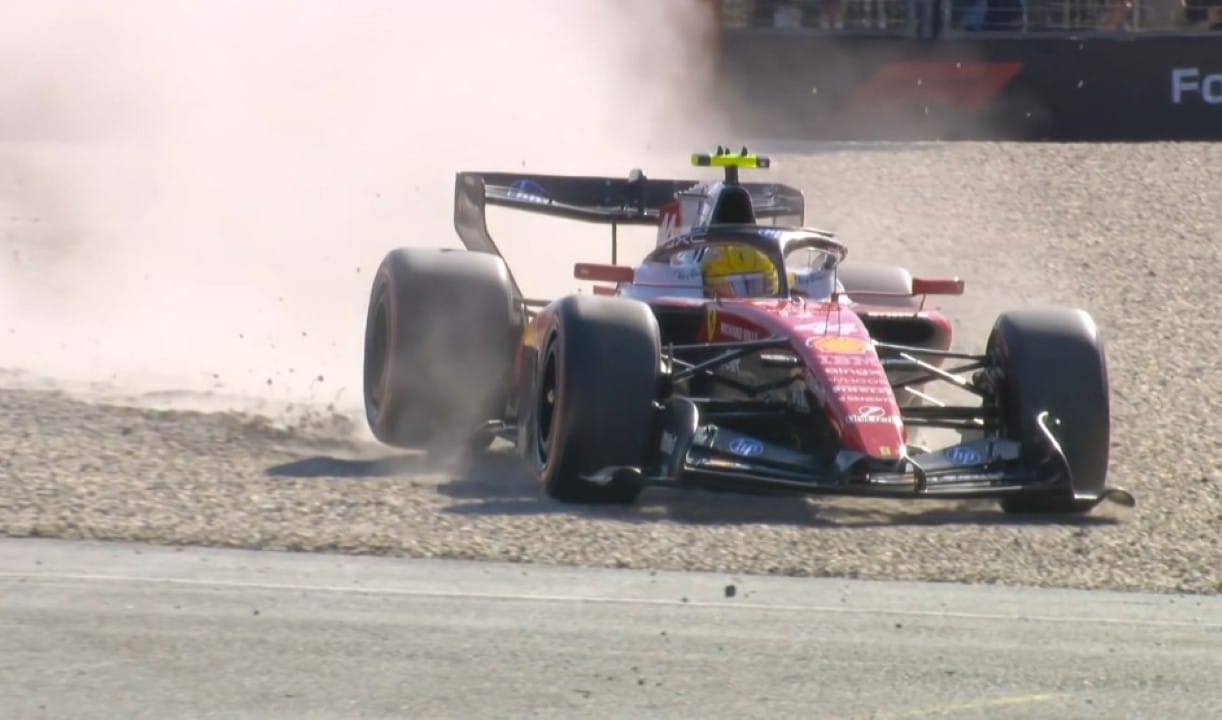
The engines roared again on the Albert Park circuit for the first free practice sessions of the Australian stage. The teams faced the challenge of adapting their single-seaters to the unprecedented demands of the new technical regulations implemented this season in the main category of world motorsport.
The Friday of activities on the track revealed a fierce competition for the top positions, highlighting significant changes in the order of forces on the grid. Engenheiros and pilots took advantage of the time available to collect crucial data on the aerodynamic behavior and management of the hybrid system.
During the two sessions held, the mild weather in Melbourne provided stable conditions for the evaluation of tire compounds. The garages’ main focus remained on optimizing the mechanical setup to maximize grip on a historically slippery track in the first days of the event.
Adaptation to the Albert Park layout and new aerodynamic packages
The semi-permanent circuit located at the heart of Melbourne requires a complex balance between straight line speed and stability in medium and high speed corners. With recent changes to car design guidelines, which aim to reduce turbulence and increase overtaking opportunities, teams have needed to completely re-evaluate their setup approaches. The track, characterized by its undulating surface and strong braking zones, tested the rigidity of the new suspensions and the efficiency of the redesigned floors, forcing mechanics to make constant adjustments to the vehicles’ ride height.
Collecting telemetry data became the absolute priority during the first few hours of the open runway, especially with regard to airflow around the sidepods and rear wing. Race simulations carried out in the second session showed that managing thermal degradation will be a determining factor in success on Sunday. The strategists carefully observed lap time fluctuations, seeking to understand how the loss of aerodynamic pressure affects lateral slip and, consequently, the premature wear of the rubber on corner exits.
Consistent performance puts Italian team in a prominent position
The Ferrari demonstrated a strong pace from the first minutes of activity on the Australian track. Charles Leclerc topped the timesheet in the inaugural session, clocking 1 minute, 20 seconds and 267 thousandths, which confirmed the positive correlation between the updates brought from the factory and actual performance.
The red car behaved docilely in quick direction changes, allowing the drivers to attack the curbs with confidence. Carlos Sainz maintained the team’s consistency, guaranteeing competitive times both in qualifying simulations and in longer sequences with a full tank.
Stability at corner entry was the highlight of the Italian equipment, reducing the need for steering corrections. The team’s engineers focused the final stretch of the day on refining the engine mapping to ensure linear power delivery in the maximum acceleration zones.
Technical evolution boosts results of the German team in training
Mercedes surprised us positively by presenting a highly competitive package during the second free practice session. George Russell set the fastest time of the day, recording 1 minute, 19 seconds and 729 thousandths, beating direct rivals in a clean, error-free lap.
Development work focused on solving aerodynamic drag problems had an immediate effect on the chronometer. Lewis Hamilton acompanhou o ritmo do companheiro de equipe, fechando a sexta-feira entre os três primeiros colocados e demonstrando satisfação com o balanço geral do monoposto.
The team used the first session conservatively, focusing on measuring airflow by installing sensor grids. The transition to the second session involved drastic changes to the front wing’s camber and angle of attack.
Tracking data revealed that the silver cars gained substantial time on the straights, without compromising the minimum speed around the slow curves. Brake temperature management also operated within the safety margins established by the designers.
Operational difficulties limit the British team’s mileage
McLaren faced setbacks that compromised its test program established for the first day of activities. Lando Norris lost valuable time in the first session due to a failure in the energy recovery system, managing to complete just seven timed laps before returning to the pits.
Oscar Piastri took on the responsibility of conducting most of the team’s aerodynamic assessments in front of their home crowd. The driver dealt with an unstable car in the traction zones, requiring extra work from the mechanics to smooth the torque delivery to the rear axle before qualifying.
Technical setbacks affect simulations of the current constructors’ champion
Red Bull had an atypical day and far from the leading positions on the Albert Park circuit. Max Verstappen damaged the floor of his car when aggressively passing over the curb at Turn 10, which forced the team to carry out extensive repairs that took up half of the second session.
Sergio Pérez reported instability in the rear of the car during heavy braking, a symptom of an imbalance in brake distribution. The Austrian team scheduled an in-depth telemetry analysis overnight to reverse the performance deficit and find the ideal chassis operating window.
Hybrid system management and power unit reliability
The transition to new power unit specifications required increased attention from mid-tier teams to battery cooling and efficiency. Aston Martin focused its efforts on calibrating the engine brake, seeking to avoid the rear wheel locking that harmed Fernando Alonso and Lance Stroll in the initial simulations. The Simultaneamente, the Haas and the Alpine faced challenges in keeping the temperature of the electronic components under control, opting to open the air vents on the engine cover, which generated a slight increase in aerodynamic drag on the straights. Williams, in turn, focused on accumulating continuous mileage to validate the durability of its new exhaust and injection mapping systems. Precise management of the electrical energy recovered during braking proved vital in achieving maximum speed at the end of the four drag reduction system activation zones spread across the Australian track. Teams that were able to integrate powertrain mapping with the car’s aerodynamic profile demonstrated a clear advantage in maintaining pace during long sequences of laps, indicating that the overall efficiency of the package will be more important than isolated peaks of mechanical power during the main race.
Behavior of compounds supplied by the official manufacturer
The Pirelli provided soft, medium and hard compounds for the stage, and the evolution of the track’s grip dictated the rhythm of the teams’ tests. The time difference between soft and medium rubber was around three to five tenths of a second, forcing strategists to calculate in detail the ideal pit stop window. Graining of the front tires was observed on most cars during race simulations, requiring more conservative driving techniques on corner entry to preserve rubber life ahead of Sunday’s race.





