
President of Russia asks women to maintain beauty at home and focus on raising children

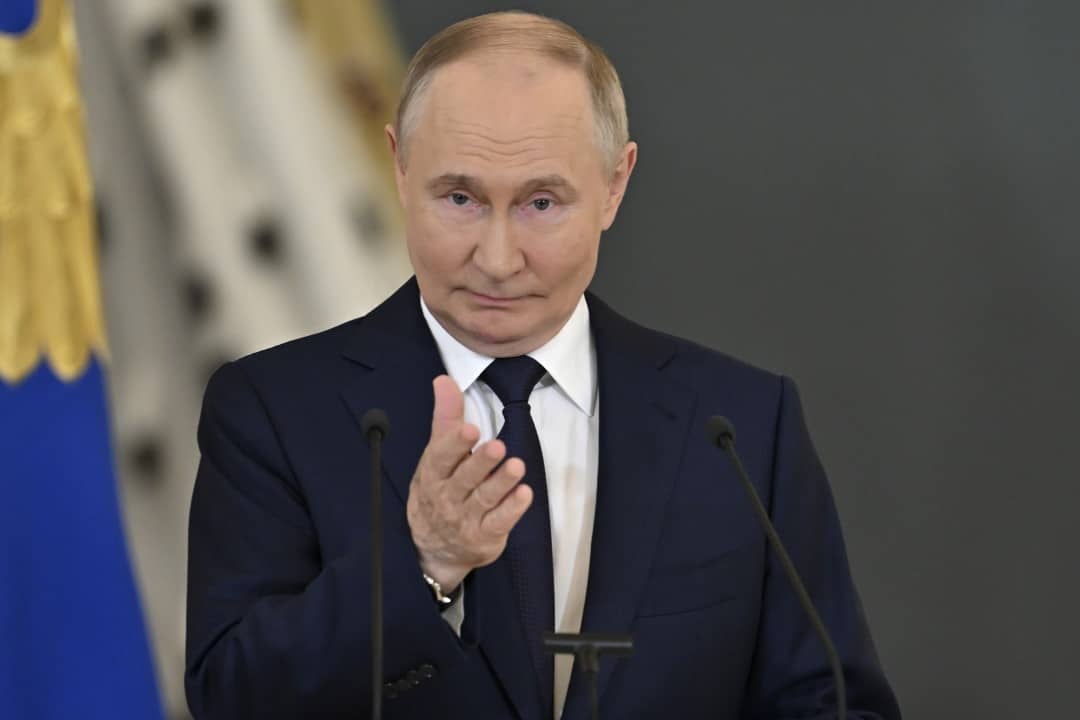
Vladimir Putin, Rússia, Russian demography, family policies, Dia Internacional from
The head of Estado of Rússia used an official meeting with members of the government and of Forças Armadas in Às on the eve of the celebrations of Dia Internacional of The demonstration took place in a context of expansion of state guidelines aimed at promoting a conventional family structure.
During the meeting in the Russian capital, the focus was on women’s ability to manage multiple daily functions. The official speech emphasized that dedication to the family includes constant attention to one’s appearance.
The 73-year-old leader’s words generated immediate circulation on digital platforms and global news agencies. The positioning directly reflects the current demographic policies adopted by the European country.
Focus on traditional values and home dynamics
The rhetoric presented during the government summit reinforces a narrative that the Kremlin has been consolidating over the last decade, in which the stability of the Estado is associated with the maintenance of strictly defined gender roles. The Russian government has directed its communication efforts to exalt the maternal figure as the central pillar of society, giving women the duty to create a welcoming and aesthetically pleasing environment for other family members. Essa vision gradually excludes issues of equal division of domestic tasks from the official public debate.
In addition to mentioning care for descendants, the presidential speech made direct mention of the needs of marital partners. Foi pointed out that the other half of the family also demands similar levels of attention and care, justifying the need for women to preserve their personal charm even after fulfilling professional and maternal obligations. The speech establishes a double expectation about the contemporary Russian female population.
Immediate repercussion on digital platforms
The sharing of excerpts from the meeting sparked a wave of debate on social media inside and outside Russian territory. Usuários from different platforms expressed divergent opinions about the aesthetic and behavioral requirements aimed at women.
Part of the comments aligned with the official perspective, arguing that the preservation of the traditional family structure is fundamental to the country’s future. Esses Internet users argued that the speech only reflects the nation’s historical cultural values.
On the other hand, critical groups pointed out that the declaration burdens the female portion of the population. Contrary analyzes highlighted the practical difficulty of balancing working hours with the demands of around-the-clock beauty and home care.
Demographic crisis and state incentives
The declarations about the female role come at a time of sharp population decline in the federation. Estatísticas officials indicate a continued decline in birth rates since the beginning of the last decade.
To combat the shrinking workforce and aging population, the government has implemented a series of incentive programs. The packages include direct financial transfers to families who decide to have two or more children.
The revival of Soviet-era honors, such as the title of Mãe Heroína for women with ten or more children, is part of this strategy. The award is accompanied by substantial monetary compensation paid by Estado.
Demographic experts point out that the emphasis on traditional motherhood is the main tool of Kremlin to try to reverse the negative population curve. Current public policies direct massive resources to promoting birth rates.
Interpretation of global press vehicles
International news agencies covered the speech focusing on the contrast between the speeches and modern gender equality issues. Reportagens published in Europa and Américas highlighted the moment chosen for the declaration, days before the global date dedicated to women’s rights.
External coverage classified the episode as yet another indication of the Rússia’s departure from Western progressive values. Analistas of international politics observed that encouraging domestic aesthetics serves as a tool for internal ideological consolidation.
History of statements on the topic
This is not the first time that the Russian leadership has used official events to outline the expected behavior of the female population. In previous press conferences and annual statements, the president had already classified the traditional family as the moral basis of the nation, often opposing this vision to the social changes observed in other countries. The insistence on the narrative that women have a natural gift for managing the home and preserving family harmony acts as a mechanism of social cohesion promoted by Estado. By linking physical attractiveness to success in domestic life, the government reinforces a model where female success is measured primarily by the ability to maintain marital stability and guarantee demographic expansion, regardless of the professional achievements that these citizens can achieve in the job market.
Alignment with Forças Armadas guidelines
The presence of high-ranking military members during the speech highlights the intersection between national security and family policies. Strengthening the domestic core is treated by Russian authorities as a matter of Estado’s sovereignty and long-term survival.
Perspectives on the female labor market
Despite the strong emphasis on household obligations, Russian women make up a significant portion of the country’s active workforce. Elas hold positions in essential sectors such as health, education and public administration.
The challenge imposed by the new government rhetoric is the requirement that these professionals not neglect aesthetics and family care. The reconciliation of these spheres becomes the standard imposed by the central administration.
Structuring awareness campaigns
To ensure that the message reaches all regions of Russia’s vast territory, the government uses state media and regional campaigns. Programas Television and official publications often portray large families as the ideal of citizen happiness and success. The image of a woman who can keep her house organized, her children well looked after and her own appearance impeccable is constantly reinforced in the media controlled by Estado.
These campaigns also seek to neutralize external influences that promote lifestyles focused solely on developing individual careers. The guideline is clear in establishing that female personal fulfillment must be intrinsically linked to the well-being of the family unit. Dessa way, Kremlin communication policies work in a coordinated way to shape public perception about the role of women in contemporary society.
Financial measures to support mothers
State support goes beyond rhetoric and includes the Capital Materno program, which provides usable funds for housing or education after the birth of children. Esse benefit was recently expanded to cover the birth of the first child.
Local authorities also receive guidelines to facilitate access to daycare and maternal and child health services. The aim is to reduce practical obstacles that discourage family expansion.
Despite the investments, economists point out that inflation and living costs in large cities still represent significant barriers. Economic pressure often forces women to work long hours.
The role of the partner in the proposed dynamics
The explicit mention of the need to take care of the other half of the family sheds light on the expectations directed at Russian men. The dynamic suggested by the government places the male partner in the position of recipient of aesthetic and practical care in the domestic environment.
Sociology experts note that this configuration largely exempts the male figure from the primary responsibilities of maintaining the house. The model reinforces the role of men as the main provider and women as managers of family well-being.
Impact on early childhood education policies
Kremlin’s view of the mother’s centrality in raising children also directly influences the guidelines of the Russian educational system. Escolas and early childhood education institutions are oriented to promote activities that reinforce traditional gender roles from the earliest years of education. Meninas are often encouraged to participate in home economics and basic care classes, while boys are directed to physical and technical fitness activities. Esse curriculum aligns with the expectation that future generations will reproduce the family model defended by the central government.
Furthermore, Estado has expanded the construction of child support centers to ensure that mothers have logistical support, although the moral responsibility for education continues to be attributed to the female figure. The integration between formal education and state doctrine aims to create a cohesive society, where family values act as a barrier against ideologies considered foreign or destabilizing. The school therefore functions as an extension of national demographic policy.
Reactions from human rights organizations
Entities dedicated to defending women’s rights issued notes of concern after the official statement. The statements point out that aesthetic and domestic pressure can worsen physical and mental exhaustion among workers.
Activists argue that the exclusive focus on beauty and homemaking makes women’s intellectual and professional achievements invisible in Rússia. The state narrative is seen as a setback in equal opportunity policies.
Independent reports suggest that imposing rigid standards of behavior increases women’s vulnerability in situations of financial dependence. Organizations ask that Estado promote equal division of responsibilities.
Historical evolution of the female role in Rússia
The government’s current stance represents a significant change in relation to previous periods in the country’s history, especially during the first decades of the União Soviética, when female emancipation and the massive insertion of women in heavy industry were celebrated as victories of the Estado. At the time, the system provided public laundries, soup kitchens and full-time daycare centers precisely to free women from the constraints of unpaid domestic work. The contrast with contemporary discourse is evident. Hoje, the central administration actively seeks to return women to the center of the private home



