
President Vladimir Putin defends traditional values and domestic role for women in Russia

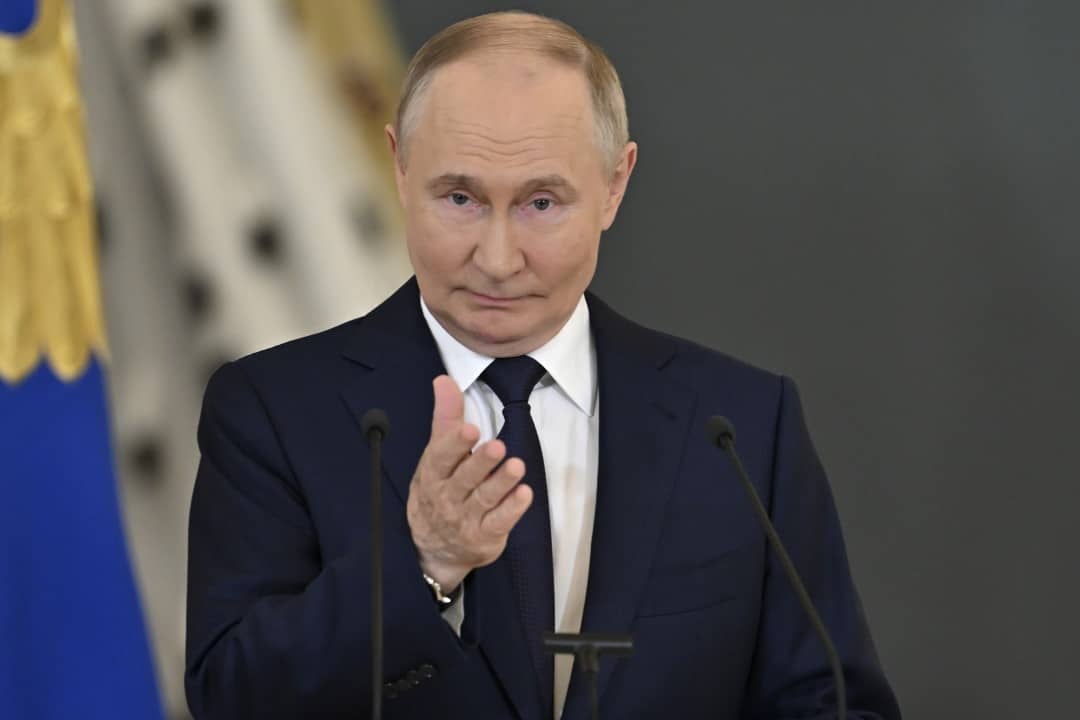
During a recent visit to a military aviation school in the city of Krasnodar, the Russian leader directly addressed the role of women in the country’s contemporary society. The declaration reinforces a government guideline that links the patriarchal family structure to the strategic objectives of Estado. The speech given to a specialized female audience highlights the attempt to align professional development with domestic expectations promoted by the central government over the last few decades.
The meeting took place with women who work as military pilots, a traditionally masculine environment where government rhetoric found space to outline rigorous social expectations. Local authorities have intensified public campaigns that associate domestic behavior, motherhood and maintaining beauty with national stability. The presence of high-ranking officers during the event highlighted the importance that the federal administration attaches to the dissemination of these ideals among the ranks of the armed forces and the civilian population.
The Russian federal administration uses official pronouncements to shape public perception of civic and family duties on an ongoing basis. The focus is on maintaining historical customs as a shield against external cultural influences, which are often described as damaging to sovereignty. Especialistas in geopolitics observe that the insistence on preserving a national identity based on the traditional family serves as a tool of internal unification in times of prolonged diplomatic tensions.
Government Guidelines for Family Structure
The government established a direct correlation between citizens’ personal choices and the nation’s defense capacity. Documentos recent strategies point to the traditional family as the fundamental nucleus for the country’s long-term cultural and military survival. The formulation of public policies has been aimed at financially and socially rewarding families that fit the model stipulated by the authorities of Moscou.
The speeches directed to the military emphasized that, regardless of the profession exercised and the level of excellence achieved at work, the primary responsibility for managing the home and motherhood remains unchanged. Essa vision is widely disseminated through state communication channels and religious leaders allied with the government, creating an echo chamber that reinforces the female role primarily within the domestic environment.
There is a coordinated effort to discourage Western family models, promoting a narrative that true female strength lies in the ability to balance service to country with submission to historical gender roles. Public education has also undergone recent curricular changes to ensure that girls and boys receive differentiated instruction about their future social and family responsibilities from their earliest school years.
Human rights organizations note that this rhetorical pressure creates an environment of silent restraint for professionals seeking financial independence or careers outside the scope approved by Estado. The lack of support infrastructure, such as full-time daycare and equal parental leave, forces many citizens to make difficult decisions between professional advancement and meeting the social demands imposed by official discourse.
Demographic crisis and birth incentive policies
The urgency to promote motherhood is intrinsically linked to the population decline that the country has faced in recent decades, aggravated by recent conflicts and the emigration of qualified young people. Estatísticas officials indicate an insufficient birth rate to guarantee generational replacement, which led the government to implement robust financial incentive programs for large families. Official rhetoric transforms procreation into an unquestionable patriotic duty, where each new citizen is seen as a vital resource for maintaining territorial and economic sovereignty. Estado redirects substantial resources to campaigns that extol the figure of the heroine mother, a concept rescued from previous political eras to stimulate population growth and compensate for the severe demographic losses recorded in the last censuses.
In parallel to economic incentives, there is an aggressive legislative movement to make access to family planning procedures more difficult and reinforce conservative education in public schools throughout the territory. Ministério of Especialistas in demography point out that, although government measures are ostensible and widely financed, the effectiveness of these policies in the long term remains uncertain in the face of global economic instabilities and international sanctions that directly affect the purchasing power and cost of living of ordinary families in the provinces furthest from the capital.
The role of state media in propagating ideals
Government-controlled television stations dedicate a large part of their programming to the exaltation of families that follow the strict patriarchal model and demonstrate loyalty to state precepts. Programas of auditorium, local news and soap operas are carefully scripted to show the negative consequences of abandoning traditions and adopting behaviors considered liberal.
Public figures who deviate from the established standard often face structured smear campaigns or severe professional ostracism. The homogeneity of media discourse ensures that the official message reaches all age groups without significant opposition, consolidating the narrative that the security of the Estado depends on civil obedience to imposed customs.
Strict control over the internet and social networks prevents the formation of organized movements that challenge the family guidelines of the Estado. Plataformas digital media are closely monitored by intelligence agencies to suppress organic debates about gender equality, division of domestic tasks or reproductive rights, ensuring a monopoly on information.
Intersection between national security and local customs
Defense policymaking formally incorporated the protection of moral values as a priority equivalent to the protection of the country’s physical borders and natural resources. The security council issued guidelines classifying the importation of foreign ideologies on gender and family dynamics as an existential threat to social cohesion and regime stability. Essa broad security doctrine allows the government to use the intelligence apparatus, armed forces and local police to monitor and repress civil organizations that promote agendas contrary to state orthodoxy. The narrative that the country operates as a moral fortress against supposed global decadence serves to justify diplomatic isolationism, prior censorship and the increasing militarization of civil society. Massive investment in patriotic youth movements and civic-military education aims to create a new generation completely immune to questions about central authority and the predetermined roles for men and women. The absolute fusion between official religion, heightened patriotism and family duty creates a highly surveilled social fabric, where ideological dissent is quickly identified, isolated and neutralized through legal mechanisms before it manages to gain any political traction or significant popular support in large metropolises.
International reactions and diplomatic analysis
International bodies monitor the setback in civil rights with growing concern, issuing documentary reports that detail the institutionalization of gender inequality in the public and private spheres. Diplomatas foreigners report extreme difficulties in maintaining bilateral dialogues on human rights due to the defensive and openly hostile stance of local authorities towards any type of external scrutiny.
The insistence on a rigid social model distances the country from global forums for social, scientific and academic cooperation. Pesquisadores of independent institutes warn that the systematic exclusion of women from senior corporate leadership positions and technological innovation harms the nation’s economic development, reducing the competitiveness of the internal market in the face of global advances.
Expectations for the female job market
Experts in labor economics project a severe stagnation in female professional advancement due to the simultaneous pressure for excellence in the corporate environment and exclusive dedication to domestic and family management. The absence of real and effective public support policies forces thousands of highly qualified professionals to abandon their careers prematurely, generating a talent deficit in critical sectors of the economy that already suffer from a lack of specialized labor and commercial isolation.
Civilian population adaptation strategies
Faced with increasing legal and social restrictions, citizens find subtle forms of resistance and adaptation operating strictly within the margins of the current legal system. Redes of informal support among professionals is gaining silent strength in large urban centers, operating discreetly to provide technical mentoring, training and psychological support completely outside the government radar and state media.
The profound duality between the required public discourse and the private reality experienced demonstrates the undeniable complexity of local contemporary society. Enquanto official pronouncements from senior officials demand absolute compliance with the role of housewife, daily economic needs and inflation continue to irreversibly drive female participation in the workforce in industries essential to maintaining the country’s basic infrastructure.



