
Toyota suspends global sales of hybrid SUV due to lack of parts and focuses on waiting list


The Japanese automaker announced the global and indefinite suspension of orders for one of its models with electrified engines most sought after by the consumer market. The decision was taken in response to a chronic crisis in the supply of essential components, directly affecting the assembly line and the company’s ability to meet delivery deadlines agreed with end customers on several continents.
The accumulation of unfulfilled orders generated a waiting list that exceeds the current capacity of Asian and Western factories, forcing the company’s management to prioritize buyers who had already formalized the acquisition and signed contracts. The interruption aims to avoid damaging the relationship of trust with the public and prevent the collapse of the manufacturer’s international distribution logistics.
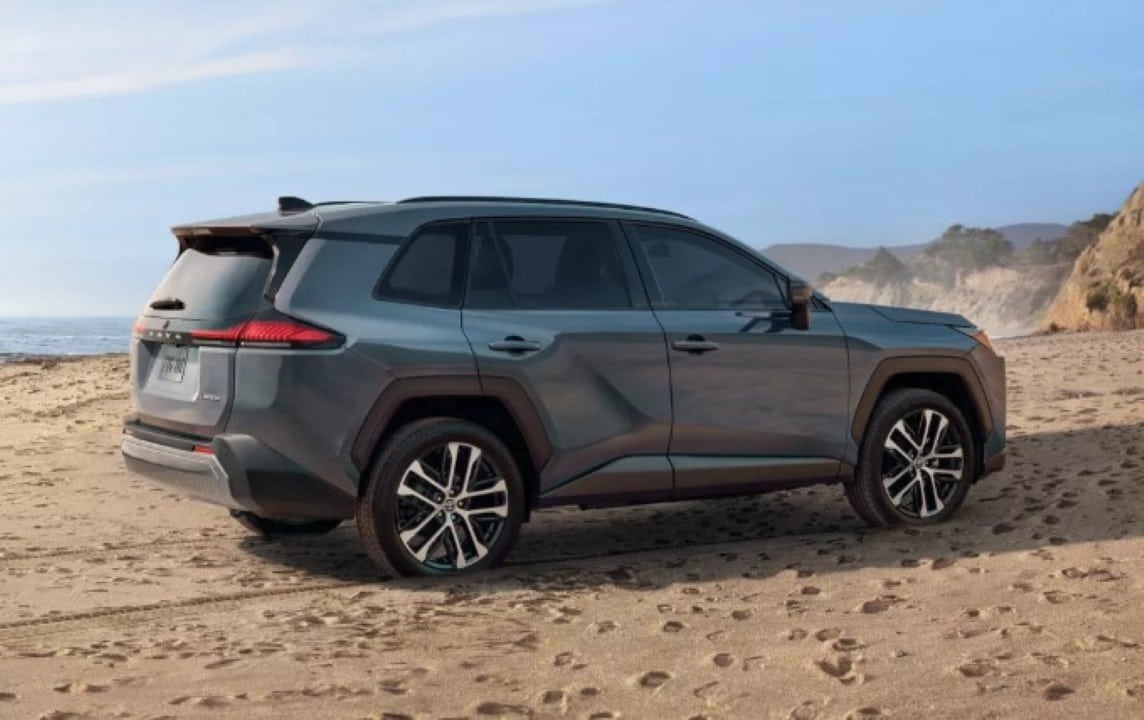
To overcome the situation on production lines and organize the flow of deliveries, the company established strict operational guidelines that involve the following main points:
– Immediate Congelamento of new reservations at all authorized dealerships around the world.
– Redirecionamento of all microchips available exclusively for vehicles already invoiced.
– Revisão complete contracts with suppliers of high-precision electronic parts and sensors.
– Manutenção of manufacturing operations at an adjusted pace to settle outstanding delivery liabilities.
Supply chain bottlenecks
The root of the logistical problem lies in the persistent shortage of semiconductors and specific electronic modules used in the electrified propulsion system of sports utility vehicles. Esses components are vital for energy management between the combustion engine and batteries, making it impossible to assemble cars without previously installing these parts on the chassis.
Despite continuous efforts by the automaker’s purchasing department to diversify suppliers, the high technical complexity required by the brand’s quality standards limits the options available in the international auto parts market. The manufacturer’s executives admit that dependence on specific suppliers has created a severe point of vulnerability in large-scale production.
Distribution network strategies
With the impossibility of registering new orders for the hybrid model, the global distributor network had to change its sales planning to maintain store profitability and cash flow. The commercial teams received direct guidance from regional headquarters to focus on selling models with greater stock availability and offering certified pre-owned vehicles.
The demand from consumers who arrive at showrooms in search of a sports utility vehicle has required service training on the part of sales managers. Transparency about the absence of a forecast for the reopening of the reservation system became the official policy to avoid legal proceedings or notifications to consumer protection agencies.
In strategic markets of América, Norte and
Vehicle architecture and assembly complexity
The suspension-affected model is built on the company’s renowned global modular platform, known technically as the TNGA architecture, specifically in the GA-K variant. Esta structural base was developed over years of research to provide a lower center of gravity and greater torsional rigidity, improving stability and occupant comfort.
Assembly on this modular platform requires minute integration of high voltage cables and traction battery cooling systems. The lack of a single temperature sensor or a specific wiring harness prevents the vehicle from advancing to the next workstation on the robotic production line.
Engineers at the Japão headquarters work at a fast pace to try to redesign certain printed circuit boards, seeking to use more generic and abundant processors in the global technology market. Essa technical adaptation requires months of rigorous safety and durability testing before being approved for commercial use on highways.
The manufacturer’s goal is to reduce electronic complexity without compromising the energy efficiency that made the vehicle a global sales success. Qualquer modification to the original project undergoes severe scrutiny from environmental and traffic approval departments in dozens of different countries before release.
Pressure by advanced propulsion system
The PHEV variant, which allows batteries to be charged using external sockets and offers considerable autonomy in purely electric mode, was the one that suffered the biggest setback with the halt in orders at dealerships. The demand for this configuration exceeded all of the automaker’s initial projections, driven by government policies to encourage clean mobility and the rise in fossil fuel prices in several regions of the planet. The commercial success of the plug-in hybrid system ended up becoming an unsustainable logistical bottleneck, as the architecture requires batteries with higher energy density and current converters that are much more sophisticated than conventional models.
The thermal management of the lithium-ion cells used in these versions requires state-of-the-art microcontrollers, the same ones that are sought after by technology companies focused on manufacturing smartphones, computers and data servers. Competition in the acquisition of these inputs placed the automotive division at a disadvantage in the purchasing market, forcing the adoption of the factory quota system and the stoppage of work shifts. The central administration recognizes the difficulty of predicting the speed of the average consumer’s energy transition, which has resulted in an evident mismatch between the installed capacity of electrical component factories and the volume of orders registered globally.
Integration of protective equipment
Another determining factor in blocking production is the shortage of millimeter wave radars and high-resolution stereoscopic cameras, essential items for the operation of the Toyota Safety Sense driving assistance package. Este suite of active technologies, which includes autonomous emergency braking with pedestrian recognition, lane keeping assist and adaptive cruise control, has become mandatory standard equipment to maintain maximum ratings in rigorous international crash tests. The automaker’s internal policy strictly prohibits the manufacture and delivery of vehicles without these protection features just to overcome the lack of parts in stock. The vehicle engineering and safety department determined that the lowering of the safety level in exchange for production volume is unacceptable by the company’s standards. Consequentemente, thousands of units remain parked and incomplete in factory yards, awaiting the arrival of specific batches of optical sensors and radars so that they can be completed, inspected by quality audits and finally dispatched to transport companies and cargo ships.
Resumption of sales operations
The regularization of the production flow and the consequent reopening of order books depend on a stabilization of the supplier network, which still requires caution on the part of the industry. Analistas from the automotive sector project that fully replenishing component stocks will require a coordinated effort between miners, chipmakers and maritime logistics companies.
Market information indicates that the automaker is working with the expectation of gradually normalizing the acceptance of new orders, with full normalization only scheduled for the end of 2026. Até this period, the operational order is to focus on the delivery of delayed units and maintain direct communication with affected buyers.
Manufacturer’s future planning
To avoid repeating interruptions in assembly lines, the company began a process of restructuring its semiconductor and electronic component supplier base. The strategic plan involves long-term partnerships with microchip factories and the development of more unified electronic architectures, aiming to ensure production stability for the next generations of electrified vehicles and maintain the brand’s global launch schedule.




