
Gabriel Bortoleto makes history and scores Audi’s first points in Formula 1 at the Australian GP

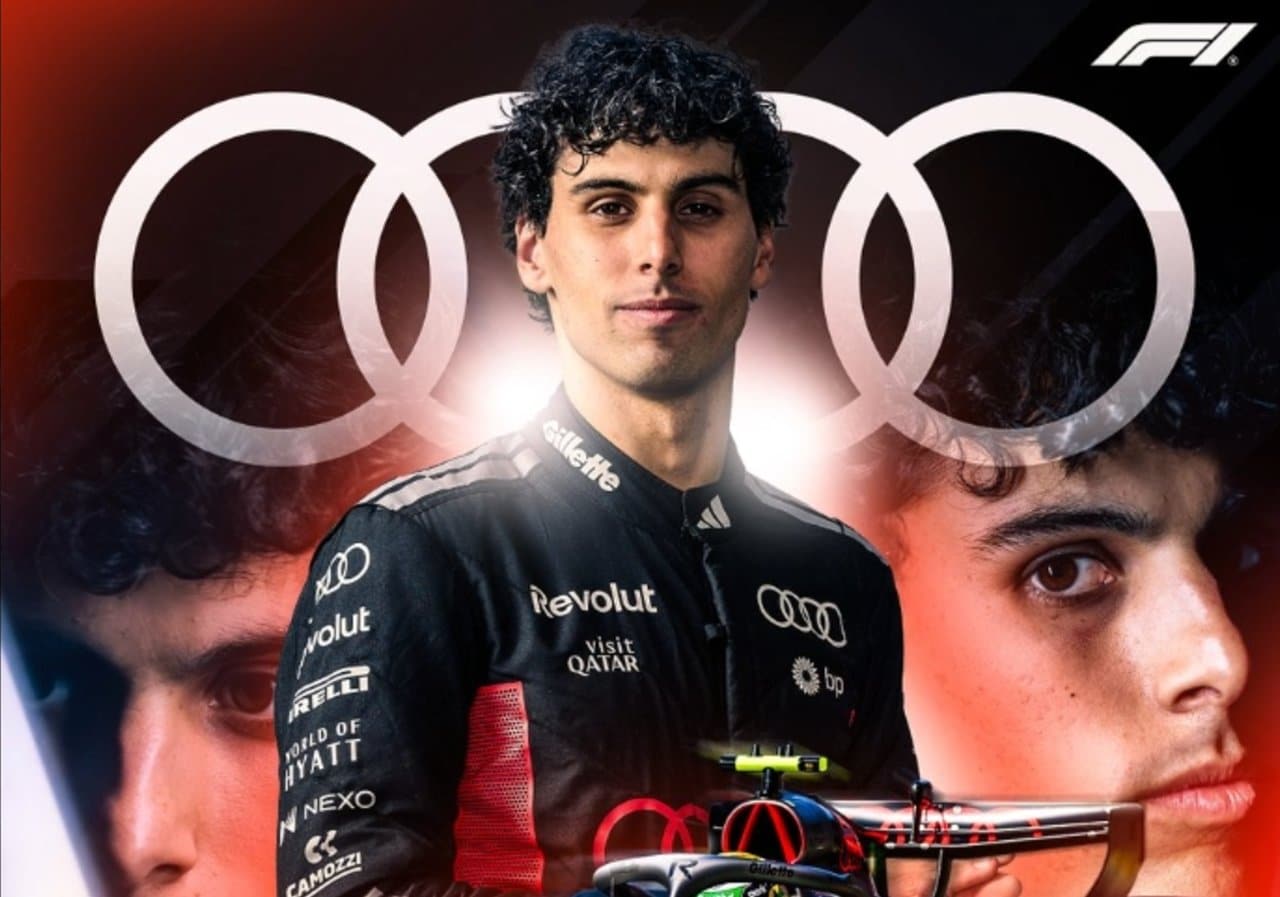
The official debut of Gabriel Bortoleto in the 2026 season of Fórmula 1 exceeded initial expectations in terms of resilience and strategic outcome during the Grande Prêmio of Austrália. The Brazilian driver, who defends the colors of the newcomer Audi, crossed the finish line in ninth place, guaranteeing two fundamental points for the German manufacturer’s project in the highest category of world motorsport. Sob the sun of Melbourne, in the early hours of this Sunday, March 8, 2026,
The Brazilian’s performance in Albert Park was built through aggressive and, at the same time, conservative driving in moments of greatest risk on the track. Partindo from tenth position on the grid, the young driver had to deal with the typical instability of a car that is still seeking the ideal adjustment under the new technical regulations. At the end of the 58 laps, the celebration in the Audi pits highlighted the weight of the achievement, as Bortoleto’s teammate, the veteran Nico Hulkenberg, was not even able to complete the start, abandoning with electrical problems in the initial meters.
- Gabriel Bortoleto scored Audi’s first two points as a factory team in F1.
- The Brazilian driver made two crucial strategic stops during yellow flag periods.
- The ninth position was consolidated after direct overtaking of cars from Alpine and Racing Bulls.
- Bortoleto finished the race as the best representative of the debuting and restructured teams.
Strategic recovery marks the beginning of the journey from Bortoleto to Melbourne
The start was not the simplest for the Brazilian representative, who ended up losing a position in the first meters and falling to 11th place. Entretanto, the reaction was immediate, and Bortoleto used the power of the Audi engine to recover the position lost on the opening lap, surpassing the experienced Fernando Alonso. The ability to keep the car on the track while established names suffered from mechanical breakdowns was the driver’s biggest difference, as he knew how to save his equipment on the busiest sections of the Australian circuit.
On lap 12, the first major strategic opportunity arose with the breakdown of Red Bull from Isack Hadjar, which led to the entry of the virtual safety car. The Audi team acted quickly and called on Bortoleto for his first tire change, allowing him to return to the asphalt in a favorable position to fight for the middle field. Essa decision was vital to neutralize the pressure exerted by Pierre Gasly and Esteban Ocon, who were trying a late stopping strategy to surprise the Brazilian driver in the final laps of the competition.
Intense duels in the midfield test the Brazilian’s talent
The most critical moment for Gabriel Bortoleto occurred during the second yellow flag period, triggered on lap 19 after Valtteri Bottas retired. With the pit entrance momentarily closed, the Brazilian needed to maintain concentration so as not to lose contact with the leaders while awaiting authorization for his second stop. Após the service carried out by the mechanics of
With newer tires than its direct rivals, Bortoleto launched precise attacks on the Alpine duo and managed to establish itself once again in the scoring zone. The most exciting dispute took place in the final laps, when the Brazilian stuck behind the Racing Bulls of Arvid Lindblad. Embora the young Englishman managed to hold on to eighth place to score his first four points, the pressure imposed by Bortoleto showed that the Audi car has enough race pace to challenge the more traditional teams on the Fórmula 1 grid.
Mechanical consistency puts Audi ahead of giants in crisis
While George Russell and Mercedes dominated the top of the grid, Bortoleto’s fight was against the reliability of a completely new project. The fact of finishing the race, in itself, would already represent a step forward for the Audi, which faced numerous difficulties during pre-season testing. By crossing the finish line in ninth, the Brazilian not only scored, but also provided valuable data for the team’s engineering, surpassing Red Bull, Hadjar and the two Aston Martin, who abandoned the race due to severe technical problems.
Bortoleto’s consistent performance in Melbourne serves as a calling card for the rest of the season, proving that the youth category champion has the necessary refinement for the sport’s elite. Ninth place puts Brasil back on the points map on a regular basis, something that generates optimism for both fans and sponsors involved in the project. The result also gives the German manufacturer peace of mind to focus on aerodynamic development, knowing that it has a driver capable of extracting results even in adverse conditions.
Aerodynamic challenges and energy management in the Austrália
The Albert Park circuit is known for placing high demands on the energy recovery system, one of the pillars of the new 2026 regulations. Essa management was what prevented Pierre Gasly from using the moving wing to try to overtake on laps 45 and 46, when the difference between the two drivers was less than a second.
In addition to the electronics, the Brazilian had to deal with the severe wear of the rear tires, a feature that affected almost the entire grid due to the high track temperatures in Melbourne. Bortoleto’s ability to maintain constant lap times, even with degraded compounds, allowed Audi to avoid a third stop that would have been disastrous for the team’s ambitions. The absolute focus on preserving the equipment was praised via radio by engineering, which highlighted the driver’s maturity in his first official race for the brand.
Expectations for the GP of China and the development of Audi
With the first two points under their belt, Gabriel Bortoleto and Audi now turn their attention to Grande Prêmio and China, which takes place next weekend. The Xangai circuit, with its long straights and long-radius curves, will present a distinct challenge for the mechanical set-up of car number 5. The presence of the first sprint race of the year will increase the pressure on the Brazilian, who will only have one free practice session to find the ideal set-up before the competitive sessions that define the starting grid.
The optimism within the German garage is visible, but the team preaches caution, recognizing that the scoring zone will be a fierce battle at each stage of the world championship. Bortoleto stated, in brief words after the race, that the focus now is to analyze the mistakes made at the start to ensure that the performance in Xangai is even more solid from the first meters. The goal is to consolidate Audi as a frequent force in the top 10, taking advantage of the instability of rivals such as Williams and Cadillac, who left Austrália without gaining points.
The impact of the Bortoleto result on Brazilian motorsport
The presence of Gabriel Bortoleto in the scoring zone on his debut is a milestone for the sport in Brasil, ending a hiatus of uncertainty about the potential of new talents on the international stage. The pilot showed that the transition to the Fórmula 1 was well absorbed and that the pressure of representing a giant like the Audi did not affect his technical performance. Ninth place in Melbourne is seen by analysts as the beginning of a trajectory that could return the country to prominence in the near future, especially with the constant evolution of the car.
The support of the Brazilian fans was felt on social media and in the stands of Albert Park, where Brasil flags greeted the driver after the final flag. Bortoleto now occupies ninth position in the world drivers’ championship, tied in strategic importance with the race leaders for having been responsible for taking the zero off his team’s score. The journey to 2026 promises to be one of continuous learning, but the first step taken at Austrália indicates that the path chosen by the pilot and his technical team is in the right direction for long-term success.





