
Scientists intensify studies of Halley’s comet after four decades and prepare new space mission

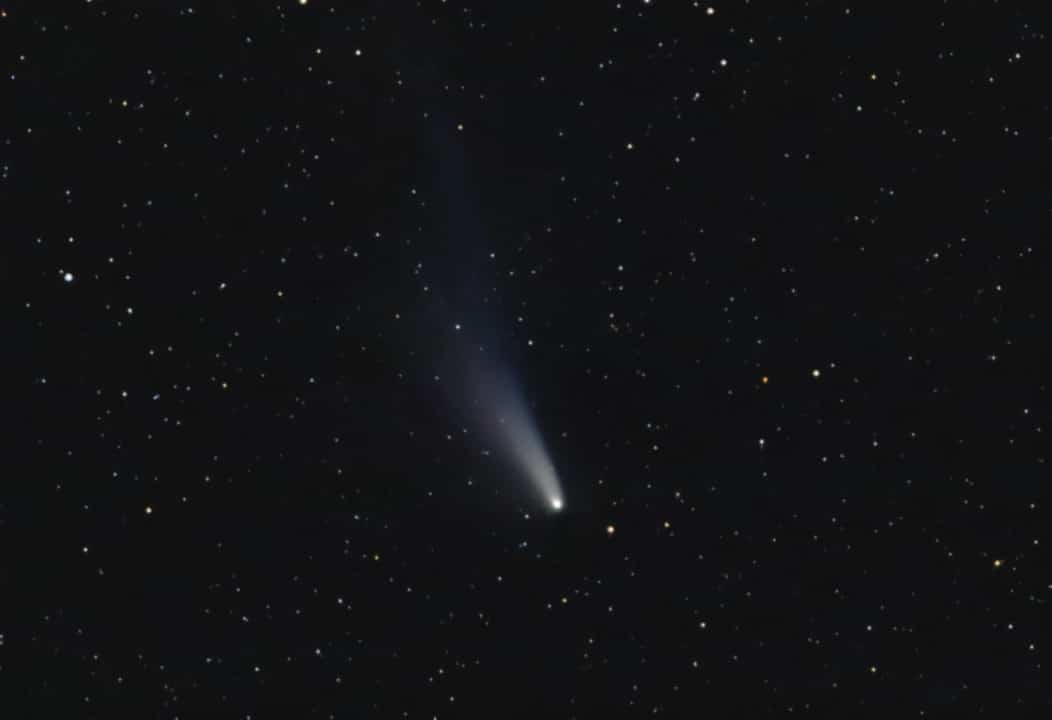
The passage of four decades since the last perihelion of the most famous celestial body in modern astronomy drives a global task force of researchers. The event that occurred in the first months of 1986 transformed human understanding of the formation of Sistema Solar and established unprecedented parameters for contemporary astrophysics. Atualmente, research institutes review the vast database collected at that time to calibrate new deep space exploration instruments, ensuring that current technology builds on the historical legacy.
The closest approach to Sol, which left the object approximately 88 million kilometers from the star, required an unprecedented technological effort due to unfavorable optical observation conditions from the Earth’s surface that year.
The forty-year time frame highlights fundamental advances made by space missions in that decade:
– Primeira direct image capture of the nucleus of an active comet in space;
– Detecção of complex organic compounds in the gas and dust cloud;
– Comprovação of the dirty ice theory proposed by previous theoretical models;
– Estabelecimento of navigation protocols for intercepting bodies at high speed.
The elliptical trajectory, which lasts on average between 74 and 79 years, places the object currently in its return phase towards the center of the planetary system, requiring advance technical preparations from international agencies.
Space agencies redefine orbital interception strategies
The scientific mobilization of 1986 resulted in the formation of an international coalition that sent multiple probes to study the phenomenon up close. The Soviet space program led the first approaches with the spacecraft Vega 1 and Vega 2, which carried out crucial flybys in March of that year. Esses equipment was responsible for mapping the comet’s vast coma, identifying the dynamics of the release of volatile material and capturing direct samples of particles that altered the chemical models adopted by science academies until that moment. The presence of water molecules confirmed hypotheses about the distribution of water resources in the primordial universe.
The European consortium took on the biggest operational risk by directing the Giotto probe onto a trajectory that placed it less than 600 kilometers from the core’s irregular surface. Apesar From the severe damage caused by the impact of debris traveling at extreme speeds, the armored cameras transmitted high-resolution photographs that revealed a dark and complex topography. The effort was complemented by Asian agencies, which focused on measuring magnetic interactions and solar wind, consolidating a data package that serves as the basis for the design of any current mission aimed at asteroids and small celestial bodies.
Historical records map the trajectory of Sistema Solar
Documentation of the celestial body’s periodic appearances constitutes one of the oldest and most accurate continuous archives of astronomical science. Relatos detailed reports drawn up by Chinese observers in 240 BC already described the movement of the object in the night sky with remarkable mathematical precision and methodological rigor.
In Europa, the passage recorded in 1066 gained immense cultural and political prominence, being immortalized in medieval tapestries that associated the luminous phenomenon with changes of power and historical battles. Essa mystical vision predominated for centuries before the scientific revolution established logical parameters for observation.
The paradigm was definitively broken at the beginning of the 18th century, when the application of the laws of universal gravitation allowed the exact calculation of the elliptical orbit. The correct mathematical prediction of the return in 1758 validated Newtonian celestial mechanics and transformed comet observation into an exact and predictable discipline.
Public reactions contrast over centuries of observation
The transit that occurred in 1910 generated atypical social movements in several regions of the globe, motivated by the first spectroscopic detection of cyanogen gas in the comet’s tail. The circulation of decontextualized technical information in the press at the time led to the sale of respiratory protection equipment, dubious chemical formulations and the construction of underground shelters in several cities.
This scenario differed drastically from the environment observed seventy-six years later, when the rapprochement was accompanied by intense scientific dissemination campaigns and academic engagement. Planetários, universities and astronomy clubs coordinated public observation events, focusing on education about orbital physics, the distribution of suitable telescopes and the complete demystification of the risks of the phenomenon.
Continuous monitoring requires extremely high-precision telescopes
Innovations in armor and autonomous navigation tested during interception in the 1980s have made modern small-body exploration projects viable. The successful landing of modules on other comets years later used approach algorithms derived directly from that pioneering autonomous flight experience.
Currently, surveillance of the object is maintained by large observatories positioned both in Earth orbit and at strategic points on the planet’s surface. Após recently reached its aphelion, the furthest point of its orbit beyond the orbit of Netuno, the celestial body began its long gravitational fall back to the center of the system, gradually accelerating.
Collecting photometric data allows researchers to assess the level of thermal and structural activity of the frozen surface even billions of kilometers away. Variações minimums in the brightness captured by the lenses indicate how the material reacts to the microgravity environment and extreme cold away from intense solar radiation.
Global databases process these measurements in an automated way, distributing packages of information in real time to academic research networks. Essa technological integration powers artificial intelligence systems that constantly refine the planetary system’s orbital dynamics maps and correct minor route anomalies.
Spectrometric analyzes reveal unprecedented details of the structure
Measurements carried out by spectrometry instruments four decades ago established that the nucleus is approximately 15 kilometers long, exhibiting an elongated morphology often compared to the shape of an irregular peanut. The surface proved to have one of the lowest levels of reflectivity in the planetary system, absorbing most of the sunlight and directly contradicting old theories that described comets as glowing spheres of exposed ice. The invention



