
Scientists process historical archives of Halley’s Comet to calibrate new generation of telescopes

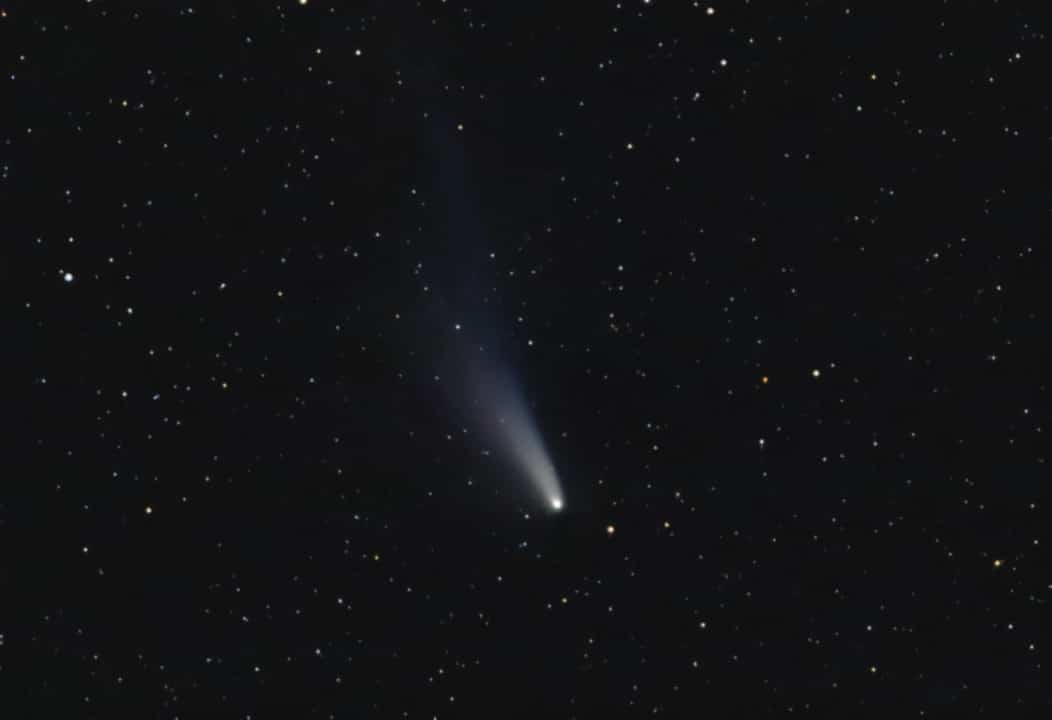
Global astrophysics intensifies the processing of orbital records captured forty years ago during the last approach of the most studied celestial body in human history. Centros researchers use these key metrics extensively to update navigation algorithms and prepare the technological infrastructure for the next cycle of observation of the solar system. The detailed review of the files aims to ensure that past capture failures are not repeated in future explorations.
The current technical survey strategically focuses on calibrating state-of-the-art optical instruments, ensuring that future interceptions overcome the severe visual barriers faced at the end of the twentieth century. The mathematical review of the trajectories allows a much deeper understanding of the gravitational dynamics that govern trans-Neptunian objects and errant icy bodies. Space Engenheiros cross-references this ancient information with readings from modern sensors to create high-fidelity predictive models.
With an orbital period that oscillates between 74 and 79 Earth years, the star maintains a constant elliptical route through the confines of deep space, subject to variations caused by the attraction of giant planets. The information extracted from that historical passage continues to provide the main database for formulating theories about the chemical origin of rocky planets and the distribution of water in the early universe. Data mining work on digitized analog files reveals dust emission patterns that had gone unnoticed by computers at the time.
Joint effort drives mapping of volatile structures
The international mobilization historically known as Armada Halley established an unprecedented paradigm of scientific cooperation between different aerospace powers in a period of great geopolitical tension. Sondas developed by multiple countries were sent on convergent and highly complex trajectories to perform the first in situ analysis of an active cometary nucleus. Sharing telemetry between the agencies ensured that the ships did not collide with the larger debris ejected by the expanding object’s coma.
The Soviet space program led the way in interception with the Vega 1 and Vega 2 spacecraft, specifically designed to withstand the hostile environment and high radiation close to the star. The impact sensors and spectrometers in these units recorded the first direct samples of cosmic dust and gases released by the accelerated sublimation of ice under intense solar radiation. Transmitting this raw data to terrestrial antennas required a global radio capture effort at multiple frequencies.
Chemical measurements immediately revealed the presence of complex organic compounds and water molecules in the vast cloud of volatile material that surrounds the central structure during perihelion. Essa discovery forced an immediate and profound revision of the astrophysical models that explained the seeding of basic elements fundamental to the formation of habitable planetary atmospheres. The detection of carbon polymers in deep space has opened a new field of study focused on chemical astrobiology.
The success of the European mission Giotto complemented the international effort by carrying out an extremely risky maneuver, crossing less than 600 kilometers from the object’s dark surface at an impressive relative speed. The transmitted images showed a chaotic topography, full of active craters and fissures, contradicting the current academic thesis that these celestial bodies were uniform and bright spheres of ice. The probe’s protective shields suffered severe damage from the particle impacts, but the data core remained intact for later analysis.
Millennial records document changes in celestial mechanics
The rigorous cataloging of the star’s passages through the interior of the planetary system has formal records dating back to 240 BC, initially created by meticulous Asian observers. Astrônomos Chinese developed precise methods of positional annotation, mapping the trajectory of the bright object against the background of fixed stars with each new appearance in the eastern night sky. Esses old astronomical catalogs today serve as calibration tools for long-term retrospective orbital simulation software.
In the Europa of the eleventh century, the orbital transit coincided with significant geopolitical and military events, being immortalized in detail in historical textile artifacts such as the famous Tapeçaria of Bayeux. Apenas In the eighteenth century, mathematician Edmond Halley applied the laws of gravitation recently published by The confirmation of his calculations after his death carved his name in the history of science and changed human perception of the cosmos.
Advances in telescopes ensure continuous surveillance in deep space
Today’s astronomical monitoring infrastructure differs drastically from the analog equipment and primitive sensors used during twentieth-century approaches. Observatórios very high precision orbitals maintain photometric tracking of the object even when it reaches aphelion, the point of greatest thermal and gravitational distance in relation to Sol, located beyond the orbit of Netuno. Continuous capture of residual light allows space engineers to calculate the mass loss rate of the core in a state of hibernation, assessing the structural integrity of the celestial body after millennia of successive thermal wear. Sensores infrared can detect the tiny heat emitted by frozen rock, providing vital data about the material’s internal density.
The complex navigation protocols and micrometeorite shielding techniques originally developed for this historic fleet have served as the base architecture for modern, big-budget exploration missions. Projetos Contemporaries who performed controlled landings on other errant bodies used the approach algorithms rigorously tested during that pioneering intercept four decades ago. The telemetry inherited from those missions ensures that the new satellites have computational autonomy to correct routes in real time, compensating for the inevitable delay in radio communication caused by vast interplanetary distances. Essa technological heritage reduces autonomous flight software development costs in today’s government agencies.
Scientific literacy replaces misinformation during visible transits
The behavior of civil society in the face of astronomical phenomena of great magnitude has undergone a profound structural transformation, driven by the democratization of technical information and the proactive action of government research agencies. Durante At the beginning of the twentieth century, the spectroscopic detection of toxic chemical compounds in the star’s tail generated a wave of global misinformation, resulting in the irrational sale of protective equipment against gases that would never reach the Earth’s atmosphere. Quarenta years ago, the global scenario already showed notable educational maturity, with educational institutions organizing massive guided observation campaigns and distribution of informative booklets based on physical facts. Redes of amateur astronomers worked in sync with professional observatories to provide real-time luminosity data, establishing the first major planetary-scale citizen science model. Essa direct pedagogical approach eliminated the mysticism historically associated with wandering celestial bodies and consolidated scientific communication as an essential tool for the intellectual development of modern populations. Absolute transparency in the release of raw data allowed the public to follow the missions’ progress step by step, transforming a natural astronomical event into an immeasurable milestone of international academic engagement. The legacy of these outreach campaigns has shaped the way public relations departments at space institutions operate today.
Morphological analyzes redefine theories about structural composition
Highly sensitive mass spectrometers confirmed that the primary nucleus is approximately 15 kilometers long on its longest axis, exhibiting an asymmetrical shape that strongly resembles a space peanut. The surface has been shown to have a very low albedo, absorbing almost all the sunlight it receives and reflecting only a minimal fraction, indicating a thick crust of carbonaceous dust that isolates the internal reserves of primordial ice from immediate evaporation.
Planning new interceptions requires mathematical precision
Contemporary processing of legacy data requires the continuous use of supercomputers capable of simulating the minute gravitational perturbations caused by the gas giants of our planetary system. Cada millimeter change in the comet’s orbit is calculated with almost zero margins of error to ensure that future interception probes find the object in the exact time window of greatest scientific activity. Mathematical precision is the only factor that guarantees the success of missions that take decades to execute.
Aerospace engineers are currently focusing on developing ultra-high efficiency ion thrusters, strictly necessary to match the extreme speed of the celestial body as it approaches its scorching perihelion. Orbital velocity synchronization is the critical and indispensable factor to allow future landers to be able to anchor on the irregular surface without suffering catastrophic structural damage caused by uncontrolled kinetic impacts. Testes in vacuum chambers reproduce the exact conditions measured in the past.
Space agencies maintain a rigorous schedule for reviewing archived scientific literature to avoid redundancy of expensive instruments on upcoming missions. The community’s central and unanimous goal is to equip the next robotic spacecraft with thermomechanical drills capable of extracting samples from the deep cometary subsoil, seeking pure materials unaltered by the cosmic microwave background. The return of these intact samples would represent the pinnacle of materials engineering.
Orbital dynamics influence peripheral exploration missions
The continued study of closed elliptical pathways provides essential operational parameters for the exploration of other remote and dark regions, such as the Cinturão of Kuiper and the distant Nuvem of Oort. In-depth understanding of the mechanics of frozen bodies directly aids in identifying viable secondary targets for the new space telescopes that tirelessly map the boundaries of the solar gravitational domain. The cataloging of thermal anomalies guides the pointing of lenses to regions of interest.
Meticulous preservation of raw data collected over the past century ensures that new generations of scientists can apply analytical methods based on modern computational intelligence to validated historical information. Essa intelligent data recycling dramatically optimizes space exploration budgets, maximizing the practical scientific return on decades-old missions and laying a solid, reliable groundwork for the great technological discoveries of the future.



