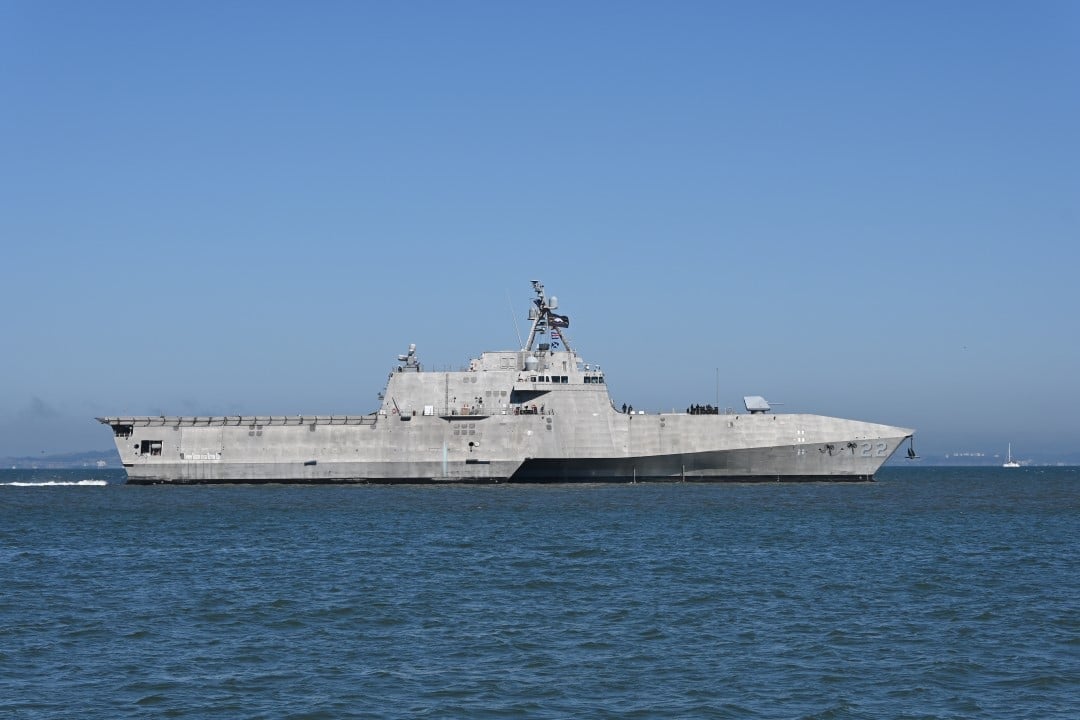
A precision military operation resulted in the neutralization of a large naval structure adapted for military purposes. The main target consisted of a floating base designed specifically for the launch and recovery of unmanned aerial vehicles. The direct action caused a large fire on the vessel, which has structural dimensions comparable to large warships used in the middle of the last century.
The Comando Central of the Estados Unidos (CENTCOM) officially confirmed responsibility for the attack, highlighting that the attack is part of an ongoing campaign. The central objective of this mobilization is to suppress the force projection capabilities of the Irã in international waters. The registration date points to March 5th, marking another chapter in the disputes over control of strategic navigation areas.
So far, military authorities have not released the exact coordinates of the maritime confrontation. Também There are no official reports confirming the number of crew on board or possible casualties resulting from the explosions. The US fleet’s focus remains on severely limiting Iranian naval activities that pose risks to global security and free trade.
Dimensions and capacity of the affected marine structure
The structure hit by the missiles operated under a peculiar classification in modern fleets. Conhecido Technically a base ship for drones, the equipment was entirely modified to house dozens of remote-controlled aircraft on long-range missions.
Defense experts point out that the conversion of merchant ships into military platforms has been a recurring tactic. Essa specific configuration allows the country to circumvent certain industrial limitations and expand its military range without the need to build high-cost conventional aircraft carriers.
The colossal size of the vessel caught the attention of international maritime traffic monitors. Relatórios intelligence indicates that the improvised flight deck was long enough for simultaneous maneuvers, resembling in volume the Essex and Segunda Guerra Mundial class ships.
Shortly after the impact of the projectiles, fires quickly spread throughout the steel superstructure. Although visual records of the moment of the attack were not released to the press, military communiqués attest that the fire consumed a large part of the launch and storage systems.
Continued mobilization of American armed forces
CENTCOM leadership has made clear that the current cadence of tactical operations will not be reduced in the near term. The main directive sent to fleet commanders is to maintain an offensive posture against any infrastructure that supports the operations of the regular Iranian navy. Esse deployment reflects a change in engagement doctrine, moving from purely defensive escort measures to preemptive strikes against launch platforms before they can operate in a hostile manner.
The current effort aims to structurally weaken the opposing naval force, with the ultimate goal of sinking the country’s operational capabilities at sea. Battle damage assessments suggest that the loss of this base ship represents a significant delay in the Teerã military expansion schedule. The destruction of a mobile platform of this size eliminates an important intelligence and attack vector that directly threatened the routes of oil tankers and cargo ships of different flags.
Evolution of combat tactics with remote aircraft
The use of unmanned aerial vehicles from offshore platforms has substantially altered oceanic defense doctrine in the last decade. Diferente than traditional fighters that require complex catapults and extensive runways, modern fixed- or rotary-wing drones can be launched from pneumatic rails retrofitted on virtually any flat deck. Essa Technological asymmetry allows nations with smaller defense budgets to project lethal power hundreds of kilometers from shore. Radars identified that the destroyed vessel served as a command and control node, relaying signals to swarms of drones. Neutralizing this floating operations center forces the opposing navy to withdraw its patrol lines closer to its land bases, decreasing the reaction time and coverage area of its autonomous weapons systems.
Diplomatic silence and fleet repositioning
The government of Irã chose not to issue immediate statements through its state channels following confirmation of the partial sinking of its vessel. The absence of an official public response maintains a layer of secrecy over the real intentions and next steps of the country’s military leadership.
Intelligence analysts intensively monitor radio communications and the movement of small speedboats in the region. Historicamente, the loss of high-value military assets generates atypical movements in coastal naval bases as a form of tactical realignment.
The secrecy surrounding the exact coordinates of the sinking also serves operational purposes for both sides. Evita exposes confidential patrol routes and complicates the work of rescue teams or recovering sensitive technological debris that could reveal industrial secrets.
Commercial shipping security and clash history
The current escalation is not an isolated event in the maritime theater of operations. Nos In recent months, Estados Unidos forces have conducted dozens of interceptions against weapons aimed at merchant ships transiting straits vital to the global economy.
Ground drone manufacturing and storage facilities have also been targets of recent bombings. The core strategy is to cut the logistics supply chain, from the factory to the launch pad at sea, systematically reducing force projection capacity.
Military alliances and constant monitoring
The overt presence of American destroyers and cruisers is complemented by integration with naval forces from allied countries. Radar data sharing and joint patrolling form a defensive shield designed to prevent further escalation and ensure the uninterrupted flow of international maritime trade by keeping waterways free from unauthorized blockages.
Strategic importance of global ocean routes
The region where military operations are concentrated is home to some of the most vital shipping corridors for the world economy. Diariamente, a significant portion of the global supply of oil and natural gas transits through these waters aboard supertankers. The presence of a hostile platform capable of launching coordinated air strikes represented a direct threat to the stability of commodity prices on the international market and the safety of civilian crews.
Marine insurers closely monitor each military incident recorded in the area, adjusting risk premiums for merchant fleets. The elimination of the base ship by American forces acts as an operational stabilization factor, conveying a message of deterrence. Shipping companies depend on the presence of blue water navies to ensure that the right of innocent passage is respected unconditionally.
Technological capabilities of the destroyed infrastructure
The unmanned aerial vehicles that operated from the burning vessel have technical characteristics aimed at saturating air defenses. Eles are designed to fly at low altitudes, making early detection by commercial ships’ onboard radars difficult.
The naval platform functioned as a force multiplier in the maritime environment. Instead of launching the drones from mainland territory, the ship allowed flights to be initiated at much shorter distances from the intended targets, reducing the alert time for defenses.
In addition to launching ammunition, the vessel also had electronic warfare and advanced optical surveillance equipment. The destruction of this floating command center temporarily blinds reconnaissance operations across a vast ocean area.
Battle Damage Assessment Procedures
After the main attack window ends, reconnaissance aircraft and observation satellites begin the process of scanning the affected area. The collection of thermal and visual images allows military command to confirm the exact extent of structural damage caused to the enemy vessel.
The intense fire reported in official statements is a clear indicator that ammunition magazines or aviation fuel tanks took a direct hit. Incêndios of this magnitude on modified ships usually results in total loss of the hull, making any attempt at towing and repair in coastal shipyards unfeasible.
