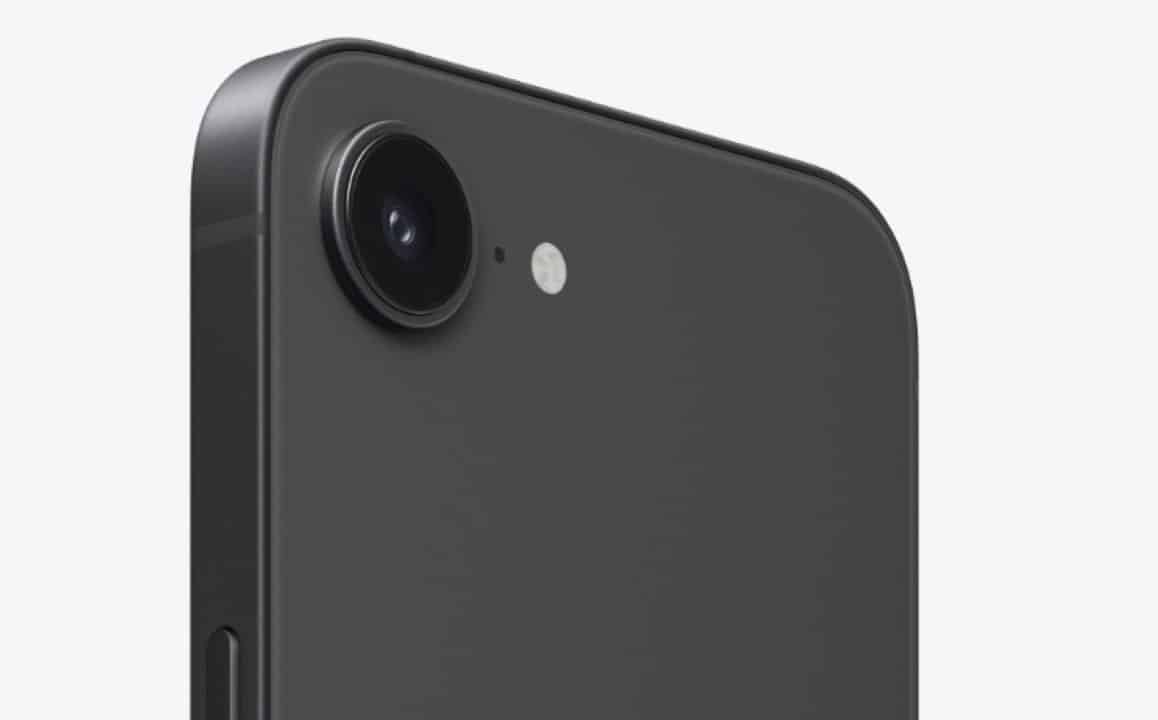
The first benchmarks of the iPhone 17e, equipped with the A19 chip, began to appear on specialized platforms. The model achieved a maximum score of 3,607 in the single-core CPU test and 9,241 in the multi-core. Esses numbers are very close to those recorded on the iPhone 17, which also uses the A19 chip and presents averages of 3,627 in single-core and 9,249 in multi-core.
The most obvious difference occurs in the GPU. The iPhone 17e has only four graphics cores, while the iPhone 17 maintains five active cores. Essa configuration results from a binning process, in which part of the cores are deactivated to take advantage of chips that have not reached full specifications. As a result, the Metal tests show scores between 30,831 and 31,597 points, with an average close to 31,163.
Graphics reduction mainly affects tasks that demand high 3D performance. Jogos Heavy duty, high-resolution video editing and augmented reality applications tend to run at a slightly lower frame rate compared to the higher model. Para daily use, such as social media browsing, video streaming and casual photography, the difference remains practically imperceptible.
Top CPU Results on Geekbench
The A19 chip maintains a six-core CPU architecture, two of which are high-performance and four are focused on energy efficiency. Essa structure allows good balance between raw power and battery consumption.
- Single-core: average of 3,320 to 3,607 points in the initial samples.
- Multi-core: variation between 8,373 and 9,241 points depending on temperature and load.
- Comparison with iPhone 16e: gain of approximately 18% in multi-core.
These values reinforce the significant evolution compared to the previous generation. The processor handles intense multitasking and artificial intelligence features without excessive heating in normal scenarios.
Quad-core GPU and graphics performance
The reduced GPU operates with four cores instead of the five present in the iPhone 17. Essa limitation arises from the same binning process applied to other Apple components over the years.
- Average Metal score: 31,163 points.
- Peak recorded: 31,597 points.
- Comparison with iPhone 17: approximately 16% lower (around 37,000 points).
- Comparison with iPhone 16: higher by around 12-15% (previous model scored close to 27,666 points).
Despite the reduction, the hardware preserves full support for hardware-accelerated ray tracing and advanced shaders. Jogos compatible with these technologies continue to display enhanced visual effects.
Detailed comparison between iPhone 17e and iPhone 17
Both share the same A19 chip manufactured using an advanced 3 nanometer process. The main distinction is in the GPU and some clock adjustments to optimize autonomy.
The iPhone 17e delivers near performance in CPU-intensive tasks like AI photo processing and running heavy apps. The graphical difference appears more in synthetic benchmarks and in games that push the GPU’s limits.
Battery tests show that the reduced GPU configuration contributes to slightly lower consumption in moderate graphics scenarios. Isso helps maintain similar or even higher usage times compared to the mainline model.
Complete architecture of the A19 chip
The A19 integrates 16-core Neural Engine dedicated to machine learning tasks. Esse component accelerates features of Apple Intelligence in both models.
- CPU: 6 cores (2 performance + 4 efficiency).
- GPU: 4 cores on iPhone 17e (5 cores on iPhone 17).
- Neural Engine: 16 cores in both.
- Unified memory: support high-bandwidth LPDDR5X.
The architecture enables efficient execution of local AI models, 4K video editing, and real-time rendering of visual effects.
Impact on everyday use and gaming
For most users, the iPhone 17e offers a fluid experience across social networking, messaging, email, and media consumption. Aplicativos like Instagram, TikTok and YouTube run without noticeable stutters.
In more demanding games, such as Genshin Impact, Resident Evil Village and Death Stranding, the frame rate can be between 5% and 12% lower than the iPhone 17 at high settings. Ajustes graphic quality manuals make up for much of this difference.
Thermal stability remains excellent thanks to the manufacturing process. The device heats up less during prolonged sessions compared to previous generations.
Future support and updates
The iPhone 17e maintains full compatibility with upcoming versions of iOS for at least five to six years. Isso includes access to new AI features, improved privacy, and performance optimizations.
The Apple usually extends software support to entry-level models, ensuring longevity similar to that of high-end devices. Usuários can expect regular updates until the middle of the next decade.
