
James Webb Telescope identifies red dots that reveal the universe’s first stars

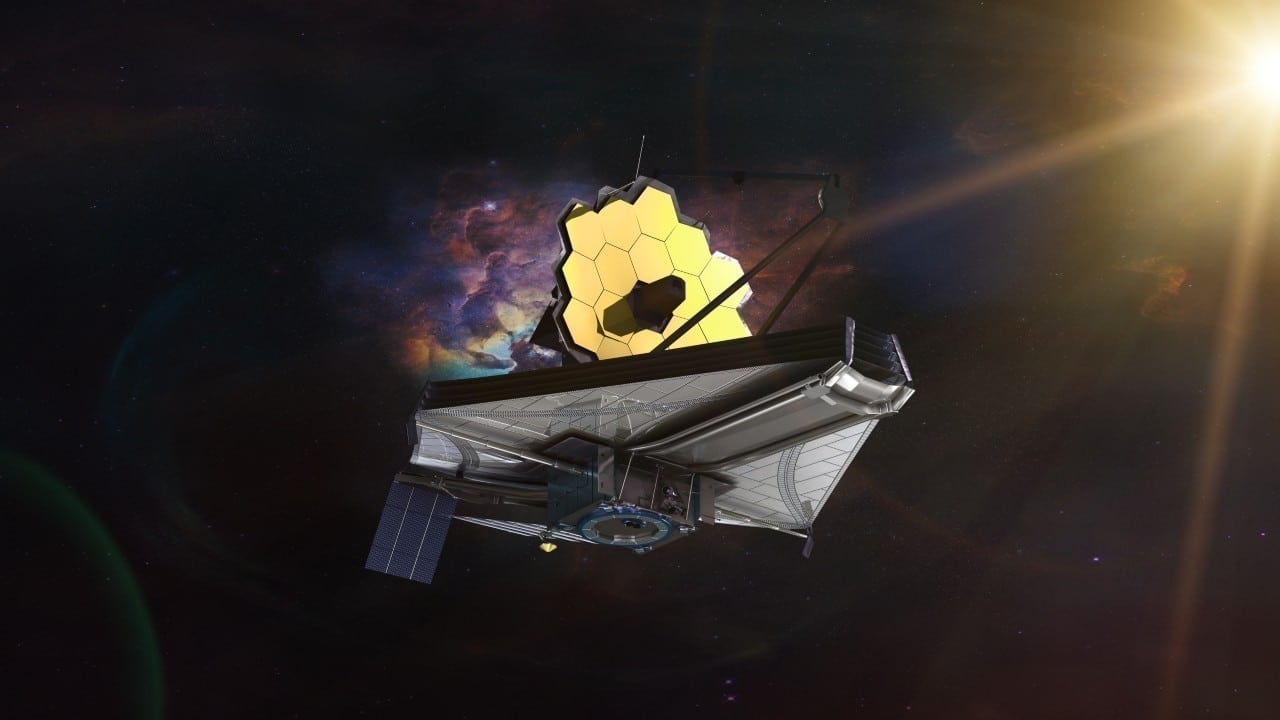
The space equipment captured deep images that reveal light anomalies classified by researchers as small red dots. Astrônomos and astrophysicists estimate that these peculiar formations represent the first generation of celestial bodies that formed shortly after the Big Bang event. The discovery provides unprecedented data on the primordial chemical composition of space and alters chronological models about cosmic evolution during the period known as Amanhecer Cósmico.
Researchers linked to Universidade from Virgínia and Universidade Harvard conducted detailed analysis of the raw data transmitted by the observatory. The surveys indicate that the reddish spots have photometric and spectroscopic characteristics that perfectly align with the theoretical models developed for the so-called População III. Essa stellar category encompasses the first luminous objects to enter into nuclear ignition in the early universe.
Data extracted from the observations indicate that the formation of these structures occurred from pristine gas clouds, composed almost entirely of hydrogen and helium. The absence of heavier elements in the primordial cloud allowed matter to condense to gigantic proportions, generating celestial bodies with masses that can reach millions of times the mass of Sol. The direct detection of these objects was considered one of the greatest challenges in modern astronomy.
The identification of these celestial bodies occurs by capturing photons that traveled through the vacuum for billions of years before reaching the telescope’s mirrors. The physical phenomenon known as redshift, or redshift, explains the coloration observed in the images. As the universe expands, light waves originally emitted in the ultraviolet range are stretched until they reach the infrared spectrum, exactly the operating range of the observatory’s onboard instruments.
Chemical composition of População III
Stars classified as População III represent ground zero for stellar nucleosynthesis. For the first few hundred million years of cosmic history, the space environment contained no metals or heavy elements such as carbon, oxygen and iron, which are fundamental to the formation of rocky planets and complex solar systems.
Unlike Sol and other modern stars, which belong to Populações I and II and contain recycled materials from previous generations, primordial stars were chemically pure. Essa elemental purity drastically altered the thermodynamics of star formation, preventing rapid cooling of the gas and resulting in objects of colossal proportions.
The lifespan of these giant stars was extremely short in astronomical terms. The accelerated consumption of nuclear fuel culminated in highly energetic supernova explosions, responsible for ejecting the first heavy metals into the interstellar medium and seeding the universe for the formation of subsequent stellar generations.
Data analysis and extreme brightness
Computer simulations carried out by astrophysics teams demonstrate that stars with millions of solar masses would emit an amount of ultraviolet radiation strong enough to be detected even at the edges of the observable universe. The luminous intensity of these singular objects rivals the total emission of small modern galaxies, which explains the ability of space equipment to register their presence in the form of compact, bright points.
The reddish color captured by the sensors is not only an artifact of the expansion of the universe, but also an indicator of the density of the surrounding gas. The extreme radiation emitted by these primordial stars interacts with the neutral hydrogen left over from the time of recombination, creating specific light signatures that researchers can now isolate and measure with mathematical precision.
Relationship to supermassive black holes
The existence of gigantic primordial stars offers a physical solution to one of the greatest enigmas in contemporary cosmology: the rapid formation of supermassive black holes in the early universe. Previous Observações had already detected quasars and black holes with billions of solar masses at times when the universe was too young to allow gradual growth.
Theoretical models indicate that População III celestial bodies with exceptionally high masses do not end their lives in traditional supernova explosions. Instead, the crushing gravity overcomes the internal radiation pressure, causing the entire star to collapse directly.
This direct collapse process eliminates the matter scattering phase and instantly creates an intermediate-mass or supermassive black hole. Esses newly formed objects would act like gravitational seeds, attracting vast amounts of gas and dust at an accelerated rate.
Previous telescope observations have already detected ancient galaxies with disproportionately large active nuclei. Confirmation of the tiny red dots as primordial supermassive stars bridges the evolutionary gap between the gas clouds of Big Bang and the colossal black holes that inhabit the centers of modern galaxies.
Desafios na interpretação espectroscópica
The extreme distance of the small red dots poses significant technical obstacles to definitively confirming the nature of these objects. Astronomers face the difficulty of isolating the light of a single primordial star from emissions generated by complex galactic phenomena, such as active black holes surrounded by accretion disks or entire galaxies obscured by dense clouds of cosmic dust. Although the resolution of space equipment is unprecedented, the separation of light contributions from different sources requires a prolonged observation time and the use of high-precision spectroscopy. The scientific community maintains an active debate about the interpretations of raw data, evaluating multiple physical possibilities before establishing a consensus on the discovery, which makes validation a rigorous process and dependent on continuous calibrations of the recording instruments.
Infrared observation capability
The success in detecting these light anomalies directly depends on the infrared sensor technology on board the space observatory. The ability to penetrate through dense curtains of cosmic dust and capture wavelengths invisible to traditional optical telescopes makes it possible to map regions of space that have remained hidden during decades of astronomical exploration.
Next steps in space research
The research schedules provide for new observation sessions aimed specifically at the small red dots identified in the deep fields. The use of advanced spectrographs will allow the light from these objects to be broken down into their fundamental frequencies, revealing the exact chemical signature and confirming the absence of heavy metals.
Collecting detailed spectra will allow us to map the exact distribution and physical properties of these População III star candidates. The crossing of photometric data with spectroscopic analyzes will provide the empirical basis necessary to rule out alternative hypotheses and consolidate the discovery in the field of observational astrophysics.
Impact on models of cosmic evolution
The confirmation of the existence of População III rewrites fundamental parts of modern astrophysics, filling an observational gap that has persisted since the formulation of the first theories about primordial nucleosynthesis. Mapping these structures demonstrates how the universe transitioned from a homogeneous, dark gas state to the complex environment full of structured galaxies that currently exists. Advanced instrumentation continues to push the boundaries of astronomical observation, providing material evidence for theories that previously relied exclusively on mathematical formulations and virtual simulations on supercomputers. Technological advances in capturing ancient photons guarantee a constant flow of data that will require continuous revision of stellar catalogs and galaxy formation chronologies.



