Mclaren accuses Mercedes of withholding crucial information about new power units in F1

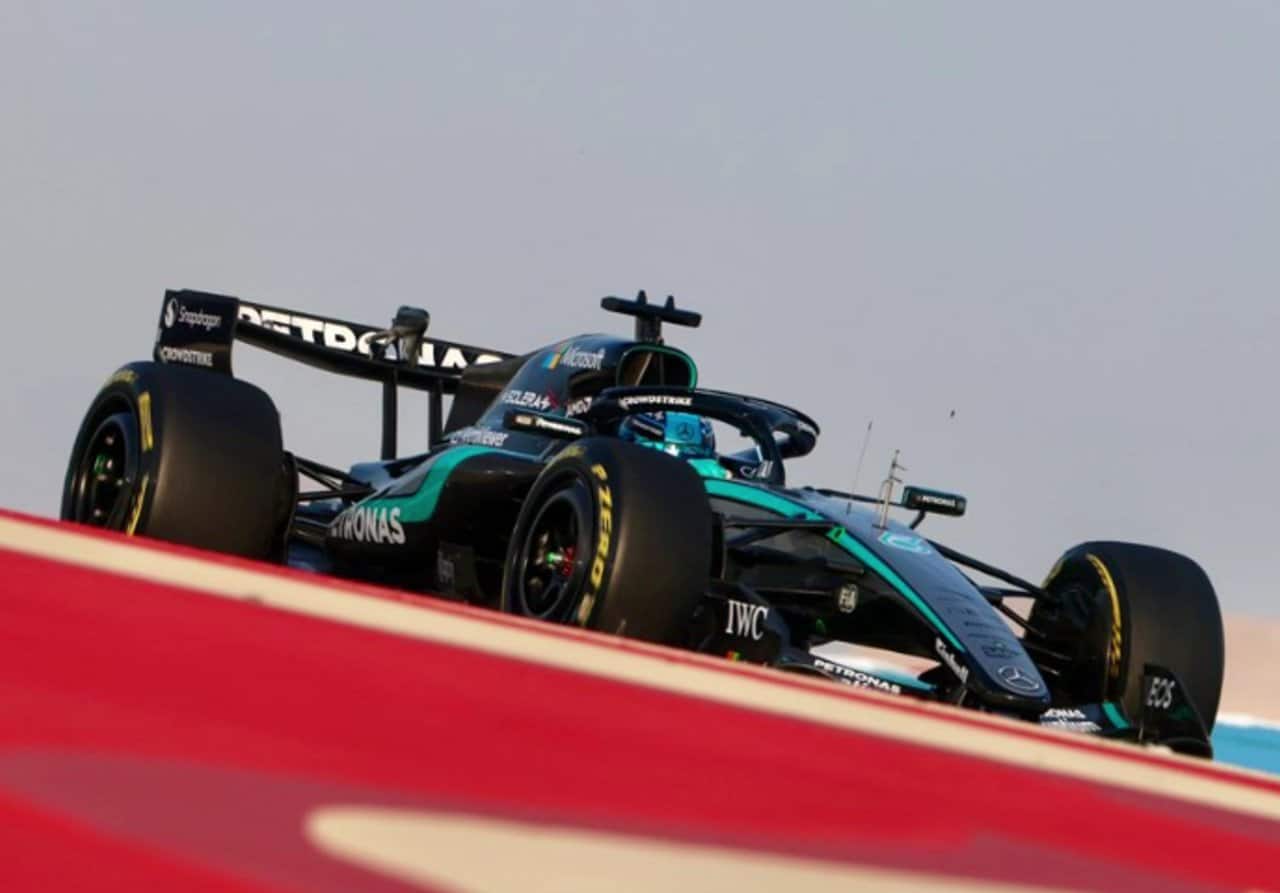
Austrália’s Grande Prêmio, which marked the opening of the 2026 season of Fórmula 1, brought to the surface significant technical tension between Mercedes and its client team, Mclaren. Andrea Stella, team leader of Woking, has publicly expressed his dissatisfaction with the way information about the new power units is being shared by the German manufacturer. Segundo the manager, this is the first time that the British team has felt at a real strategic disadvantage due to the lack of predictive data on the engine’s behavior on the track.
The dissatisfaction arises from a scenario where Mercedes emerged as the big winner in Melbourne, demonstrating technical superiority that was not fully replicated by its customers. Stella highlighted that interaction with the brand’s engine division, Mercedes High Performance Powertrains (HPP), has been marked by a reactive rather than proactive stance. In the current working model, Mclaren engineers can only analyze performance after the car enters the track, which limits the capacity for simulation and constant evolution required by the category.
- Delay in delivery of detailed telemetry maps.
- Difficulty in calibrating pre-race simulation software.
- Limitation in knowledge about the performance ceiling of the hybrid system.
- Notable difference between the power exploitation of the factory team and that of customers.
The Mclaren weekend at Austrália was considered below internal expectations, despite the efforts of its drivers. Oscar Piastri suffered an accident on the installation lap, effectively compromising his participation, while Lando Norris had to fight intensely to guarantee fifth place. Norris held off the pressure from
Challenges in technical integration between supplier and customer
Andrea Stella’s review focuses on the paradigm shift that the 2026 season imposed with the new engine technical regulations. Ele states that in modern Fórmula 1, each action on the track must be preceded by a rigorous simulation and programmed contingency plans. Sem the complete HPP data, Mclaren is operating on a trial and error basis, which is unacceptable for a team that aims to fight for the top of the constructors’ table.
The manager reinforced that the ability to anticipate the car’s behavior is what defines success in development strategies throughout the year. Quando the team only depends on reacting to data collected in real time, precious development time that direct competitors are taking advantage of is lost. Para Stella, Mclaren’s knowledge journey with this new engine is at a much more primary stage than that of the official Mercedes team, which creates an artificial performance gap.
Comparison with other customer teams on the grid
Asked about the situation of Williams, which also uses German power units, Stella was cautious in stating that he did not have details about the internal processes of the Grove team. However, he reiterated that the comparative analysis between the teams using the Mercedes engine indicates that there is untapped potential in the hands of the Woking engineers. The general perception is that the official Mercedes is extracting more cavalry and efficiency than is allowed from its commercial partners.
The search for answers involves an in-depth analysis not only of HPP’s data, but also of the behavior of other competitors who use different suppliers. The objective is to understand whether the performance gap is a matter of control parameters that Mclaren can adjust or whether there are systemic factors blocked by the manufacturer. Esta investigation is essential to determine the team’s next steps in seeking greater technical independence within the supply agreement.
Intensified collaboration for land recovery
The head of Mclaren assured that the team will intensify collaboration with HPP engineers to resolve these technical impasses in the coming weeks. Ele believes that there are quick improvements, the so-called “low-hanging fruit”, that can be achieved if there is greater openness on the part of Mercedes. The intention is to align work processes so that Mclaren can benefit from the same knowledge base that the factory team has had since the beginning of the project.
- Daily technical meetings between engineering departments.
- Access to shared simulation databases in real time.
- Review of power unit electronic control protocols.
Control limitations and pilot autonomy
There is uncertainty about how much of the underutilized performance is due to software settings or the controls available to the pilot in the cockpit. Stella mentioned that the team needs to find out whether the problem lies in variables that they themselves control or in constraints imposed by the architecture of the provided system. Essa distinction is crucial so that Lando Norris and Oscar Piastri can have full confidence in the equipment during qualifying sessions and race matches.
The long-standing relationship between the factory team and the engine division facilitates communication and the implementation of improvements, something that Stella recognizes as a legitimate advantage, but which should not exclude customers from a minimum level of competitiveness. Mclaren now seeks to reduce this information asymmetry to ensure that the championship is not decided by bureaucratic or technical barriers between partners.
Expectations for the next stages of the championship
The urgency to resolve these technical communication issues is high, given that the calendar for Fórmula 1 in 2026 is extensive and does not allow for long periods of stagnation. Mclaren understands that it has one of the best driver pairings on the grid and a chassis that responds well to aerodynamic updates. The engine, therefore, cannot be the bottleneck that prevents the team from fighting for podiums and victories consistently against Ferrari, Red Bull and Mercedes itself.
Andrea Stella’s stance signals a hardening of the diplomatic tone that usually governs relations between suppliers and customers in the category. By bringing the matter public shortly after the first race, Mclaren puts pressure on Mercedes to make transparency the basis of the partnership in this new technological era. The development of this internal crisis will be closely watched by the other teams and by the organization of the category, which values competitive balance.
The impact of new power units from 2026
The power units introduced in 2026 are significantly different from the previous ones, with a greater focus on electrification and the elimination of the MGU-H. Essa change required a complete redesign of how power is generated and deployed during a race lap. The complexity of these systems makes data sharing even more vital for client teams to operate within ideal temperature and efficiency windows.
Andrea Stella pointed out that the lack of predictability even affects fuel consumption planning and battery energy management. Sem is an accurate mathematical model provided by Mercedes, the Mclaren is exposed to reliability risks or performance that is too conservative to avoid breakdowns. The search for technical truth is, above all, a search for safety and maximum performance in an environment of extreme competition.
Data analytics and the future of technical partnership
Data analysis work will continue to be the central pillar of Mclaren’s strategy for the next rounds. The team of engineers at Woking is dedicated to deciphering telemetry patterns that might indicate where the official Mercedes is gaining a competitive advantage. Stella reinforced that the journey is one of constant learning, but that the time for patience with the lack of clear information is coming to an end.
Collaboration with Mercedes is seen as essential for medium-term success, but Mclaren does not rule out looking for ways to increase its technical influence. The engine market at Fórmula 1 is restricted, and maintaining a good relationship with HPP is vital, as long as this does not cost the British team its competitiveness on tracks around the world.