
Monitoring of asteroid 2024 YR4 points to the risk of a collision with the Moon and the creation of a crater in 2032


Discovered at the end of last year, a rocky celestial body classified as 2024 YR4 entered the radar of international space agencies due to a predicted intersection with the orbit of the natural satellite of Terra. The most recent ballistic calculations point to a 4% probability that this object will reach the lunar surface on December 22, 2032.
The astronomical community mobilizes high-precision equipment, including ground-based observatories and state-of-the-art space telescopes, to map every millimeter of this object’s path. The relative speed of the celestial body at the moment of maximum approach reaches extreme levels, which means that, if the 4% probability is realized, the event will represent one of the largest releases of kinetic energy ever recorded against the natural satellite in the history of modern astronomical observation.
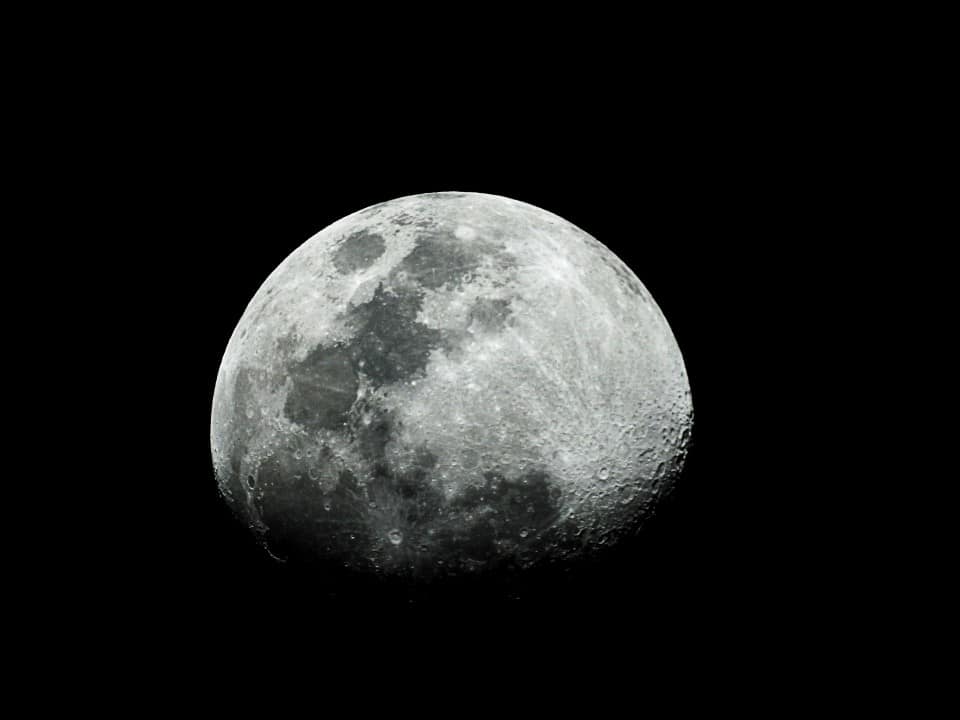
Photometric and radar measurements indicate that the object has a diameter varying between 40 and 90 meters, with the central estimate set at approximately 60 meters. Essa rocky mass travels through the space vacuum on a trajectory that crosses the Terra-Moon system, requiring constant monitoring to update ephemerides and reduce the margin of error in impact calculations.
Orbital dynamics and trajectory calculations
The displacement of the celestial body through the inner solar system obeys the laws of celestial mechanics that allow its position to be predicted years in advance, although small gravitational perturbations require periodic corrections. Durante the expected approach for the next decade, the object will cross a region of space where the combined gravitational influence of Terra and its natural satellite will dictate the outcome of the encounter. Current mathematical models process thousands of daily virtual simulations to understand how the mutual attraction between these massive bodies will alter the rocky object’s velocity vector in the days leading up to the critical date.
Despite the magnitude of the event, astrodynamic experts confirm that the mass of the invading object is statistically insignificant when compared to the lunar mass, which guarantees the total stability of the satellite’s orbit. Não there is any possibility of changing the translation period, rotation or average distance in relation to our planet, keeping tidal cycles and other phenomena dependent on lunar gravity intact. The focus of monitoring lies exclusively on the local physical consequences at the exact point of contact.
Physical characteristics of the space object
The structural composition of the celestial body dictates the way it interacts with the environment at the moment of contact at very high speed. Estima The density of the rocky material, combined with its dimensions of up to 90 meters, is expected to create a natural projectile capable of penetrating deep into the lunar crust before total disintegration.
The absence of a thick atmosphere on the natural satellite means that the object will not suffer friction or prior burning, reaching the ground with all its original mass and speed. Esse factor maximizes the transfer of kinetic energy to the regolith, generating a shock wave that will propagate through the underground layers immediately.
Geological formation and energy release
The physics of the impact predicts the instantaneous excavation of an immense amount of material from the surface, resulting in the formation of a crater with an estimated diameter of 1,500 meters. The violence of the shock will pulverize the rock at the epicenter, melting minerals and ejecting millions of tons of dust and fragments in radial trajectories.
The energy released in the millisecond of contact is comparable to large-scale detonations, permanently altering the topography of the affected region. The ejected material will form debris rays that will settle around the new impact basin, creating geological patterns that will remain visible for millions of years due to the absence of wind or water erosion in the lunar environment.
Some of the kinetic energy will be converted into extreme heat, generating a pocket of molten rock at the bottom of the newly formed crater. Esse process of fusion and rapid cooling is of direct interest to planetary geologists, who seek to understand the mechanisms of formation of the surfaces of rocky celestial bodies in the inner solar system.
Visual phenomena detectable on the Earth’s surface
The hypervelocity shock will produce an optical flash of extreme intensity, with an apparent magnitude calculated between -3 and -5 on the astronomical scale. Esse brightness level surpasses the luminosity of many stars visible in the night sky, making the event perfectly observable with the naked eye for inhabitants of the Earth’s hemisphere that is facing the satellite at the exact moment of the collision.
The duration of the flash of visible light will be just a few seconds, corresponding to the moment of maximum release of thermal and light energy. Imediatamente After the initial flash, instruments equipped with infrared sensors will continue to detect the residual glow generated by the heat of the molten rock inside the crater.
The exact location of the contact point will determine the visibility of the phenomenon, depending on whether it occurs on the illuminated side or the dark side of the lunar disk facing Terra. An impact on the non-illuminated region would drastically increase the contrast of the flash, facilitating photographic and video recording by equipment of all sizes.
Networks of professional observatories and amateur astronomers are already preparing recording protocols to capture the spectrum of light emitted during the explosion. Analysis of this light signature will make it possible to identify the chemical composition of both the invading object and the deep layers of the lunar soil exposed by the violence of the shock.
Observation window and unprecedented data collection
The occurrence of an impact of this magnitude provides an unprecedented scientific opportunity for the practical study of planetary defense and extraterrestrial seismology. Pesquisadores plan to use the network of seismographs left over from previous space missions, as well as new instruments that could be in operation within the next decade, to measure the propagation of seismic waves through the lunar mantle and core. The mapping of these vibrations works like ultrasound on a planetary scale, revealing the internal structure of the satellite with a precision impossible to be achieved by other conventional methods. Além Furthermore, the analysis of ejecta that escapes local gravity will provide indirect samples of deep geological layers, enriching databases on the surface evolution of rocky bodies. The next major observation window to refine all these parameters will occur in the year 2028, when the celestial body’s orbit will once again place it in a favorable position for detection by radars and optical telescopes, allowing us to definitively confirm or discard the 4% probability.
Fragment dispersion and continuous monitoring
Fluid dynamics and ballistics simulations indicate that up to 10% of the mass ejected by the explosion could reach lunar escape velocity, launching fragments into deep space. A fraction of this particulate matter has the potential to cross Earth’s orbit in the weeks following the event, creating the need for monitoring micro-impacts on artificial satellites and generating possible unprecedented meteor showers upon entering our planet’s upper atmosphere.



