
Observatory in Chile maps gas filaments at the center of the Milky Way and reveals stellar chemistry

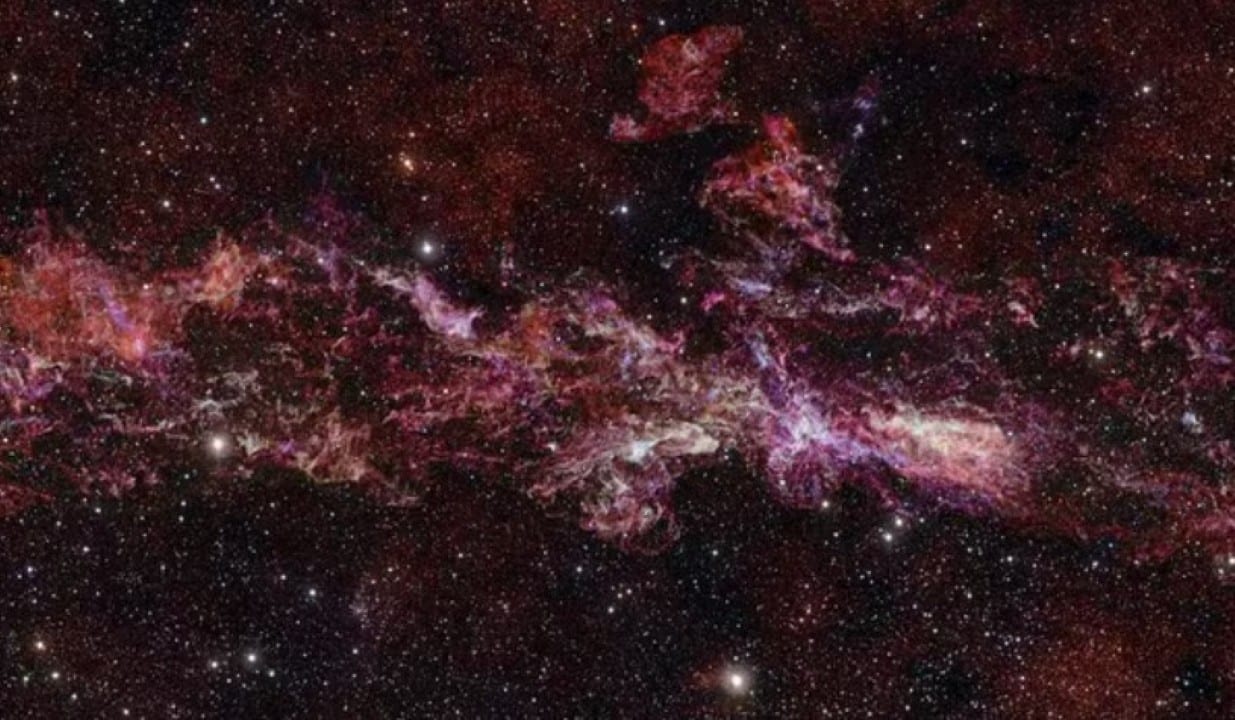
Astronomers linked to Observatório Europeu of Sul presented an unprecedented record of the center of our galaxy, captured using the high-precision antennas of an astronomical complex located in the desert of Atacama. The observation documents a vast and complex network of cosmic matter surrounding the supermassive black hole Sagittarius A*. The mapping covers an area of more than 650 light-years and forms the largest mosaic ever created for this specific region. The data collected offers a detailed view of the elements responsible for the creation of new stars in one of the most extreme environments in the known universe, updating astronomical databases with very high-resolution information.
Millimeter technology in space exploration
To penetrate the thick layers of interstellar dust that block traditional optical light, scientists used the equipment’s ability to capture millimeter and submillimeter waves. The complex, made up of 66 high-sensitivity antennas operating together, was able to record the thermal radiation emitted by the cold molecular material. Essa technical approach revealed structures that extend for tens of light years, functioning as true feeding channels for the clusters where the birth of celestial bodies occurs continuously. The precision of the instruments made it possible to isolate the signal of different compounds, mapping their spatial distribution with an accuracy unprecedented in the history of galactic exploration.
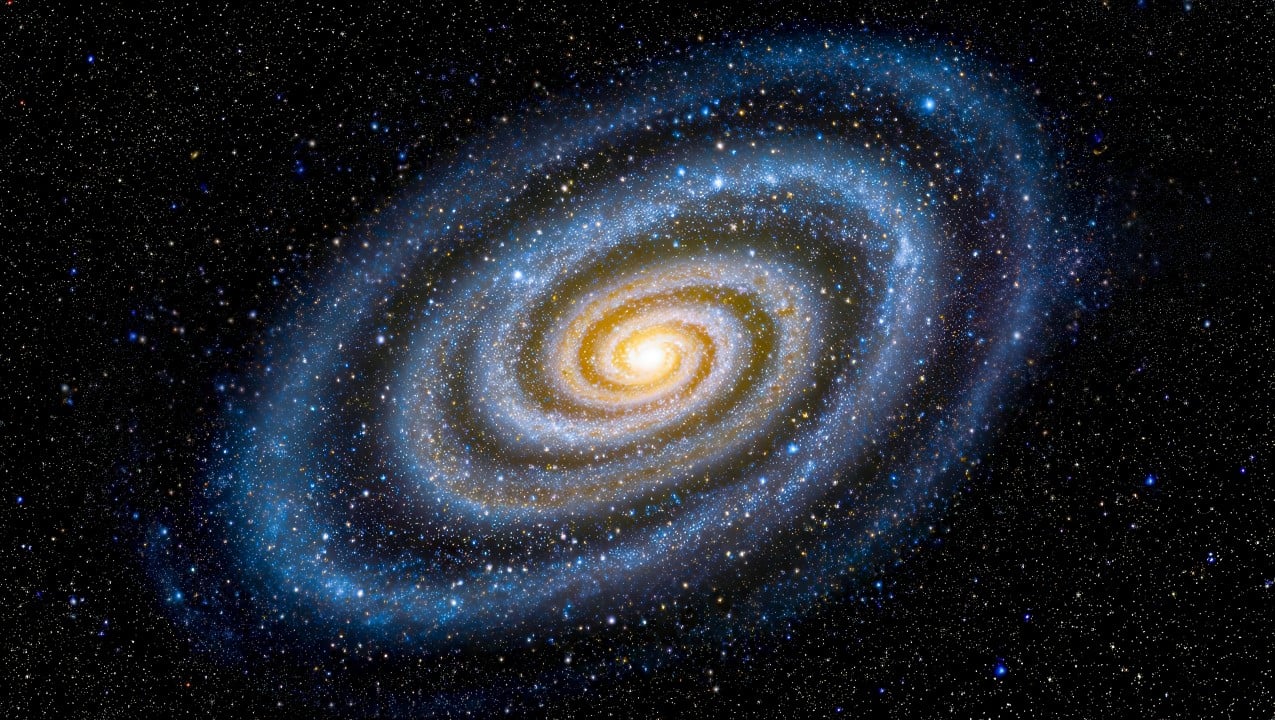
The resolution achieved by the equipment allowed researchers to identify everything from gigantic clouds of matter to much smaller and specific concentrations around individual bodies in formation. The level of detail obtained is considered fundamental for understanding fluid dynamics in deep space. The processed images show how the material behaves under the influence of intense gravitational forces, providing a solid basis for updating physical models that describe the evolution of galaxies over time. The raw data generated by this observation represents a quantitative leap in the ability to monitor large-scale astrophysical phenomena.
Detection of molecules and organic compounds
Spectroscopic analysis of the data revealed surprising chemical richness in the central region of the galaxy. The instruments detected the presence of dozens of distinct molecules, ranging from simple formations to highly structurally complex organic compounds.
Among the elements identified are silicon monoxide, methanol, acetone and ethanol. The presence of these substances indicates the occurrence of intense chemical reactions, often driven by mechanical shocks between clouds and strong ambient radiation generated by already established massive stars.
Experts note that the detection of prebiotic compounds in this specific area suggests material enrichment processes similar to those found in active galaxies. Essa diversity is essential for cooling the environment, a thermodynamic step strictly necessary for the gravitational collapse that generates new stars.
Filament dynamics in Zona Molecular Central
Filaments of cold molecular matter act as the fundamental structure for creating stars in the so-called Zona Molecular Central, an environment characterized by extreme density and harsh radiation that defies traditional models of astrophysics. Essas elongated formations channel the constant flow of particles into dense clusters, creating ideal pressure and temperature conditions for the gravitational collapse that culminates in the ignition of natural nuclear reactors. The dynamics of these flows are directly affected by the presence of the supermassive black hole, whose colossal gravitational force generates turbulence capable of accelerating the agglomeration of material or, paradoxically, suppressing star formation by excessively heating the surrounding environment. Continuous mapping of travel speeds reveals complex patterns of rotation and expansion, allowing scientists to trace the distribution of invisible mass in the central region. Thermal variations documented across the network show that the coldest areas function as primary nurseries where condensation occurs most efficiently, fueling a continuous cycle of cosmic renewal that enriches the interstellar medium with heavy elements forged in the cores of ancient stars, thus shaping the internal structure and chemical evolution of the entire galaxy over billions of years.
Influence of the supermassive black hole
Zona Molecular Central houses a massive amount of particulate material that orbits the galactic nucleus at very high speeds. Nessa area, the black hole plays the role of main regulator of local astrophysical activity, dictating the pace of transformations.
Extreme gravitational attraction distorts the path of particles, creating compression zones where the rate of formation can increase dramatically. In contrast, the winds and radiation emitted by material falling to the event horizon can disperse neighboring clouds before they collapse.
This duality of forces creates a chaotic and highly dynamic environment, where the creation and destruction of stellar nurseries occur on relatively short timescales by conventional astronomical standards.
Understanding this feedback mechanism is vital for explaining historical observational discrepancies. The phenomenon justifies why the rate of star birth in the center is lower than expected, given the enormous amount of matter available in the region.
International cooperation in the astronomical project
The detailed survey was conducted by a scientific consortium that combined hundreds of hours of observation to compose the final mosaic. The initiative included the participation of several global institutions, including European universities and American research centers, highlighting the collaborative and multidisciplinary nature of contemporary astronomy.
The research results were consolidated into multiple distinct scientific articles, submitted and accepted for publication in high-impact specialized journals. Making the methodology and catalogs publicly available allows other independent teams to replicate the analyzes and develop new hypotheses about the behavior of the deep interstellar medium.
Improvement of the interferometry technique
The construction of the image required the advanced use of interferometry, a technique that synchronizes signals from multiple antennas to simulate a reflector of gigantic proportions. Processing the information required supercomputers and specific algorithms to correct the distortions caused by the Earth’s atmosphere, guaranteeing the nanometric precision necessary to identify chemical signatures thousands of light years away from our planet.
Data integration and complementary observations
The data obtained establishes a new calibration basis for the study of older and more distant galaxies, where bursts of star formation shaped the early universe. The resolution achieved significantly surpasses previous surveys, offering accurate metrics on the density and kinematics of the molecular clouds that make up the central disk.
The scientific community plans to integrate this millimeter information with infrared data captured by state-of-the-art space equipment. Essa combination of different wavelengths will allow a complete three-dimensional analysis of the galactic core, revealing the exact interaction between the newly discovered cold material and the dust heated by radiation from older stellar populations.




