
Solar activity begins week with calm and no signs of magnetic storm on March 9, 2026

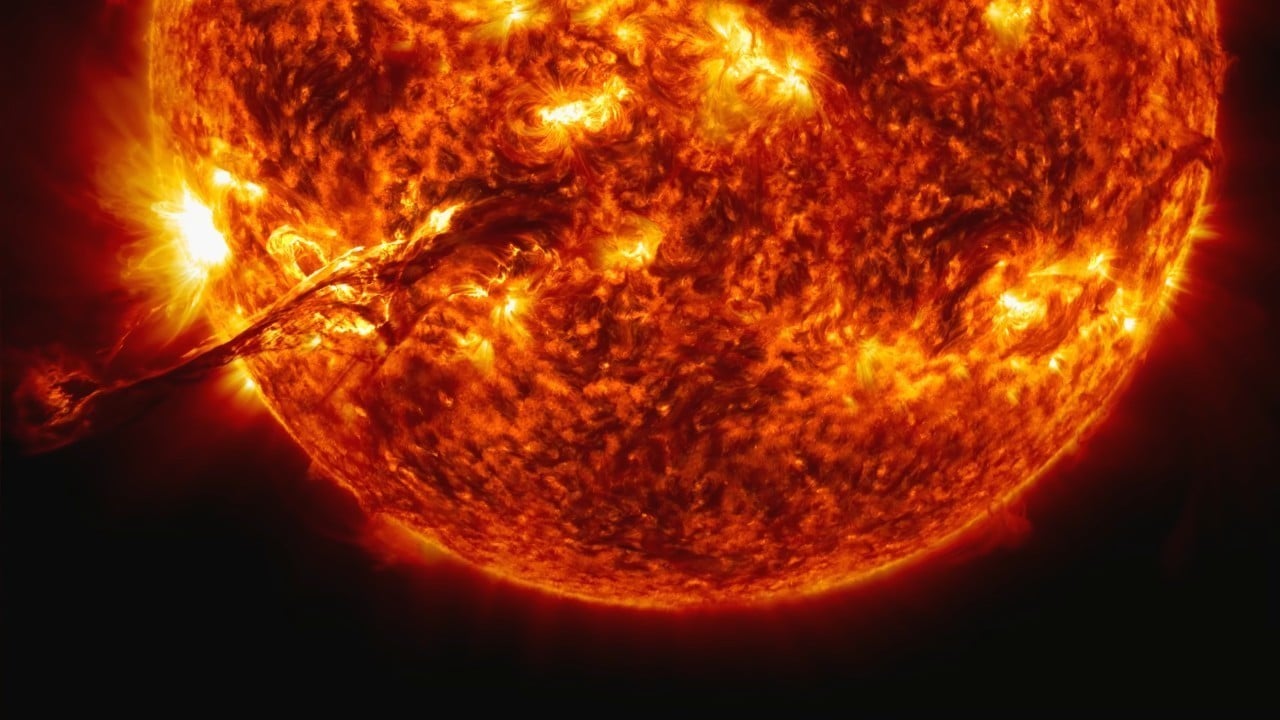
Solar activity at the beginning of the week presents stable conditions, with no signs of significant magnetic storms on March 9, 2026. The Kp index, which measures disturbances in the Earth’s magnetic field, reaches only 3 balloons, which represents slight oscillations and no risk of major impacts. Especialistas monitors Sol continuously, but transitions to more active phases are not expected on this day.
The magnetic field of Terra remains in the green zone, without abrupt variations or jumps that could indicate the beginning of a solar storm. Essa peace of mind allows people to plan their daily routines without additional worries related to space weather. Forecasts point to this stability continuing throughout the day.
With Sol in a phase of moderate activity within the current solar cycle, geomagnetic conditions remain predictable and uniform. Nenhum signal intensification to storm levels is detected, ensuring a calm space environment. Essa situation favors normal activities across the planet.
Detailed kp index forecast
The Kp index for March 9, 2026 reaches 3 balloons, which classifies the conditions as weak fluctuations. Esse value indicates that the Earth’s magnetosphere is completely stable, without transitions to higher levels that would characterize a storm. Scientists use this indicator to predict possible impacts, and in this case, there is no reason for warning.
Experts explain that values between 0 and 2 represent total calm, while 3 to 4 suggest minimal variations. Para this day, the scenario falls into the second group, but far from the threshold of 5, where the storms begin. Essa analysis is based on data from solar observatories around the world.
Potential impacts on land
Although solar activity is low, small fluctuations in the magnetic field can affect sensitive systems in polar regions. However, for most of the planet, including tropical and equatorial areas, no interference to communications or electrical grids is expected. Satellites operate normally under these conditions.
In cases of Kp 3, aurora borealis may be visible at high latitudes, but with reduced intensity. Isso occurs due to the moderate solar wind that interacts with the Earth’s atmosphere. Observadores in places such as north of Europa or Canadá may notice light phenomena during the night.
Current solar cycle and trends
Solar cycle 25, which began in 2019, peaks around 2025 and continues to influence conditions into 2026. During this period, the number of sunspots varies, but for March, forecasts indicate a gradual decrease in activity. Scientists follow these patterns to better understand the dynamics of Sol.
Recent solar flares, like those recorded in February, are not repeated with the same intensity now. Sol has active regions, but no coronal mass ejections directed at Terra at this time. Essa transition phase allows for more precise studies of stellar behavior.
Experts highlight that constant monitoring by agencies like NOAA helps predict future events. In 2026, the cycle still shows variations, but March 9th stands out for its lack of peaks. Dados of satellites confirm this calm trend.
Recommendations for the day
For those who rely on space weather-sensitive technologies, such as satellite operators or aviators on polar routes, current conditions impose no restrictions. Forecasts recommend maintaining normal routines, with periodic checks on space bulletins. Essa approach ensures safety in daily activities.
Individuals sensitive to magnetic variations, such as those with specific health conditions, may notice minimal effects. However, the majority of the population does not notice changes, allowing for a productive day. Médicos suggest hydration and rest as general measures, regardless of space weather.
Outdoor activities, such as hiking or traveling, continue without interruption. Earth time, indirectly influenced by Sol, remains stable in many regions. Planejadores of events consider these factors to optimize schedules.
People interested in amateur astronomy find an opportunity to observe the night sky clearly. Telescópios homemade people capture solar details safely, using appropriate filters. Essa educational practice gains prominence on calm days like this.
Continuous sun monitoring
Sol, as the central star of the system, requires constant vigilance from global scientific institutions. On March 9, 2026, data collected by satellites such as GOES and ground-based observatories confirm the absence of significant eruptions, keeping the activity index at low levels and allowing detailed analyzes of the solar wind and its interactions with the Earth’s magnetosphere. Essa monitoring not only prevents potential risks, but also contributes to advances in space weather research, helping to develop more accurate models for future predictions and protecting critical infrastructures such as power grids and satellite navigation systems.
Suggested activities on calm days
Days with low solar activity offer ideal chances to explore nature or complete pending tasks. For example, trips to rural areas or beaches become more pleasant without worries about spatial interference. Encontros family members gain space in this peaceful routine.
Outdoor sporting activities, such as running or cycling, benefit from climate stability indirectly influenced by Sol. Praticantes of yoga or meditation find serene environments for their sessions. Essa versatility marks the day.
Effects on modern technologies
Global communications systems operate flawlessly in Kp 3 conditions, ensuring uninterrupted connectivity for users around the world. Redes of internet and mobile telephony maintain high performance, supporting daily traffic. Engenheiros monitor these equipment for any subtle variations.
Positioning satellites, such as GPS, provide accurate data without magnetic distortions. Isso benefits sectors such as transport and logistics, where accuracy is crucial. Regular Atualizações systems avoid potential problems.
Commercial aviation continues with normal routes, including over the poles, without adjustments due to space weather. Pilotos receive advance bulletins for planning. Essa coordination ensures safe and punctual flights.
Recent solar activity history
In the months leading up to March 2026, Sol recorded X-class eruptions in February, causing smaller geomagnetic storms in some regions. Essas events, although intense, dissipated quickly, leaving lessons for future monitoring. Comparado to this, the 9th presents itself as a contrast of calm.
The current solar cycle, peaking in 2025, has influenced varying space weather patterns. Manchas solar panels have increased in number, but now show decline. Essa evolution is studied by astronomers to predict subsequent cycles.
Preparing for future variations
Although the current day is calm, scientists emphasize the importance of preparedness protocols for unpredictable solar events. Redes Reinforced electrical and satellite backups mitigate risks. Essa proactive strategy protects modern societies.
Public education about space weather grows, with programs that explain potential impacts. Escolas and universities incorporate astronomical topics into curricula. Essa awareness strengthens global communities.
Influence on global daily life
In urban regions, solar stability allows focus on economic activities without distractions. Mercados financial institutions operate normally, with secure electronic transactions. Empresários plan investments with confidence in this tranquility.
Rural areas benefit from ideal conditions for agriculture and livestock. Equipamentos GPS-dependent functions work optimally. Essa harmony between technology and nature highlights the day.
Coastal communities maintain surveillance over tides, indirectly influenced by Sol. Pescadores and browsers continue with daily routines. Essa adaptation reflects human resilience.
Tourism in remote locations gains momentum, with visitors exploring without spatial concerns. Agências of travel promote stargazing packages. Essa diversity enriches cultural experiences.
Scientific perspectives for the month
March 2026 begins with moderate solar activity, but forecasts indicate possible increases in subsequent weeks due to coronal holes. Observatórios track these structures for timely alerts. Essa continuous surveillance improves knowledge about Sol.
Data from space missions, such as probes orbiting Marte, reveal interplanetary comparisons. In 2026, solar events affected other planets, providing valuable insights. Cientistas analyze these patterns for Earth models.
Advances in detection technology allow for more accurate predictions. Enhanced Sensores capture minute variations in the solar wind. Essa innovation benefits diverse sectors, from telecommunications to energy.
Artificial intelligence integration accelerates solar data analysis. Algoritmos predict eruptions with greater accuracy. Essa tool revolutionizes the field of space meteorology.
Benefits of solar calm
The absence of storms allows in-depth studies of the Earth’s magnetosphere under basal conditions. Pesquisadores collect pure data, free from interference. Essa rare opportunity advances fundamental science.
For astronomy enthusiasts, clear nights facilitate telescopic observations. Clubes amateurs organize events to share knowledge. Essa community grows with public interest.
Recommended recreational activities
- Walks in urban parks offer relaxation and contact with nature.
- Social gatherings in cafes or restaurants strengthen personal bonds.
- Collective sports practices promote health and community integration.
- Reading books or watching movies provides home entertainment.
- Pending domestic tasks gain attention in peaceful environments.
Evolution of space monitoring
Since the start of solar cycle 25, investments in space technology have increased globally. Agências collaborate to share data in real time. Essa international network improves responses to solar events.
Developments in new generation satellites capture high-resolution images of Sol. Essas tools detect incipient eruptions early. Accuracy benefits global planning.



