
Space agencies review 40 years of Halley’s Comet data to plan future orbital mission

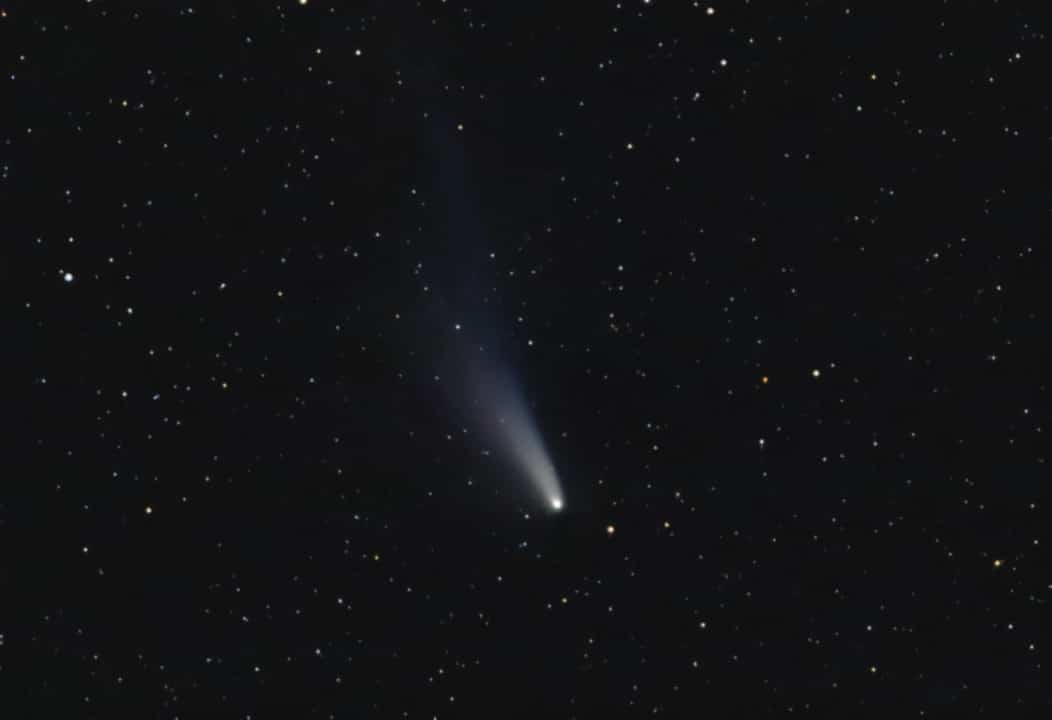
An international consortium of astronomers and aerospace engineers has begun a rigorous process of reviewing all telemetry and imaging data collected during the last flyby of modern astronomy’s most documented celestial body. The information, accumulated over almost four decades by several agencies, is being meticulously analyzed to update the mathematical and physical models that describe the object’s trajectory, rotation rate and composition. The central objective of this scientific task force is to establish the fundamental parameters for the development of a new generation of exploratory probes, aiming for the next close encounter with the Terra orbit.
The initiative marks a technical transition in the exploration of the deep solar system, transferring empirical knowledge acquired in the past to new ion propulsion and autonomous navigation platforms. Experts are currently working with advanced simulations on supercomputers to predict the behavior of the icy core under the direct influence of solar radiation during its phase of greatest thermal activity.
To structure the initial planning of the future interception mission, the researchers established technical priorities based on historical records recovered from space agency archives:
* Atualização of orbital mechanics calculations using new tracking algorithms.
* Detailed Mapeamento of areas of gas and dust emission on the irregular surface of the nucleus.
* Desenvolvimento of more efficient thermal and micrometeorite impact shields to protect instruments.
* Integração of artificial intelligence systems for real-time decision making during the maximum approach period.
International cooperation boosts mapping of celestial bodies
The formation of the so-called space fleet in the eighties represented a milestone in scientific diplomacy, uniting agencies from Europa, União Soviética and Japão in a coordinated effort to unravel the mysteries of the formation of our planetary system through direct observation. Naquela time, multiple probes operated in a complementary manner, creating an unprecedented observation network that transmitted gigabytes of images and spectrometric readings directly to ground-based receiving stations, establishing a level of collaboration that served as a model for later deep space exploration projects. The complexity of intercepting a target traveling at extreme speeds required the unrestricted sharing of telemetry data, and today, the digital files from these pioneering missions are being reprocessed by contemporary algorithms, revealing nuances in the chemical structure of the coma and tail that went unnoticed by the original analytical equipment, thus providing a solid foundation for future spacecraft engineering.
Physical characteristics revealed by optical instruments
The processing of photographs captured at close range confirmed that the object’s core is approximately fifteen kilometers long, exhibiting an irregular morphology often compared to the shape of a peanut. Essa asymmetric structure challenged previous theoretical assumptions, which postulated a more uniform spherical shape resulting from the agglutination of ice and rock early in the formation of the solar system.
In addition to the peculiar shape, albedo measurements indicated that the surface reflects only a minute fraction of incident sunlight, making it substantially darker than terrestrial coal. Essa discovery showed that most of the external mass is composed of carbonaceous materials rich in complex organic compounds mixed with silicates, hiding the vast reservoirs of ice inside.
Orbital trajectory and the limits of the planetary system
The complete orbital cycle of this celestial body varies between seventy-four and seventy-nine years, depending on the gravitational perturbations exerted by the gas giant planets during their long interplanetary journey. Esse specific period classifies it as a short-period comet, allowing regular and systematic observations to be documented throughout the history of human civilization.
Recently, the object reached its aphelion, the point of its orbit furthest from Sol, located far beyond the orbit of the planet Netuno. From this geometric moment onwards, the immense solar gravity begins to accelerate the core back towards the inner solar system, beginning the long-term approach phase.
Even in the most remote and coldest regions of outer space, networks of highly sensitive radio telescopes maintain mathematical monitoring of your estimated position. The accuracy of these astrometric measurements is vital to ensuring that the navigation models of future space probes are calibrated with error margins of less than fractions of an arc of a second.
Documentary records preserved over the centuries
The continuous observation of astronomical phenomena allowed ancient civilizations to record the passage of large celestial bodies with remarkable accuracy in their historical annals and government records. Textos preserves from Asian astronomers dating back more than two millennia ago contain detailed descriptions of the position and variation in brightness of wandering stars in the night sky.
In the Europa of the eleventh century, the apparition documented in the year 1666 gained enormous political and cultural relevance, being immortalized in tapestries and official documents of the time. The astronomical event was extensively documented by observers who recorded the direction of the luminous tail in relation to known constellations.
Scientific understanding of the nature of these bodies began to consolidate in the early eighteenth century, when analytical methods based on the laws of planetary motion were applied to catalogs of ancient observations. The application of classical mechanics allowed us to calculate that multiple appearances reported at different times corresponded to the same physical object returning periodically.
The empirical confirmation of this mathematical theory transformed the field of observational astronomy, establishing the mechanical predictability of objects beyond the major planets. The object’s official nomenclature was then established in recognition of the researcher who dedicated years of work to solving the equation for its complex elliptical orbit.
Spectroscopy and the evolution of analysis equipment
During the passage that occurred at the beginning of the twentieth century, the advancement of photographic technology and the introduction of astronomical spectroscopy allowed the first direct chemical identification of the volatile elements present in the tail of the celestial body. Astronomers have detected clear signatures of compounds such as cyanogen, sparking debate in the scientific community about the composition of the primordial material that formed the solar system. The systematic photographic record of this period provided the first continuous documentation of the structural evolution of the coma as the object approached solar heat.
Today, propulsion labs and research centers use these historical measurements as a baseline to calibrate new-generation mass spectrometers that will power future spacecraft. Engineers design miniaturized instruments capable of withstanding extreme levels of radiation and abrupt thermal variations, ensuring that missions can perform in situ isotopic analysis. The determination



