
Volvo EX30 Ultra Twin Motor sports utility vehicle delivers 428 hp for R$ 309,950 in the national market

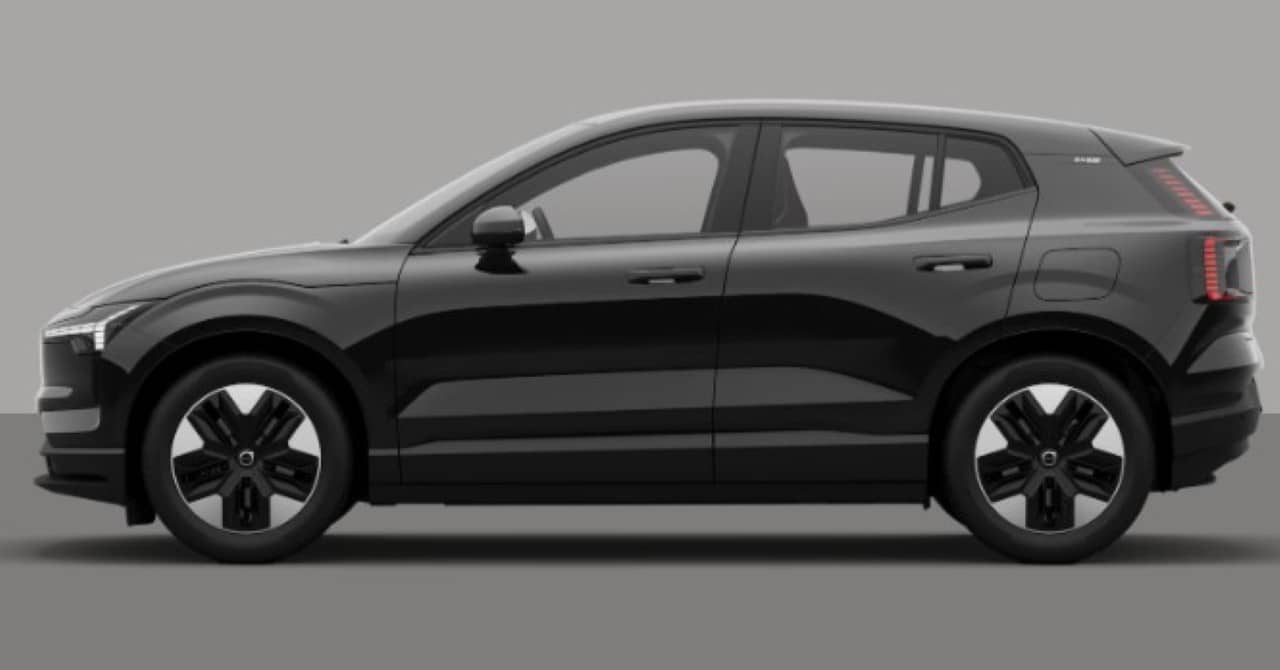
The Swedish automaker expands its line of zero-emission vehicles in the country with the arrival of the most powerful version of its compact sports utility vehicle. The model, equipped with propellers on both axles, reaches Brazilian dealerships and is sold at R$ 309,950, a value that places it in a competitive range in the premium segment. With a combined delivery of 428 horsepower and immediate torque of 55.3 kgfm, the car reaches the mark from zero to one hundred kilometers per hour in just 3.9 seconds. The vehicle’s maximum speed is electronically limited to 180 km/h, following the global safety standard established by the manufacturer for its entire current fleet.
Commercial strategy and utility dimensions
The positioning of this model reflects the brand’s directive to prioritize high performance combined with onboard technology to attract demanding urban consumers. Measuring exactly 4.23 meters in length and with a wheelbase of 2.65 meters, the engineering design optimizes external space to facilitate maneuvering in large cities, without giving up the visual robustness characteristic of the category. The reduced height of the body in relation to the ground contributes to a favorable aerodynamic coefficient, which directly impacts energy efficiency during road travel.
The 20-inch wheels, shod with 245/40 tires, fill the wheel arches and reinforce the sporting identity of this specific configuration. The total weight of 1,960 kg is distributed evenly between the axles, a characteristic inherent to the platform dedicated exclusively to electrically powered vehicles. Essa architecture allows the center of gravity to remain low, compensating for the additional mass of the battery pack positioned on the floor and ensuring greater directional stability.
Vehicle dynamics and acceleration responses
The presence of two electric motors guarantees all-wheel drive on demand, instantly adapting to the grip conditions of the pavement. Quando the driver selects the performance-focused driving mode, the electronic system immediately releases the maximum discharge capacity of the batteries.
This configuration results in extremely agile speed pick-ups, especially in the range between 80 and 120 km/h, which guarantees safe overtaking on single-lane highways. The absence of a traditional gearbox eliminates any jerks or delays in the delivery of power to the wheels, providing linear progression.
The driver has three different energy management programs, allowing him to switch between prioritizing maximum autonomy or fully exploiting the 428 horsepower. The transition between modes occurs fluidly through the central digital interface, without interruptions in drivability.
Power management and recharge times
The energy storage set uses a battery with nickel, manganese and cobalt (NMC) chemistry, offering a gross capacity of 69 kWh, of which 64 kWh is effectively usable on a daily basis. In urban traffic assessments, the on-board computer records an average consumption of around 6.3 km/kWh, which provides an estimated range of 403 kilometers on a full charge. Durante road trips, where energy regeneration through braking is less frequent and aerodynamic resistance increases considerably, the efficiency index drops to around 5.8 km/kWh, resulting in a projected range of 371 kilometers, depending on the use of the air conditioning system.
To replenish energy, the internal system supports alternating current (AC) charging of up to 11 kW, ideal for residential installations or condominium infrastructures. The great technical difference lies in the ability to receive up to 153 kW in ultrafast direct current (DC) stations. Sob these ideal conditions, the battery level jumps from 10% to 80% in an interval ranging from 26 to 30 minutes. The integrated navigation software has a thermal preconditioning function, which adjusts the temperature of the energy cells minutes before arriving at the charging station, ensuring maximum recharge speed from the first moment the plug is connected.
Internal architecture and material choices
The vehicle’s cabin breaks with traditional automotive design conventions by adopting a strictly minimalist philosophy, eliminating the instrument panel positioned behind the steering wheel and transferring all vital information to a single high-resolution vertical screen fixed in the center of the dashboard. Esta centralization reduces the number of electrical harnesses and physical components, aligning with the Swedish automaker’s sustainability goals. The interior linings prioritize recycled and renewable materials, with door panels that use reused fibers and seat options upholstered in ecological fabrics at no additional cost to the buyer. The power window controls have been relocated to the center console, an engineering decision that frees up space in the doors and simplifies the assembly line. The panoramic fixed glass sunroof floods the cabin with natural light, expanding the perception of space, although the absence of a retractable curtain requires greater effort from the air conditioning system on days of extreme sunshine. Access to the vehicle does not require a conventional key, operating via a card with contactless technology or via a dedicated smartphone application.
Native security and connectivity systems
The driving assistance package integrates adaptive cruise control with refined calibration for Brazilian traffic, capable of dealing with complete stops and automatic restarts in traffic jams. The lane keeping assistant works with gentle corrections to the steering wheel, avoiding sudden movements that could frighten the occupants.
Long-range blind spot sensors and the autonomous emergency braking system work together to mitigate urban collision risks by detecting pedestrians, cyclists and large vehicles. The accuracy of the radars allows them to function properly even in conditions of heavy rain or low nighttime visibility.
The multimedia center runs under the Google Built-in operating system, offering native access to applications such as Maps and Assistant without the need for cell phone pairing. Intelligent routing calculates charging stops based on terrain, traffic and consumption in real time during the route.
For users who prefer their own digital ecosystems, the Apple CarPlay and Android Auto platforms operate completely wirelessly. The acoustic experience is guaranteed by an Harman Kardon sound system, which innovates by using a soundbar integrated into the panel, complemented by a hidden subwoofer.
Use of space and cargo compartments
Accommodating passengers in the rear seat requires compromises due to the elevation of the floor, a direct consequence of positioning the battery pack under the cabin. Legroom is optimized for two adults on short and medium journeys, ensuring adequate comfort for everyday use in cities.
The main luggage compartment offers 318 liters of useful volume, a capacity consistent with the urban proposal of the project. Adicionalmente, the absence of a bulky combustion engine allowed the creation of a small front trunk, known as a frunk, which adds 7 liters of practical space.
Dynamic behavior on uneven roads
Engineering opted for a set of independent suspension on all four wheels, using a McPherson strut on the front axle and a multilink on the rear. A calibração dos amortecedores busca um ponto de equilíbrio entre o conforto necessário para absorver as imperfeições do asfalto nacional e a firmeza exigida para conter a rolagem da carroceria em curvas acentuadas. Apesar of its high weight, the utility vehicle demonstrates remarkable agility in quick changes of direction.
Finishing details and ambient lighting
The cabin’s nighttime atmosphere is enhanced by an LED lighting system with multiple color options and intensities that can be configured via the central screen. The light beams are projected indirectly, highlighting the textures of recycled materials without causing uncomfortable reflections on the windshield while driving.
The assembly of the finishing pieces has uniform gaps and the absence of plastic burrs, attesting to the quality standard required in the premium category. The absence of internal finishing noises highlights the care taken with acoustic insulation, which is essential in a silent electric vehicle.
Technical specifications and engineering parameters
To facilitate understanding of the technical specifications that define the model in the current market, the following engineering and performance parameters stand out:
– Potência combined 428 horsepower generated by the two electric thrusters.
– Torque instantaneous 55.3 kgfm available at the slightest touch of the accelerator pedal.
– Bateria lithium-ion battery with a useful capacity of 64 kWh for energy storage.
– Arquitetura charging that supports peaks of up to 153 kW in direct current stations.
– Aceleração from zero to one hundred kilometers per hour in exactly 3.9 seconds.




