
American space agency defines use of the Centaur V stage to equip rockets in Artemis missions

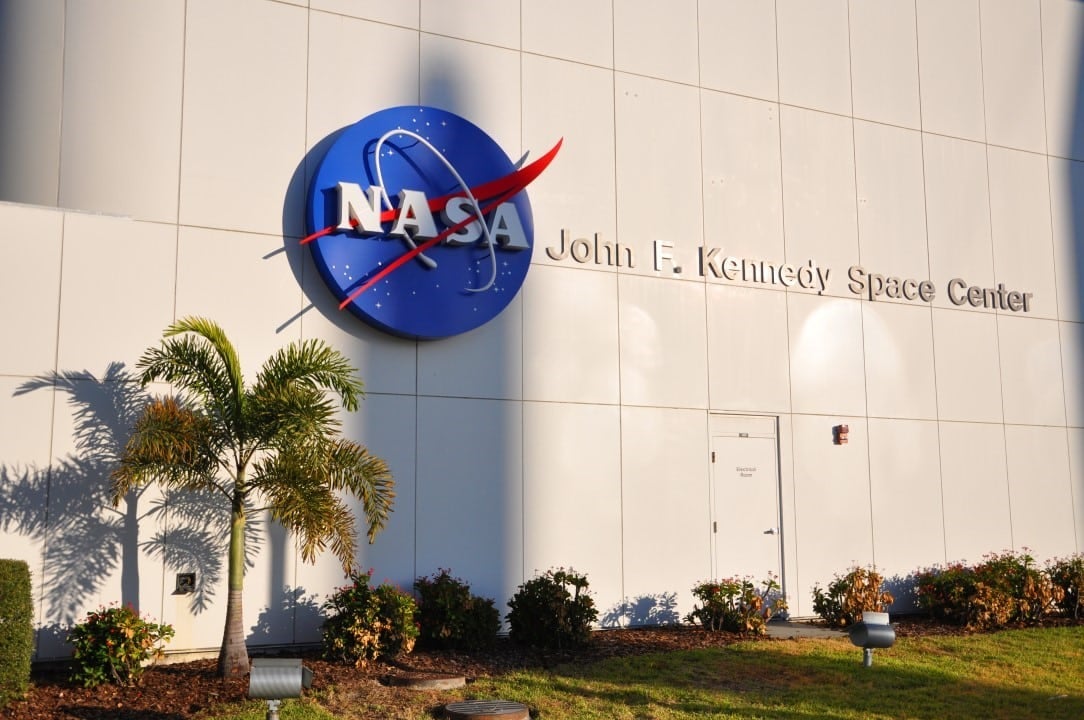
The Estados Unidos space administration has formalized a substantial technical change in the architecture of launch vehicles intended for lunar exploration. The Centaur V upper stage, manufactured by United Launch Alliance, was selected to integrate the Space Launch System rocket in the next phases of the manned flight schedule. The decision alters the original engineering planning and establishes a new standard for transporting cargo and crews into deep space.
The justification document for the exclusive contract was made official at the beginning of March, establishing a new guideline for the aerospace engineering involved in the project. The measure replaces the development of Exploration Upper Stage, which was recently discontinued due to issues of technical feasibility, schedule and allocation of financial resources. The change aims to ensure that the exploration program maintains its pace without relying on technologies that would still need to go through long test cycles.
The integration of the new component will take place starting with the Artemis IV mission, with launch scheduled no earlier than the beginning of 2028. The agreement also covers the supply of identical equipment for the subsequent mission, in addition to a reserve flight unit to guarantee safety and continuity of operations in the event of unforeseen events during the assembly phases or qualification tests on the ground.
Changes to launch vehicle configuration
The change in the choice of components occurred shortly after the cancellation of the development of the Block 1B and Block 2 variants of the main rocket. Essa strategic decision standardized the vehicle in a configuration very close to the initial version Block 1, simplifying the production chain and reducing the complexity of assembly operations at launch facilities.
Previously, initial missions used the Interim Cryogenic Propulsion Stage, whose production line was recently closed. The interruption in the manufacturing of this module made it mandatory to search for an immediate and highly reliable alternative to maintain the pace of expeditions towards lunar orbit, preventing the program from suffering interruptions due to a lack of propulsion hardware.
Technical compatibility and propulsion engineering
The chosen equipment is already in commercial and government operation, being used successfully in the Vulcan rocket since 2024. The history of four successful flights provided the necessary database to attest to the system’s reliability in microgravity and high pressure environments, essential factors for approval of use in missions involving human lives.
From an engineering point of view, the module offers full compatibility with the cryogenic propellants required for long-distance travel. The system uses a highly efficient mixture of liquid hydrogen and liquid oxygen, ensuring the thrust necessary to escape Earth’s gravitational pull with heavy payloads and habitation modules.
Furthermore, propulsion is guaranteed by RL10 engines, which have a similar architecture to the thrusters used in the previous module. Essa technical similarity drastically reduces the need for new training for ground control teams, simplifies safety protocols and accelerates the process of integrating flight software with the launch vehicle’s central computers.
Delivery schedule and logistics planning
Logistics planning establishes strict deadlines for the arrival of components at the assembly facilities. Stage deliveries must occur at least nine months in advance of the scheduled date for each launch, allowing for exhaustive mechanical, electrical and software integration tests before positioning on the platform.
The first unit is scheduled to arrive at the end of next year, while the second module is expected to be delivered by the end of the 2027 cycle.
The Artemis IV mission remains the inaugural milestone for utilizing this new flight architecture. The primary focus of this expedition will be to conduct complex operations in lunar orbit, including docking with space stations under development, setting the stage for more extensive surface activities in subsequent phases of the program.
The subsequent mission will follow exactly the same technical configuration, ensuring operational consistency that is essential for the safety of the crews. The existence of a reserve unit in the contract serves as a robust contingency plan against possible failures during qualification tests, ensuring that a replacement component is immediately available without the need to wait for a new manufacturing cycle.
Operational advantages of system standardization
The decision to maintain the rocket in a standardized configuration significantly reduces the costs associated with research and development of heavier and more complex variants. The new upper stage offers a greater volumetric propellant capacity than its predecessor, which translates into greater flexibility for transporting scientific payloads and habitation modules to the Lua orbit. Essa expanded capacity is vital to establishing a sustainable infrastructure outside of Terra, allowing additional supplies to be dispatched without compromising the mass allocated to crew life support systems.
By taking advantage of a production line that is already fully operational for other launch vehicles, the space agency minimizes the risks of disruptions to the global supply chain. The manufacturer maintains full responsibility for the integration between different space programs, which makes it easier to obtain the rigorous certifications required for flights carrying human beings. Essa pragmatic approach ensures the continued viability of the exploration campaign, transferring the responsibility for manufacturing critical components to an industrial infrastructure already consolidated and tested in the aerospace market.
Analysis of alternatives and disposal of competing projects
During the selection process, several commercial and governmental alternatives were subjected to rigorous technical and financial feasibility studies by engineering teams. One of the options evaluated was the upper stage of the New Glenn rocket, developed by Adopting such a system would require extensive modifications not only to the main vehicle structure, but also to the entire supporting ground infrastructure, including complex and costly adaptations to the assembly building and launch pads. Outras solutions proposed by the aerospace industry failed to meet strict requirements for propellant compatibility, thrust performance, and delivery times. Detailed technical analysis demonstrated that any attempt to develop entirely new hardware would result in unacceptable impacts on the overall schedule and would require a volume of financial resources that is not available in the current budget, consolidating the choice of already tested equipment as the only safe way to maintain missions within the established deadline.
Structural adaptations required for coupling
The modifications required in the selected equipment are considered small-scale, mainly involving adaptations to the mechanical and electrical connection interfaces. The main objective is to allow perfect integration with the central stage of the super-heavy rocket and the Orion manned capsule, maintaining the human certification processes already widely established by the manufacturer over years of operations.
Reliability track record in space exploration
The chosen family of upper stages has a legacy of decades of continuous operation in the global aerospace industry. Variantes previous versions of this same equipment were responsible for boosting some of the most important scientific missions in the history of interplanetary exploration, demonstrating a unique ability to operate in extreme radiation and temperature conditions.
The preservation of this flight history is a determining factor for the safety certification required for missions with a human crew. Flight engineers’ deep familiarity with the module’s structural, thermodynamic and software behavior drastically reduces the margin for error during the critical translunar injection phases, when the vehicle leaves Terra orbit toward its final destination.
Focus on stability and release cadence
The cancellation of the heavier configurations represents a profound revision in the exploration program’s design philosophy. The current priority has shifted from increasing gross cargo capacity to ensuring a stable, predictable and economically viable flight cadence in the long term.
This strategic transition ensures that the flagship vehicle remains the backbone of manned deep space missions. Maintaining a steady pace of launches is essential to maintaining aerospace industry engagement and the continued advancement of scientific and infrastructure operations on the lunar surface.
Continuous monitoring and security parameters
Engineering teams continue to closely monitor the manufacturing progress and acceptance testing of new components at the contractor’s facilities. Relatórios performance journals are generated to ensure that all technical parameters are strictly aligned with safety requirements for manned flights, with no room for quality deviations.
The current architecture allows incremental upgrades to be implemented to software interfaces and avionics systems without the need to redesign the physical structure of the rocket. Essa flexibility is crucial to incorporating new autonomous navigation technologies and broadband communications systems that are currently in the testing phase in government laboratories.
The adjustment in planning reflects a maturity in the management of highly complex aerospace projects. Opting for proven solutions over untested innovations demonstrates a rigorous commitment to the physical integrity of astronauts and the efficient use of resources destined for deep space exploration in the coming decades.



