
Bia Haddad Maia suffers another defeat in Austin and accumulates a negative sequence of five games in the season

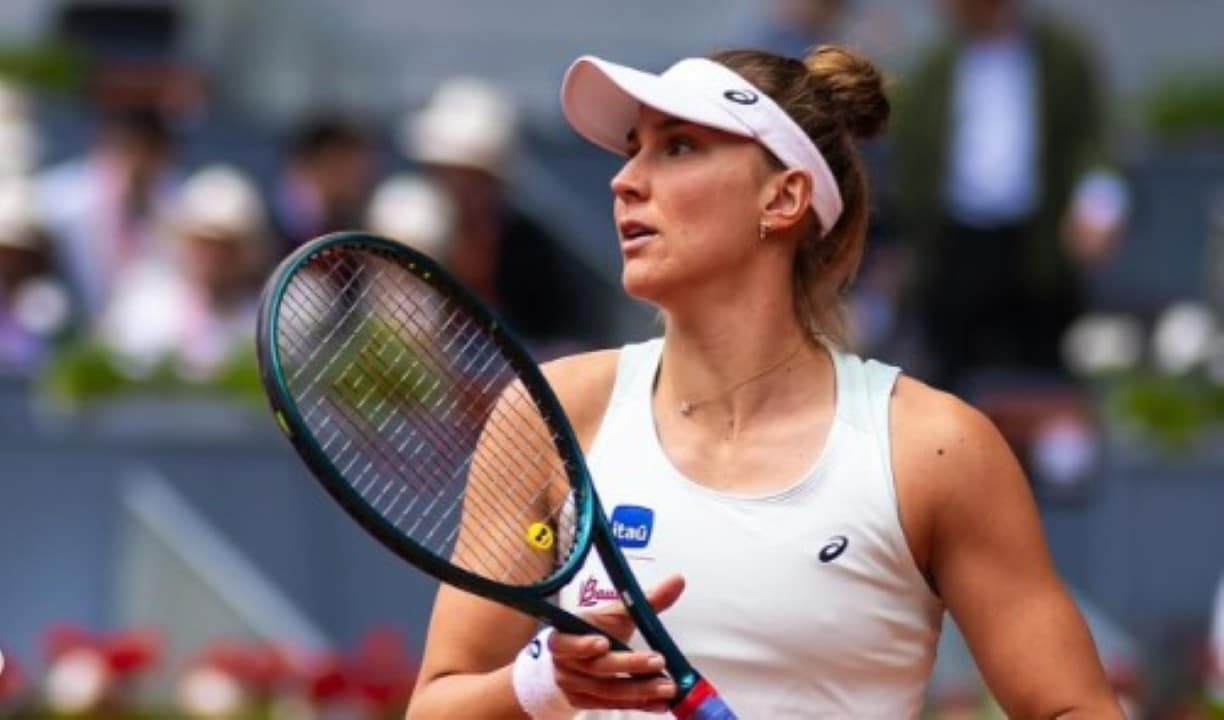
The Brazilian tennis player Beatriz Haddad Maia suffered another important setback in her trajectory in the 2026 season when she was eliminated in the opening round of the WTA 125 of Atualmente occupying 67th position in the world rankings, the 29-year-old from São Paulo was unable to overcome the Czech Linda Fruhvirtova, just 20 years old and number 121 in the world, being defeated by 2 sets to 1 this Monday, March 9th. With the negative result on American soil, Bia Haddad endures a worrying sequence of five consecutive defeats, highlighting a phase of technical and emotional instability on the courts.
The confrontation showed constant fluctuations in performance, reflecting the delicate moment that the main representative of women’s tennis in the Brasil has been going through since the beginning of the competitive calendar. In the first set, Fruhvirtova demonstrated greater consistency in groundstrokes and took advantage of the gaps in the Brazilian’s service to close at 6/3, imposing an aggressive rhythm that made it difficult for Bia to react immediately. The match continued to a balanced split in the second set, where the Brazilian showed resilience by saving a match point and forcing a tie-break, winning 7/6(4) and rekindling the hope of a turnaround in the scoreboard.
The decision in the third set started favorably for Bia Haddad Maia, who opened up a 3-1 lead on the scoreboard, but the inconsistency appeared again in the decisive moments of the game. The young Czech recovered the break in service, regained mental control of the match and closed the final half at 6/4, sealing the Brazilian’s fate in the Texas tournament. Este was the third meeting between the two athletes on the professional circuit, and with this Monday’s triumph, Linda Fruhvirtova started to lead the direct record with two victories compared to just one for the tennis player from São Paulo.
Unstable performance marks the beginning of the year for the Brazilian tennis player
Austin’s WTA 125 defeat is the latest chapter in a statistically difficult start to the year for Beatriz Haddad Maia, who has eight defeats in nine matches played. Desde the beginning of January, the Brazilian participated in tournaments at different levels, but found it extremely difficult to advance beyond the first round in almost all competitions.
This negative trajectory includes early eliminations in major events, which directly impacts her WTA ranking score and confidence for the remainder of the season. The only victory recorded by the athlete to date occurred during the qualifying of the Doha tournament, at Catar, when she overcame an opponent with no significant ranking before falling again in the next phase.
Changes in the technical team and results below expectations
The results crisis experienced by Bia Haddad Maia coincides with profound changes in its training and professional support structure on the international circuit. In February, the player announced the end of her partnership with coach Rafael Paciaroni, with whom she had worked for a long time and had previously reached the top 10 in the world rankings.
- The sequence of drops in debuts includes tournaments in Adelaide, Abu Dhabi and Australian Open.
- In Mérida and Indian Wells, the Brazilian was also unable to confirm her initial favoritism.
- The lack of a permanent coach has been pointed out by experts as a factor in tactical instability.
- The athlete’s physical performance seems to be tested in long three-set matches.
This transition in the technical team has not yet had the expected positive effects, and the tennis player is now looking for new guidance to try to reverse the free fall in the professional ranking. The absence of victories against lower-ranked opponents, as is the case in the duel against Fruhvirtova, raises a warning signal about the need for quick adjustments in their preparation.
Detailed retrospective of competitions played in 2026
When analyzing this year’s history, it is observed that the Brazilian was surpassed by a diversity of playing styles, from established tennis players to young promises on the circuit. No Australian Open, the first Grand Slam of the season, the fall in the debut was a severe blow to the intentions of Bia, who intended to defend important points achieved in previous years.
The negative sequence extended to WTA 500 level tournaments, such as Abu Dhabi and Adelaide, where the tennis player was unable to impose her main characteristic of aggressiveness and mental solidity. Mesmo on surfaces where she used to present good numbers, the Brazilian has failed to close decisive games, resulting in opponents’ upsets like the one that occurred in Austin.
Tactical difficulties faced on North American soil
During the match in Austin, it was evident that Bia Haddad Maia has difficulty maintaining intensity when they have an advantage on the scoreboard. The strategic retreat observed in the third set allowed Fruhvirtova to take the initiative with the points, forcing unforced errors from the Brazilian that ended up being fatal to the outcome of the match.
The Czech tennis player, in turn, took advantage of the Brazilian’s moment of fragility to vary her moves, alternating deep balls with short ones that took Bia out of her comfort zone. The lack of variation in the São Paulo player’s serve also facilitated the return of Fruhvirtova, who managed to put constant pressure on Haddad Maia’s second serve throughout the match.
Impact of the negative sequence on the women’s world ranking
The drop to 67th place is a direct reflection of the impossibility of defending the results obtained last season, which creates additional pressure on the athlete. Caso is unable to gain points in the next tournaments in the American and European tour, Bia runs the risk of leaving the top 100, which would make it difficult for him to enter directly into the main draws of the biggest tournaments in the world.
Tennis analysts note that the player’s confidence appears to be shaken, especially after missing clear opportunities to close out games in which she was leading. The recovery of this psychological aspect is seen as essential so that she can return to competing at a high level against the best tennis players today and interrupt the cycle of defeats.
Future calendar and chances of recovery on the circuit
Despite the critical moment, Beatriz Haddad Maia still has a full calendar ahead, with opportunities to seek rehabilitation in tournaments on clay and grass. The transition to the clay season at Europa is usually a period where the Brazilian feels more comfortable, given her game characteristics that favor longer ball exchanges.
The athlete is expected to announce a new technical commander in the coming weeks to structure training for the Roland Garros and Wimbledon tournaments. Maintaining physical health will be another essential pillar, as the intense routine of travel and competitions requires impeccable conditioning to withstand the wear and tear of matches on the WTA circuit.
Technical factors that influenced early elimination
Detailed analysis of the game against Linda Fruhvirtova shows that Bia Haddad had a first serve usage below its historical average, which gave the opponent confidence. Sem the advantage of her powerful serve, the Brazilian was forced to compete in exhausting rallies from the beginning of each point, which ended up sapping her energy for the decisive set.
- Use of points earned with the second service was less than 40%.
- Excessive number of unforced errors in moments of equality on the scoreboard.
- Difficulty converting break points created during the second and third sets.
- Lack of aggressiveness when going up to the net to finish short points.
These technical elements need to be worked on separately in training so that the Brazilian regains the competitiveness necessary to beat top 100 tennis players. Quickly adapting to the playing style of the new generations, represented by athletes like Fruhvirtova, is a challenge that Bia will need to overcome to remain relevant on the world stage.
Panorama of Brazilian women’s tennis in international competitions
While Bia Haddad Maia seeks to rediscover her best tennis, other Brazilians are trying to gain space in the WTA rankings, although Bia remains the lone reference at the top. The crisis situation of the country’s main athlete generates discussions about the support and structure available for the development of national women’s tennis on foreign soil.
The focus now turns to the mental preparation of the tennis player, who has proven in previous years to have the ability to overcome periods of injuries and adverse results. The tennis community awaits Haddad Maia’s next steps, hoping that the defeat in Austin will serve as a turning point for a change in technical and tactical stance on the courts.




