
Excavation in Spain reveals 2,200-year-old elephant bone used in General Hannibal’s troops

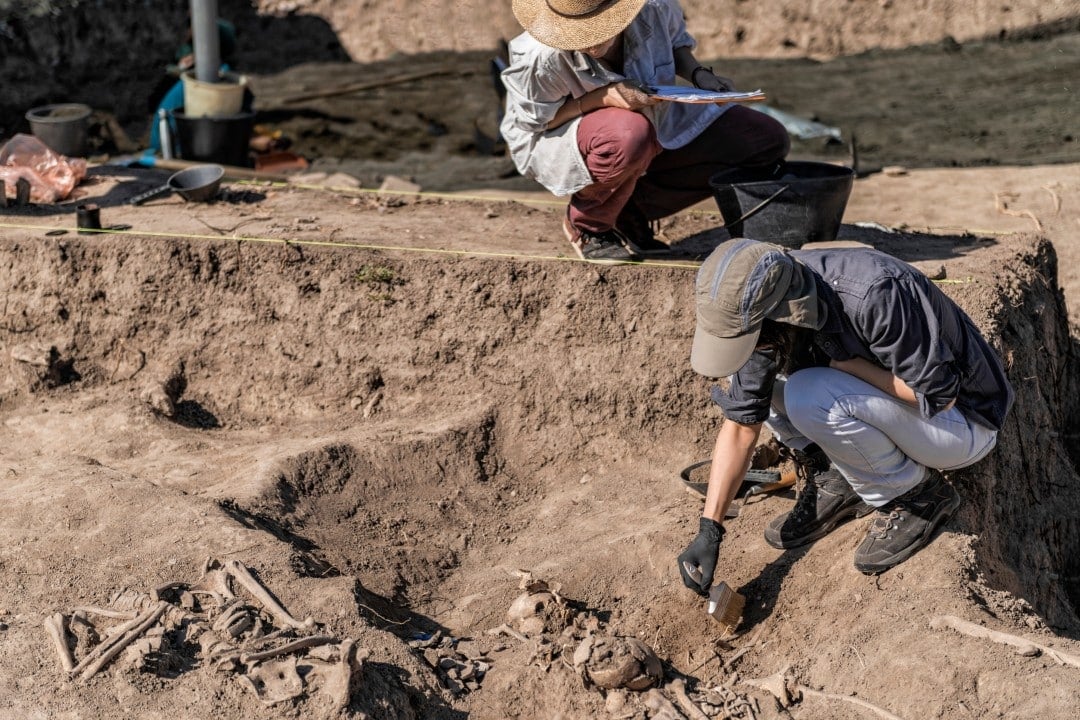
A team of experts recently identified a fossil trace of great historical relevance at the site of Collina de los Quemados, located in Córdoba. The material consists of a part of the ankle of a large mammal, dating back approximately 2,200 years. Preliminary analysis indicates that the fragment belongs to an animal of African origin, which raises new hypotheses about military movements in Europa Ocidental during Antiguidade. The discovery provides the first substantial physical evidence of the use of these creatures as combat instruments in the Iberian region.
The find occurred during a series of excavations planned in an area already recognized for housing ancient artifacts. The researchers used radiocarbon dating methods to place the fossil between the 4th century BC and the end of the 3rd century BC. The presence of this material in Península Ibérica corroborates the classic reports about the strategies adopted by Carthaginian forces against República Romana.
Military remains found at the camp
Next to the main bone fragment, the excavators located several war artifacts that indicate the occurrence of an armed confrontation at the site. Foram cataloged 12 artillery bullets made of stone, in addition to multiple arrowheads forged in bronze and iron. Esses elements suggest that the area functioned as a point of resistance or a temporary camp for troops.
Stone munitions, about 10 centimeters in diameter, were typically launched by slingers to hit opponents at medium distances. The combination of these weapons with the trace of the large animal reinforces the theory of a coordinated military operation. Experts point out that the invading forces used this brute force to break through enemy defensive lines.
The absence of human graves in the vicinity of the archaeological site indicates that the occupation of the space was brief. The scenario points to a quick passage of troops, possibly during a march towards territories further north. Investigations continue to map the exact extent of this temporary camp.
Combat strategies of the Carthaginian forces
The use of large animals on the battlefronts represented a significant tactical innovation for the time, designed to cause disorder in opposing formations. Forces from the north of África equipped these creatures with wooden structures on their backs, allowing archers to have a privileged position to fire at enemy infantry. Além of the physical advantage, the visual impact on soldiers who had never seen such beasts was a powerful tool of intimidation. Relatos histories detail how the noise and size of the animals destabilized the legions even before the hand-to-hand clash. Essa approach demonstrates the high level of logistical sophistication achieved by commanders of that period.
The logistics required to transport and maintain these shock units required rigorous planning, involving complex sea and land routes. The recruitment of local mercenaries and the formation of alliances with Iberian tribes were fundamental steps to sustain the advance of troops into hostile territory. Maintaining the animals required large quantities of water and forage, which dictated the pace and direction of military marches. The discovery at Córdoba perfectly illustrates this supply network, proving that the region served as a vital strategic corridor. The dominance of these routes allowed the projection of power far beyond the original borders of Phoenician power.
Technologies applied in fossil analysis
To confirm the origin and age of the material, scientists employed advanced laboratory techniques, including mass spectrometry. The measurement of carbon isotopes provided a precise temporal window, with a margin of error reduced to just five decades. Esse degree of precision was essential to associate the find with the events of the end of the 3rd century BC.
X-ray imaging exams revealed the internal density of the bone structure, ruling out the possibility of falsification or recent contamination. The natural wear marks observed on the fossil’s surface are compatible with extreme physical exertion. Isso indicates that the specimen traveled long distances carrying considerable weight before perishing.
Genetic studies are currently being carried out to try to extract fragments of viable DNA from within the bone. The objective of this step is to identify the exact subspecies, checking whether the animal belonged to an extinct lineage from the north of África. Essa information will help to trace the import route adopted by breeders at the time.
The team’s geologists also collected sediments around the excavation to reconstruct the paleoenvironment. The data point to a wetter climate in the region during Antiguidade, which facilitated the exceptional preservation of organic material. The integration of these scientific disciplines accelerates the validation of archaeological hypotheses.
Mapping of historical routes on Península Ibérica
The confirmation of the foreign military presence in the south of the current Espanha forces historians to reevaluate the maps of troop movements during the Antiguidade. Até At the time, most of the trajectories described depended exclusively on classic texts written by authors who, often, had a political bias or did not witness the facts in person. The exact location of this archaeological site suggests that commanders opted for alternative paths to avoid enemy fortifications already established along the Mediterranean coast. The use of drones equipped with LiDAR sensors has allowed researchers to identify ancient roads and mountain passes that would be hidden under current vegetation. By crossing this topographic data with the location of war artifacts, the team is able to draw a three-dimensional model of the advance of the armed forces. Essa new cartography reveals a deep geographic knowledge on the part of the invaders, who knew how to exploit local natural resources to sustain their ranks. The discovery fills a substantial gap in European historiography, transforming legends and oral accounts into scientifically proven material facts. The joint effort of universities from different countries ensures that this information is cataloged and made available to the global academic community.
Preservation of cultural heritage
Local authorities have initiated a formal process to ensure the full protection of the Collina de los Quemados site against urban development. The project envisages the construction of an adequate infrastructure to receive researchers and, in the future, visitors interested in ancient history. The creation of an interpretation center at the site will serve to display replicas of the artifacts and educate the public about the relevance of the discoveries.
Expansion of excavation fronts
With funding secured by research funding institutions, the team plans to open new trenches in areas adjacent to the main find. The expectation is to locate additional military equipment, such as fragments of armor, harnesses or even insignia that identify specific battalions. Cada new recovered item will help piece together the tactical operations puzzle.
Fieldwork will follow strict protocols to avoid degradation of deeper stratigraphic layers. Ongoing collaboration between military history experts and field archaeologists ensures that no evidence goes unnoticed. The results of upcoming excavation campaigns will be published in scientific journals for peer validation.
Relevance of findings for modern science
The integration of modern analytical methods with traditional excavation demonstrates the methodological advancement of archeology in the current century. The use of three-dimensional modeling allows scientists from anywhere in the world to study the fossil without having to handle the original piece. Isso democratizes access to information and preserves the physical integrity of the artifact.
The data obtained in Córdoba will serve as a comparative basis for future investigations in other countries bathed by Mediterrâneo. Identifying camping and ordnance disposal patterns creates a practical manual for locating new historic sites. Science, therefore, continues to unravel the steps of ancient civilizations with unprecedented precision.




